
To properly maintain leather boots, you must follow a consistent, three-step process. First, regularly clean the surface to remove dirt; second, apply a conditioner or cream to keep the leather hydrated and supple; and third, use a protective treatment to shield the boots from moisture and stains.
The core principle of leather care is treating it like a natural skin. Its longevity depends not on a single product, but on a routine that cleanses, moisturizes, and protects it from the elements, preventing the material from drying out and cracking.
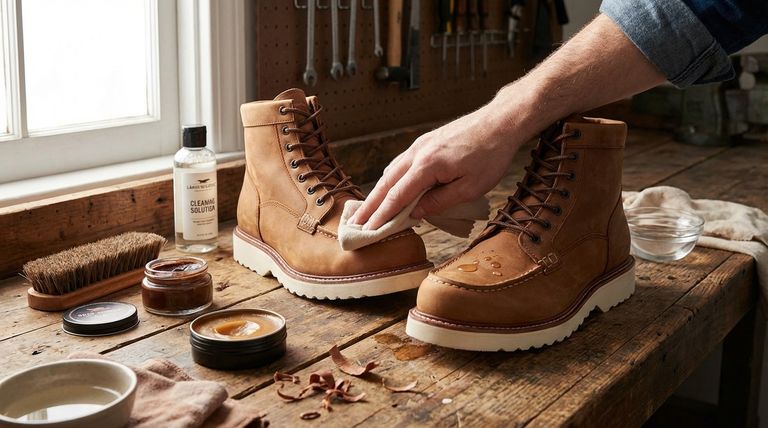
The Three Pillars of Leather Boot Care
Effective maintenance is a cycle built on three distinct but interconnected actions. Neglecting any one of these steps will compromise the integrity and appearance of your boots over time.
Pillar 1: Consistent Cleaning
Before you can treat the leather, you must ensure it is clean. Applying conditioners or polishes over dirt will grind abrasive particles into the material and seal in grime.
For light, daily maintenance, a simple wipe-down with a damp cloth or a soft brush is sufficient to remove surface dust and mud.
For deeper cleaning, use a specialized leather cleaner or cleaning foam. This removes embedded dirt and old polish, preparing the leather to properly absorb conditioner.
Pillar 2: Regular Conditioning
This is the most critical step for preventing irreversible damage. Leather is a porous material that loses its natural oils and moisture over time, especially when exposed to heat and dry air.
Conditioning replenishes these oils, keeping the leather flexible and preventing it from becoming brittle and cracking. Think of it as moisturizing your own skin.
Products like leather conditioner, shoe cream, or wax polish achieve this. Apply a small amount after cleaning and allow it to absorb fully. This should be done every few weeks for frequently worn boots.
Pillar 3: Proactive Protection
The final step is to create a barrier against the elements. This is often called impregnation or waterproofing.
A quality protectant, such as a waterproofing spray, repels water and helps prevent dirt from setting into the leather. This doesn't make the boot completely waterproof but significantly improves its resistance to moisture damage and staining.
This step is especially important for boots worn in wet or snowy conditions and helps maintain the effectiveness of the leather's protective qualities.
Understanding the Trade-offs of Neglect
Ignoring a regular maintenance routine is not a neutral choice; it actively shortens the lifespan and reduces the performance of your boots. The consequences are predictable and progressive.
Structural Damage
The most common outcome of neglect is cracking. As the leather dries out, its fibers become brittle. The constant flexing from walking puts stress on these dry fibers, causing them to break and form permanent cracks, especially around the toe box.
Loss of Function
Well-maintained leather offers a degree of natural water repellency and comfort. As it degrades, it loses this ability, absorbing water more easily. The material also becomes stiff and less pliable, leading to reduced comfort and a poor fit.
Aesthetic Decline
Without proper care, leather will inevitably fade, stain, and show signs of premature wear. The rich color and finish will become dull, and the boots will lose the character that makes high-quality leather desirable in the first place.
Making the Right Choice for Your Goal
Your maintenance schedule should adapt to how you use your boots. A consistent routine is more important than any single intensive treatment.
- If your primary focus is durability in harsh conditions: Clean your boots after each significant use and apply a conditioner and protectant every few weeks to combat moisture and abrasion.
- If your primary focus is preserving the look of casual boots: Clean them as needed when they appear dirty and condition them every 2-3 months to keep the leather nourished.
- If your primary focus is long-term storage: Ensure the boots are thoroughly cleaned and conditioned before you put them away to prevent the leather from slowly drying out and cracking over time.
Ultimately, a small investment of time in a consistent care routine is the definitive way to protect your investment for years to come.
Summary Table:
| Maintenance Step | Purpose | Recommended Products |
|---|---|---|
| 1. Clean | Remove dirt and grime to prepare the leather | Damp cloth, soft brush, leather cleaner |
| 2. Condition | Replenish natural oils to prevent drying and cracking | Leather conditioner, shoe cream, wax polish |
| 3. Protect | Shield against moisture and stains | Waterproofing spray, impregnator |
Ensure your boots stand the test of time with professional-grade care. As a large-scale manufacturer, 3515 produces a comprehensive range of durable footwear for distributors, brand owners, and bulk clients. Our expertise in materials and construction ensures your customers receive boots built to last. Let us help you source or develop footwear that simplifies maintenance and maximizes longevity. Contact our team today to discuss your production needs.
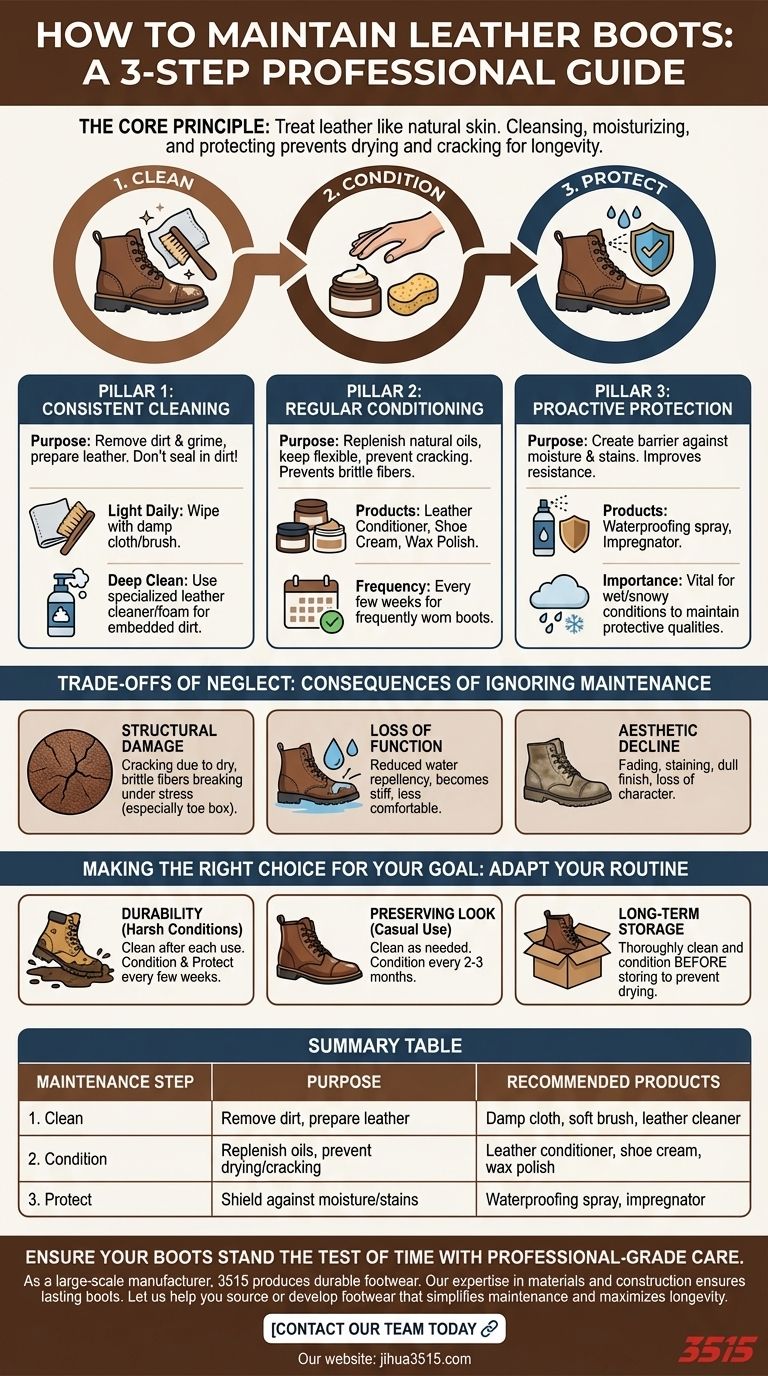
Visual Guide
Related Products
- Wholesale Leather Work Boots with Customizable Wedge Sole for Brands
- Durable Leather Work Boots for Wholesale & Custom OEM Manufacturing
- Durable Leather Work Boots for Wholesale & Custom Manufacturing
- Durable Leather Work Boots Wholesale Manufacturer & Custom Factory
- Durable Goodyear Welt Leather Work Boots for Wholesale & Private Label
People Also Ask
- What is the difference between full-grain and top-grain leather? Premium Material Guide for Boot Manufacturers
- What are the advantages of leather as an upper material for work boots? Unmatched Durability & Custom Comfort
- How can leather work boots be protected from environmental elements? A 3-Step Guide to Lasting Durability
- What is the complete process for deep cleaning leather work boots? A Step-by-Step Guide to Preserve Your Investment
- What are the key qualities of leather for work boots? Superior Durability, Breathability & Custom Fit

















