
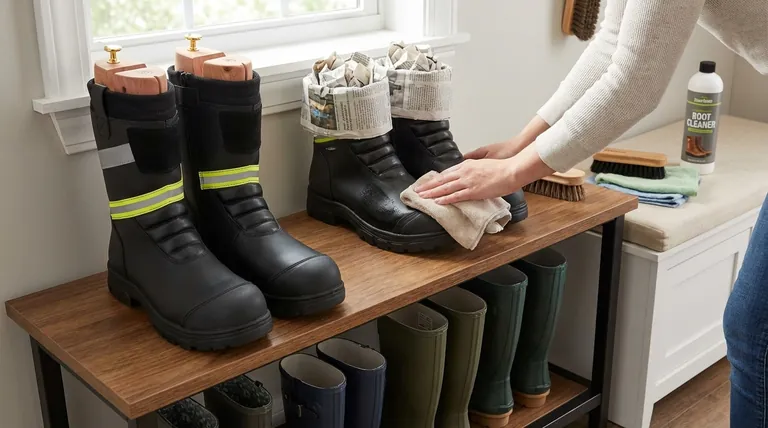
To properly store snow, rain, and garden boots, you must first ensure they are completely clean and dry. Store them upright in a cool, dry location away from direct sunlight and extreme temperatures, using boot trees or crumpled newspaper to help them maintain their shape and prevent creasing.
The key to extending the life of your boots isn't just the storage location, but the preparation beforehand. Proper storage is the final step in a simple but crucial maintenance routine: Clean, Dry, and Shape.
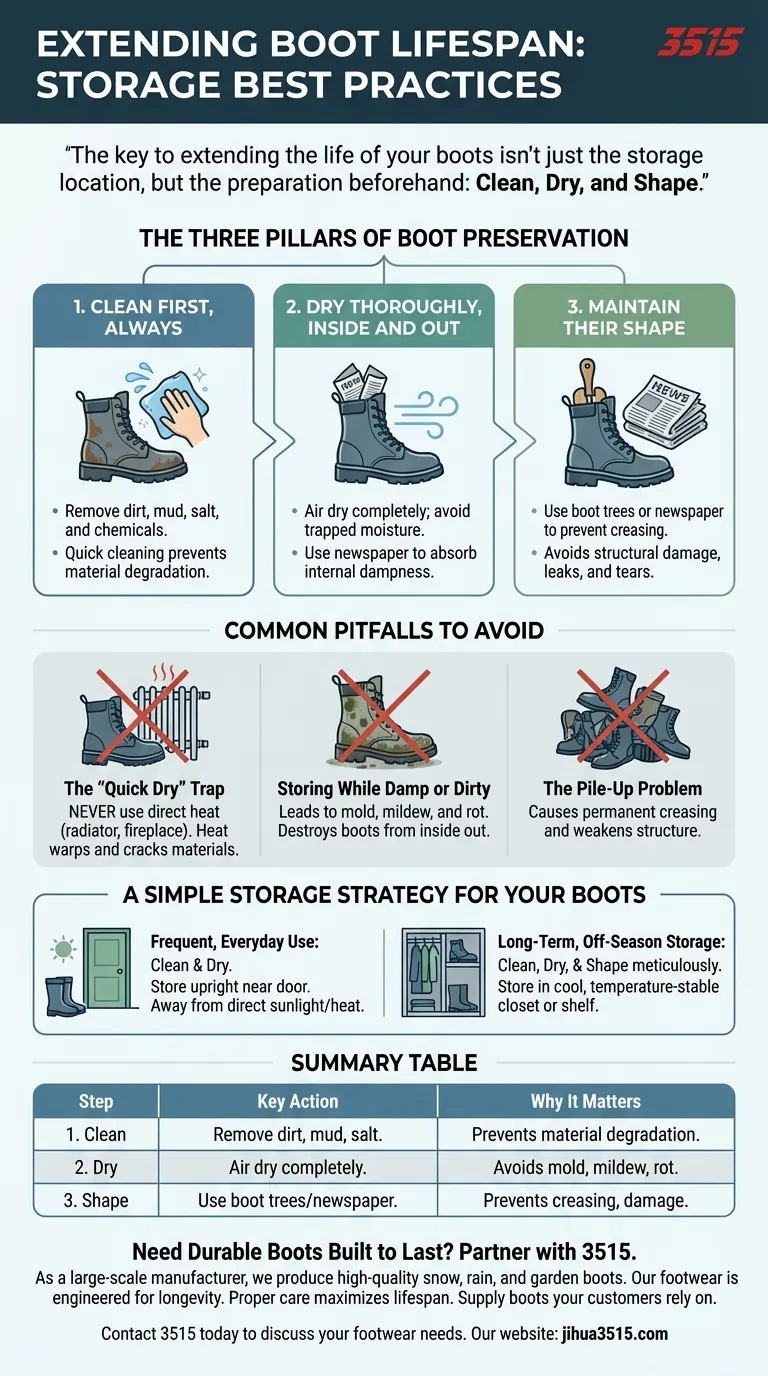
The Three Pillars of Boot Preservation
Before your boots ever go into storage, whether for a day or a season, three steps are essential to prevent material degradation. Skipping these is the most common cause of premature failure.
Clean First, Always
Dirt, mud, salt, and chemicals can slowly break down the rubber, synthetics, and leather on your boots. A quick cleaning after each use is the best preventative measure.
For rubber and synthetic rain or garden boots, simply wiping them down with a damp cloth is sufficient. For snow boots with mixed materials, ensure you remove any salt stains, which are particularly corrosive.
Dry Thoroughly, Inside and Out
Storing boots while they are still damp is a recipe for mold, mildew, and material rot. This trapped moisture will compromise seams, liners, and the boot's primary materials.
Always allow your boots to air dry completely. To speed up the process, you can remove the insoles and stuff the boots with newspaper, which helps absorb internal moisture.
Maintain Their Shape
Boots left to flop over in a closet will develop deep creases. Over time, these creases become weak points where the material can fatigue and eventually crack, especially in rubber and synthetic fabrics.
Using boot trees or even just loosely crumpled newspaper helps the boot hold its natural form. This simple step prevents the structural damage that leads to leaks and tears.
Common Pitfalls to Avoid
Knowing what not to do is as important as knowing the right steps. Many well-intentioned owners damage their boots by making these common mistakes.
The "Quick Dry" Trap
Never place your boots near a direct heat source like a radiator, fireplace, or heater vent. Intense, direct heat can melt adhesives, warp rubber, and cause leather to become brittle and crack. Slow, patient air drying is always the safest method.
Storing While Damp or Dirty
This is the single most destructive mistake. Trapped moisture and organic matter from dirt create the perfect environment for mold and bacteria, which will literally eat away at your boots from the inside out.
The Pile-Up Problem
Tossing boots into a pile at the bottom of a closet causes them to bend and crease in unnatural ways. As mentioned before, these creases are future failure points that permanently weaken the boot's structure.
A Simple Storage Strategy for Your Boots
Your storage method should match how you use your boots. Follow the guideline that best fits your situation.
- For frequent, everyday use: After cleaning and ensuring they are dry, store them upright near your door, but away from direct sunlight or heat vents.
- For long-term, off-season storage: Follow the "Clean, Dry, and Shape" process meticulously, then place them in a temperature-stable closet or on a shelf in a dry part of your basement or garage.
By treating storage as a deliberate part of your gear maintenance, you ensure your boots are ready and reliable for years to come.
Summary Table:
| Step | Key Action | Why It Matters |
|---|---|---|
| 1. Clean | Remove all dirt, mud, and salt. | Prevents material degradation and corrosion. |
| 2. Dry | Air dry completely, inside and out. | Avoids mold, mildew, and material rot. |
| 3. Shape | Use boot trees or crumpled newspaper. | Prevents creasing and structural damage. |
Need Durable Boots Built to Last? Partner with 3515.
As a large-scale manufacturer, we produce a comprehensive range of high-quality snow, rain, and garden boots for distributors, brand owners, and bulk clients. Our footwear is engineered with longevity in mind, but proper care is key to maximizing its lifespan.
Let us help you supply boots that your customers can rely on season after season.
Contact 3515 today to discuss your footwear needs and discover our manufacturing capabilities.
Visual Guide
Related Products
- Wholesale Durable Safety Boots | Custom Steel Toe & Puncture-Resistant Manufacturing
- Premium Wholesale Tactical Style Safety Shoes Boots with Quick Lacing
- Durable Goodyear Welt Leather Work Boots for Wholesale & Private Label
- Durable Leather Work Boots for Wholesale & Custom Manufacturing
- Premium Wholesale Waterproof Safety Boots High Performance Protection for Industrial Markets
People Also Ask
- How should safety boots be cleaned to avoid damage? A Gentle Guide to Preserve Your Boots
- What are the consequences of not wearing safety boots? Protect Your Finances and Career
- What makes durable safety boots? The Ultimate Guide to Long-Lasting Work Footwear
- What materials are commonly used for outsoles in safety boots? A Guide to Durability, Grip, and Comfort
- What are the key features of safety boots? Essential Protection for Hazardous Workplaces



















