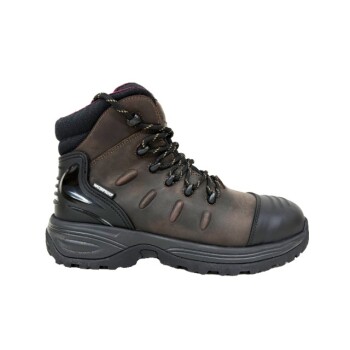
The SST K-omega turbulence model is a critical computational tool for predicting how floodwaters interact with the complex shapes of human limbs and specialized footwear. By accurately calculating flow resistance and pressure distribution under high-stress conditions, it allows engineers to optimize design elements that keep the wearer stable and safe in fast-moving water.
By capturing the chaotic behavior of water vortices and flow interference around the human body, this model provides the physically realistic resistance coefficients necessary to design footwear that minimizes drag and maximizes safety in flood scenarios.
The Physics of Fluid-Structure Interaction
Handling High Reynolds Numbers
Flood conditions typically involve fast-moving, turbulent water. This state is characterized by high Reynolds numbers, a metric that indicates chaotic flow patterns.
The SST K-omega model is specifically engineered to function effectively in these high-turbulence environments. It ensures that the simulation does not break down when the water speed increases significantly.
Mapping Complex Geometric Surfaces
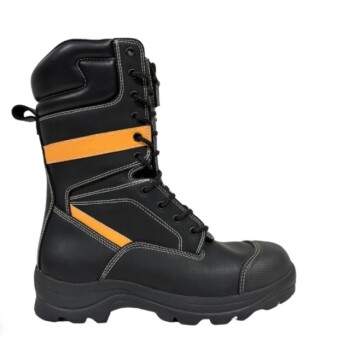
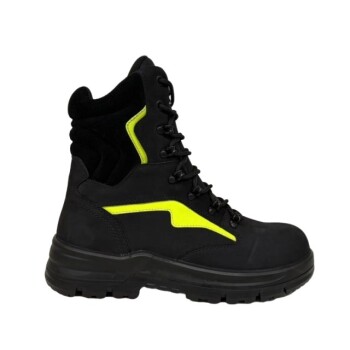
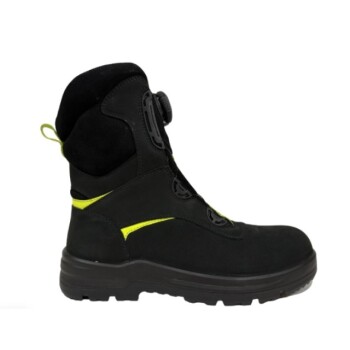
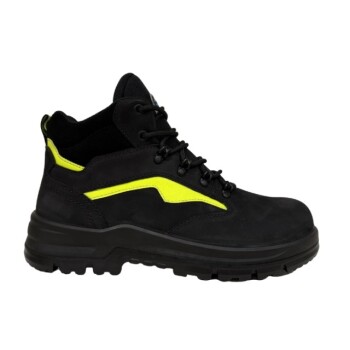
Human legs and functional boots are not simple, aerodynamic cylinders; they are complex geometric surfaces with curves, straps, and varying textures.
This model excels at mapping these irregularities. It calculates how pressure is distributed across every millimeter of the footwear's surface area, rather than just providing a rough average.
Analyzing Flow and Vortices
Capturing Leeward Vortices
One of the most dangerous aspects of floodwater is what happens behind the leg, known as the leeward side.
As water rushes past a person, it creates swirling vortices and flow field interference behind them. The SST K-omega model accurately captures these phenomena, which are often missed by simpler simulations.
Understanding Flow Field Interference
The interaction between the water and the body changes based on how a person is standing.
The model simulates flood impacts on various human postures. This allows developers to see how shifting weight or changing stance alters the flow of water around the boots.
Translating Simulation to Design
Deriving Resistance Coefficients ($C_d$)
The ultimate output of these simulations is the resistance coefficient ($C_d$).
This metric quantifies how much "drag" the footwear generates in the water. By deriving physically realistic $C_d$ values, engineers can mathematically determine how hard the water is pushing against the wearer.
Optimizing Hydrodynamic Performance
With accurate $C_d$ data, designers can refine the shape of the boot to slice through water more efficiently.
This optimization directly translates to enhanced safety. A lower resistance coefficient means the wearer is less likely to be swept off their feet by the force of the current.
Critical Considerations for Accuracy
The Necessity of Posture Simulation
The model's effectiveness relies heavily on context. The text notes its success when simulating impacts on various human postures, not just the boot in isolation.
To get valid data, developers must model the entire lower body's interaction with the flow. Analyzing the footwear without accounting for the wearer's stance and the resulting leeward vortices will yield inaccurate safety data.
Making the Right Choice for Your Goal
To leverage the SST K-omega model effectively, you must align the simulation outputs with your specific design objectives.
- If your primary focus is Stability: Prioritize the analysis of leeward vortices to understand how turbulence behind the leg might destabilize the wearer's balance.
- If your primary focus is Efficiency: Focus on reducing the resistance coefficient ($C_d$) to ensure the footwear generates the least amount of drag possible in high-speed flows.
Success in flood footwear design depends on using this model to turn chaotic flow data into precise, actionable hydrodynamic adjustments.
Summary Table:
| Feature/Capability | Benefit/Impact |
|---|---|
| High Reynolds Numbers Handling | Effective in fast, turbulent water; prevents simulation breakdown |
| Complex Geometry Mapping | Accurate pressure distribution across irregular surfaces (boots/limbs) |
| Leeward Vortex Capture | Identifies swirling turbulence behind the leg; enhances stability |
| Posture Simulation | Accounts for various human postures; refines safety analysis |
| Resistance Coefficient ($C_d$) | Quantifies hydrodynamic drag; enables shape optimization for efficiency |
| Hydrodynamic Optimization | Refines footwear design to slice water efficiently; enhances safety |
Unlock Advanced Footwear Design with 3515
As a large-scale manufacturer serving distributors and brand owners, 3515 offers comprehensive production capabilities for all footwear types. Our flagship Safety Shoes series, alongside work and tactical boots, outdoor shoes, training shoes, sneakers, and Dress & Formal shoes, are crafted to meet diverse bulk requirements with precision and innovation.
Leverage our expertise in advanced design, materials, and manufacturing, informed by cutting-edge techniques like the SST K-omega model, to create high-performance footwear that sets new industry standards for safety, durability, and comfort. Whether you need specialized flood boots, tactical gear, or robust safety footwear, we bring your vision to life with unmatched quality and scale.
Ready to elevate your product line? Contact 3515 today to discuss your next project!
References
- Guo Xin, Xiaojing Li. Analysis of Self-Rescue Possibilities for Pedestrians in the Aftermath of Destabilization during a Flood Event. DOI: 10.3390/w16091218
This article is also based on technical information from 3515 Knowledge Base .
Related Products
- Durable Waterproof Rain Boots | Custom Manufacturer for Wholesale & Brands
- Factory Direct Wholesale Rain Boots Durable Waterproof & Fully Customizable
- High Performance Fire-Retardant Waterproof Safety Boots
- Premium Flame-Retardant Waterproof Safety Boots and Shoes
- Durable Military Combat Boots with Water Drainage for Wholesale & OEM
People Also Ask
- What are the main materials for waterproof rain boots? Choose the Right Material for Durability & Comfort
- What is the overall recommendation for choosing rain boot materials? A Guide to Rubber vs. PVC
- How does boot height affect waterproofing? Choose the Right Height for Ultimate Protection
- Why are rain boots more flexible and comfortable than snow boots? The Key Differences Explained
- What are the best types of shoes for different gardening conditions? Find Your Perfect Match.