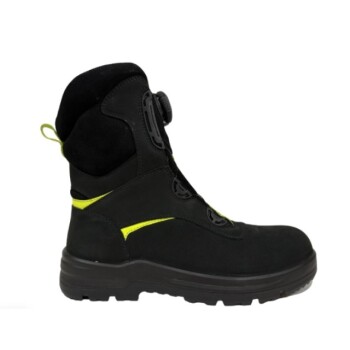
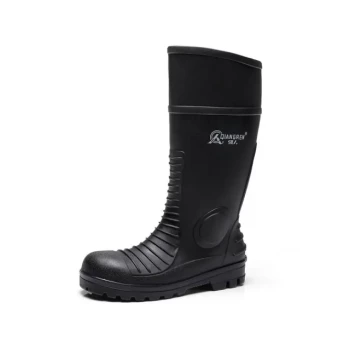
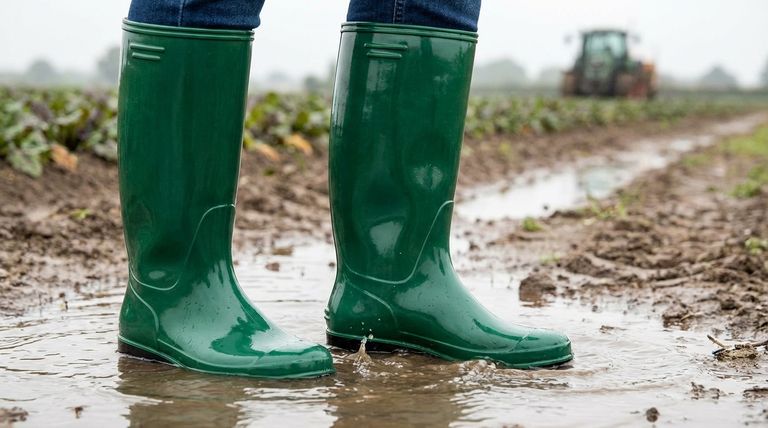
At their core, the primary advantages of PVC wellington boots are their affordability, lightweight design, and complete waterproofing. These attributes stem from an efficient, low-cost material and manufacturing process, making them a highly practical and accessible choice for a wide range of general-purpose applications.
While PVC offers an unbeatable combination of low cost and light weight for waterproof needs, this efficiency comes with a trade-off in long-term durability, flexibility, and comfort when compared to premium materials like natural rubber.
The Core Advantages of PVC
Polyvinyl chloride (PVC) is a synthetic plastic polymer that has become a dominant material in the footwear industry for specific, practical reasons. Understanding these core benefits clarifies why it's such a popular choice.
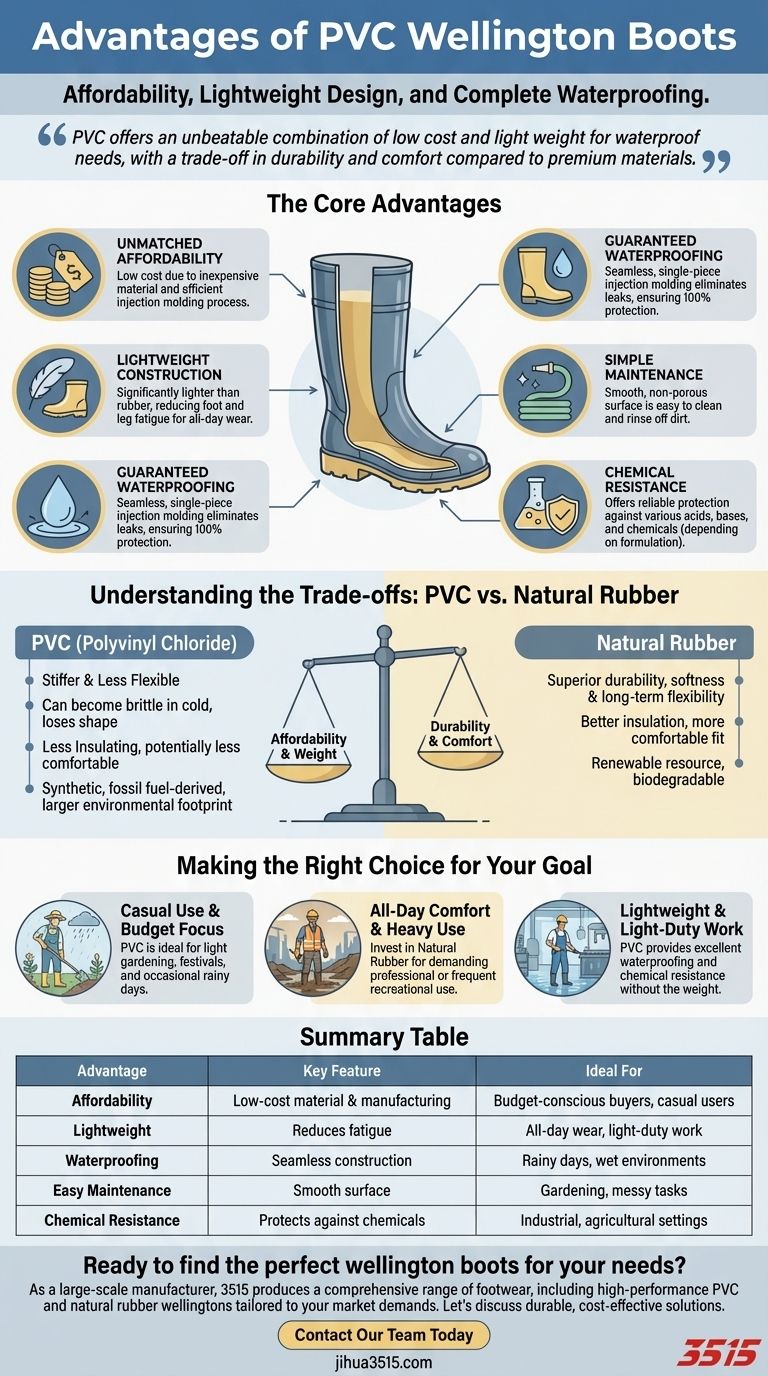
Unmatched Affordability
The single greatest advantage of PVC is its low cost.
This is a result of both the inexpensive nature of the raw material and the highly efficient injection molding process used to manufacture the boots. This makes them widely available and budget-friendly.
Lightweight Construction
PVC boots are significantly lighter than many alternatives, especially traditional rubber boots.
This reduction in weight minimizes foot and leg fatigue, making them a suitable choice for jobs or activities that require being on your feet all day.
Guaranteed Waterproofing
The injection molding process creates a seamless, single-piece boot.
This construction inherently eliminates seams or stitches where water could potentially leak, ensuring the boot is 100% waterproof from top to bottom.
Simple Maintenance
The smooth, non-porous surface of PVC makes the boots incredibly easy to clean and maintain.
Dirt, mud, and other substances can be rinsed off easily, making them ideal for messy environments like gardening or light agricultural work.
Chemical Resistance
Depending on the specific formulation, PVC boots can offer reliable protection against a variety of chemicals, acids, and bases.
This makes them a standard choice in many industrial, agricultural, and cleaning applications where exposure to such substances is a concern.
Understanding the Trade-offs: PVC vs. Natural Rubber
To fully appreciate PVC's role, it's critical to compare it to natural rubber, another common wellington material. The choice between them is a classic case of balancing cost against performance.
Durability and Flexibility
PVC is generally stiffer and less flexible than natural rubber.
Over time and with heavy use, PVC can lose its original shape and may become brittle, especially in cold temperatures. Natural rubber, by contrast, is known for its superior durability, softness, and long-term flexibility.
Comfort and Insulation
The inherent softness of natural rubber provides a more comfortable fit and better insulation against the cold.
PVC is less insulating and its stiffness can lead to less comfort during prolonged wear, particularly without well-fitted socks.
Environmental Impact
Natural rubber is a renewable resource harvested from trees and is biodegradable over a long period.
PVC is a synthetic plastic derived from fossil fuels. While durable in its own right, its production and disposal have a greater environmental footprint compared to natural materials.
Making the Right Choice for Your Goal
Your ideal material depends entirely on your intended use, budget, and priorities.
- If your primary focus is casual use and budget: PVC is the clear and logical choice for tasks like light gardening, festivals, or occasional rainy days.
- If your primary focus is all-day comfort and heavy use: Investing in the durability and flexibility of natural rubber is often a better long-term decision for demanding professional or frequent recreational use.
- If your primary focus is lightweight footwear for light-duty work: PVC provides excellent waterproofing and chemical resistance without the weight of traditional rubber boots.
Ultimately, choosing the right wellington boot is about aligning the material's strengths with your specific needs.
Summary Table:
| Advantage | Key Feature | Ideal For |
|---|---|---|
| Affordability | Low-cost material & manufacturing | Budget-conscious buyers, casual users |
| Lightweight | Reduces foot and leg fatigue | All-day wear, light-duty work |
| Waterproofing | Seamless, injection-molded construction | Rainy days, wet environments |
| Easy Maintenance | Smooth, non-porous surface | Gardening, messy tasks |
| Chemical Resistance | Protects against acids and bases | Industrial, agricultural settings |
Ready to find the perfect wellington boots for your needs?
As a large-scale manufacturer, 3515 produces a comprehensive range of footwear for distributors, brand owners, and bulk clients. Our production capabilities encompass all types of shoes and boots, including high-performance PVC and natural rubber wellingtons tailored to your specific market demands.
Let's discuss how we can provide you with durable, cost-effective footwear solutions. Contact our team today for expert consultation and competitive pricing!
Visual Guide
Related Products
- Durable Waterproof Rain Boots | Custom Manufacturer for Wholesale & Brands
- Premium Wholesale Waterproof Safety Boots High Performance Protection for Industrial Markets
- High-Traction Suede Tactical Boots Wholesale & Custom Manufacturing
- Heavy-Duty Waterproof Nubuck Safety Boots Safety Shoes for Bulk Supply
- Durable Goodyear Welt Leather Work Boots for Wholesale & Private Label
People Also Ask
- What are the main materials for waterproof rain boots? Choose the Right Material for Durability & Comfort
- What is the overall recommendation for choosing rain boot materials? A Guide to Rubber vs. PVC
- How does boot height affect waterproofing? Choose the Right Height for Ultimate Protection
- Why are rain boots more flexible and comfortable than snow boots? The Key Differences Explained
- What are the best types of shoes for different gardening conditions? Find Your Perfect Match.