
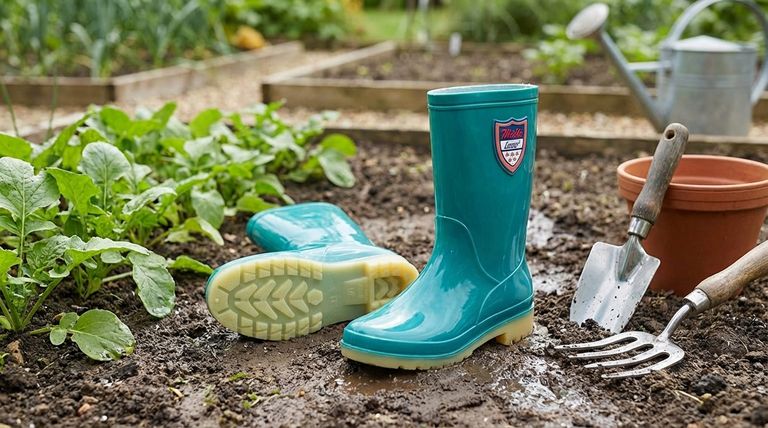
The best gardening wellington boots are a fusion of protection, comfort, and practical design. The key features to look for are a completely waterproof material like natural rubber, a sole with deep lugs for excellent grip, and a comfortable fit that provides support without being restrictive. These elements ensure your feet stay dry, safe, and comfortable through long hours of work.
Beyond simply being waterproof, the ideal gardening boot must provide all-day comfort for bending and kneeling, secure traction on uneven ground, and durability against the elements. The right choice depends entirely on matching the boot's material and structure to the specific demands of your garden.
The Foundation: Material and Construction
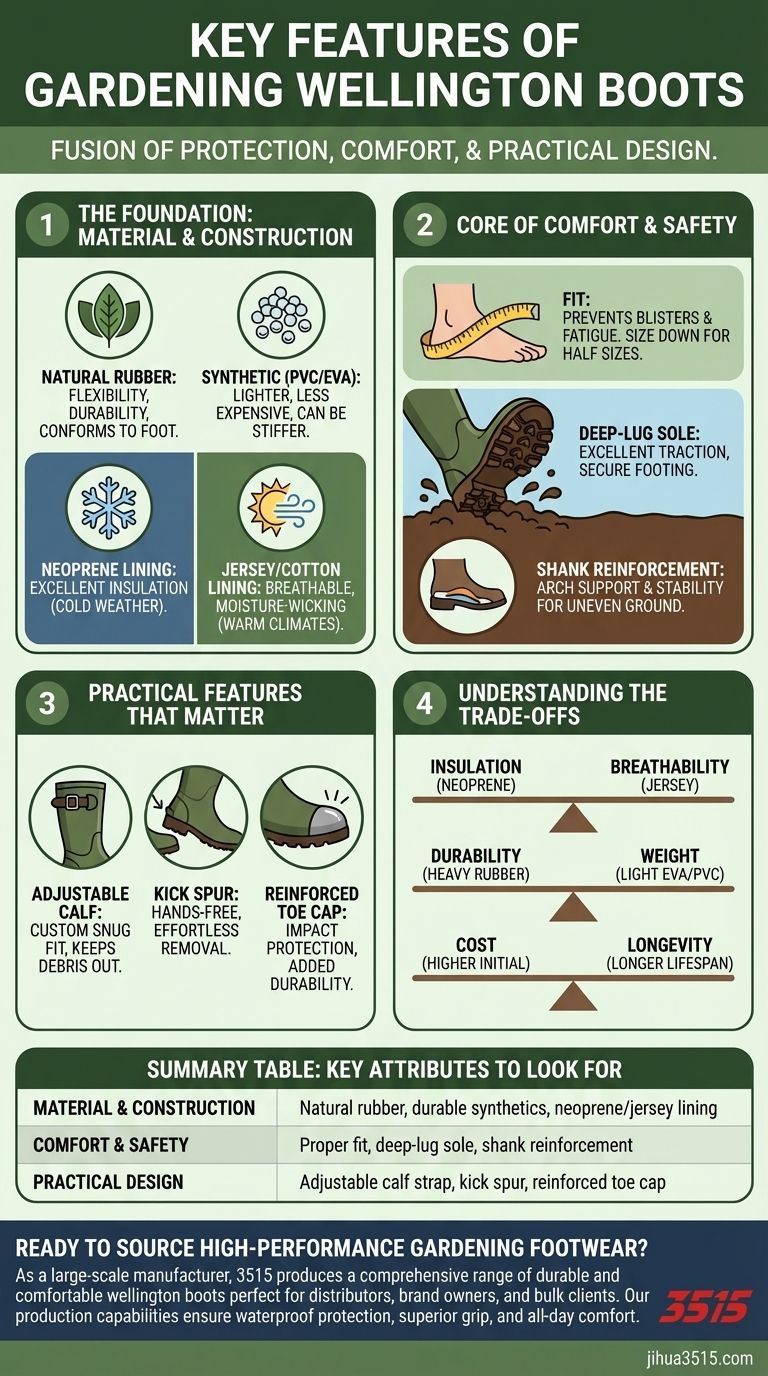
The material of your wellington boot is its first line of defense. It dictates the boot's durability, flexibility, and overall comfort in different weather conditions.
Natural Rubber vs. Synthetic Options
Natural rubber is the premium choice for its superior flexibility and durability. It resists cracking over time and conforms to your foot's movement, which is essential for tasks like kneeling.
Synthetic materials like PVC or EVA are lighter and often less expensive. While still waterproof, they can be stiffer than rubber and may not offer the same long-term durability for heavy use.
The Role of Linings
The interior lining manages comfort and temperature. Neoprene linings offer excellent insulation, making them ideal for cold-weather gardening.
For warmer climates or summer use, a moisture-wicking jersey or cotton lining provides breathability and prevents your feet from overheating.
Core of All-Day Comfort and Safety
A boot that isn't comfortable or safe is a tool that won't get used. Fit and sole design are the two most critical factors for performance in the garden.
Why Fit is Non-Negotiable
A proper fit prevents blisters and fatigue. Always check a brand's specific size chart, as sizing can vary.
If you are a half-size, the general rule is to size down. Remember to account for the thickness of socks you'll be wearing.
Grip and Flexibility of the Sole
Look for a sole with deep lugs and excellent traction. This is critical for maintaining a secure footing on wet grass, mud, or uneven terrain.
The sole must also be flexible enough to allow you to bend and kneel comfortably without the material digging into your foot.
Support for Uneven Ground
For heavy-duty tasks or rocky gardens, look for boots with shank reinforcement. This is a supportive piece in the mid-sole that provides crucial arch support and stability, reducing foot fatigue.
Practical Features That Matter
Small, thoughtful design elements can dramatically improve the user experience of a gardening boot, turning it from a simple piece of footwear into an indispensable tool.
Adjustable Calves for a Custom Fit
An adjustable calf strap or gusset allows you to achieve a snug fit. This feature is invaluable for tucking in trousers and preventing soil or debris from falling into your boots.
Ease of Use: Kick Spurs and Cleaning
A small ridge on the back of the heel, known as a kick spur, makes removing muddy boots hands-free and effortless.
The boot's exterior should be smooth and easy to wipe clean. This prevents you from tracking mud indoors and simplifies maintenance.
Reinforced Toes for Heavy Work
If your gardening involves heavy digging or using tools like spades and forks, a reinforced toe cap provides essential protection from impacts and adds durability to a high-wear area.
Understanding the Trade-offs
No single boot is perfect for every gardener or every season. Understanding the inherent compromises is key to making an informed decision.
Insulation vs. Breathability
A heavily insulated neoprene-lined boot is excellent for winter but will be uncomfortably warm during summer. Lighter, unlined boots are more versatile but offer no protection from the cold.
Durability vs. Weight
Heavy-duty, thick-walled rubber boots offer maximum durability and protection. However, their weight can lead to fatigue over a long day compared to lighter EVA or PVC options.
Cost vs. Longevity
A higher initial investment in a well-constructed boot made from natural rubber typically translates to a much longer lifespan. Cheaper boots may need to be replaced more frequently, costing more in the long run.
Making the Right Choice for Your Goal
Select your boots based on the primary type of work you do in the garden.
- If your primary focus is light-duty work and all-day comfort: Choose a lighter boot made from flexible rubber or EVA with a breathable jersey lining.
- If your primary focus is heavy digging and all-weather use: Prioritize a natural rubber boot with shank reinforcement, a reinforced toe, and a neoprene lining for insulation.
- If your primary focus is a secure fit and preventing debris: Look for a boot with an adjustable calf strap to create a custom seal around your leg.
Choosing the right wellington is an investment in your comfort, safety, and overall enjoyment in the garden.
Summary Table:
| Feature Category | Key Attributes to Look For |
|---|---|
| Material & Construction | Natural rubber, durable synthetic options, neoprene or jersey lining |
| Comfort & Safety | Proper fit, deep-lug sole for grip, shank reinforcement for support |
| Practical Design | Adjustable calf strap, kick spur for easy removal, reinforced toe cap |
| Performance Trade-offs | Insulation vs. breathability, durability vs. weight, cost vs. longevity |
Ready to Source High-Performance Gardening Footwear?
As a large-scale manufacturer, 3515 produces a comprehensive range of durable and comfortable wellington boots perfect for distributors, brand owners, and bulk clients. Our production capabilities ensure your customers get the perfect blend of waterproof protection, superior grip, and all-day comfort they need.
Let's discuss your specific requirements: Contact our expert team today to explore our catalog and manufacturing solutions.
Visual Guide
Related Products
- Durable Waterproof Rain Boots | Custom Manufacturer for Wholesale & Brands
- Durable Goodyear Welt Leather Work Boots for Wholesale & Private Label
People Also Ask
- What are the main materials for waterproof rain boots? Choose the Right Material for Durability & Comfort
- What is the overall recommendation for choosing rain boot materials? A Guide to Rubber vs. PVC
- How does boot height affect waterproofing? Choose the Right Height for Ultimate Protection
- Why are rain boots more flexible and comfortable than snow boots? The Key Differences Explained
- What are the best types of shoes for different gardening conditions? Find Your Perfect Match.

