
Measuring your child's feet for Wellington boots is a straightforward process that ensures a comfortable and secure fit. The most reliable method is to have your child stand on a piece of paper, trace the outline of both feet, and then measure the length from the heel to the tip of the longest toe. This measurement can then be compared directly to the boot manufacturer's specific size chart.
The most accurate measurement comes from tracing the child's foot while they are standing to capture its true, weight-bearing length. Always use the measurement of the larger foot and consult the specific brand's size chart, accounting for the thickness of socks.
The Foundation: Why an Accurate Measurement Matters
Getting the right size is about more than just comfort; it's crucial for proper foot development and safety. A boot that is too loose can be a tripping hazard, while one that is too tight can cause discomfort and restrict natural foot movement.
The Impact of Weight
A child's foot spreads out and lengthens when they stand up due to their body weight. Measuring while they are sitting will give you an inaccurate, smaller reading.
For a true measurement, the child must be standing with their weight distributed evenly on both feet.
Asymmetry is Normal
It is very common for one foot to be slightly larger than the other.
Always measure both feet. If there is a difference, use the measurement from the larger foot to select the boot size. This prevents one boot from being too tight.
A Step-by-Step Guide to Measuring
This simple three-step process removes the guesswork and provides a reliable measurement you can use for any brand.
Step 1: Gather Your Tools
You will need a piece of paper larger than your child's foot, a pen or pencil, and a ruler or tape measure.
Step 2: The Tracing Process
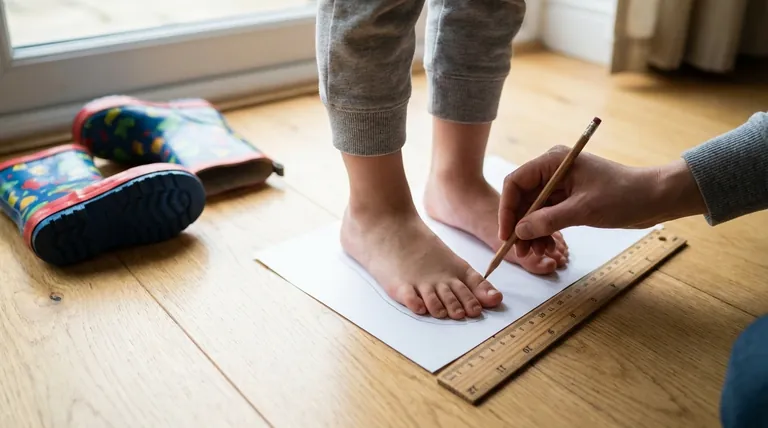
Place the paper on a hard, flat surface. Have your child stand barefoot on the paper.
Carefully trace the complete outline of their foot, keeping the pen or pencil as vertical as possible to avoid measuring under the foot. Repeat this process for the other foot.
Step 3: Measure the Outline
Using your ruler, measure a straight line from the very back of the heel to the tip of the longest toe on each tracing.
Record the longer of the two measurements. This is the number you will use to find their correct boot size.
Understanding the Trade-offs: Growing Room vs. A Secure Fit
While it's tempting to buy a larger size for your child to "grow into," this can create problems. Finding the right balance is key.
The Risk of Oversizing
Wellington boots that are too large can cause a child's foot to slide around, leading to blisters and an unstable footing. This can increase the risk of trips and falls.
Factoring in Socks
Wellies are often worn with thick, warm socks. If this will be the case, consider measuring your child's foot while they are wearing the type of socks they'll typically use with the boots.
This gives you a more realistic measurement for the boot's internal space.
Using the Brand's Sizing Chart
Shoe sizing is not standardized across all brands. A size "9" from one manufacturer may fit differently than a size "9" from another.
Always refer to the specific size chart provided by the Wellington boot brand you intend to purchase. Match your measurement in centimeters or inches to their corresponding size.
Making the Right Choice for Your Needs
Use your accurate measurement to make an informed decision based on how the boots will be used.
- If your child will primarily wear thick winter socks: Measure their feet while they are wearing those socks to ensure you select a size with adequate room.
- If your child is between two sizes: It is generally better to select the slightly larger size to accommodate for growth spurts and thicker socks.
- If you are buying for immediate use with regular socks: Choose the size that most closely corresponds to your measurement to ensure a secure, safe fit from day one.
An accurate measurement is the key to ensuring your child's comfort and safety on every adventure.
Summary Table:
| Step | Key Action | Why It Matters |
|---|---|---|
| 1 | Trace foot on paper while child is standing. | Captures the true, weight-bearing length of the foot. |
| 2 | Measure both feet and use the larger measurement. | Accounts for natural asymmetry between feet. |
| 3 | Always consult the specific brand's size chart. | Shoe sizing is not standardized across brands. |
Need perfectly fitted Wellington boots in bulk? As a large-scale manufacturer, 3515 produces a comprehensive range of durable and comfortable footwear for distributors, brand owners, and bulk clients. Our production capabilities encompass all types of children's shoes and boots, ensuring quality and consistency for your inventory. Contact us today to discuss your sourcing needs!
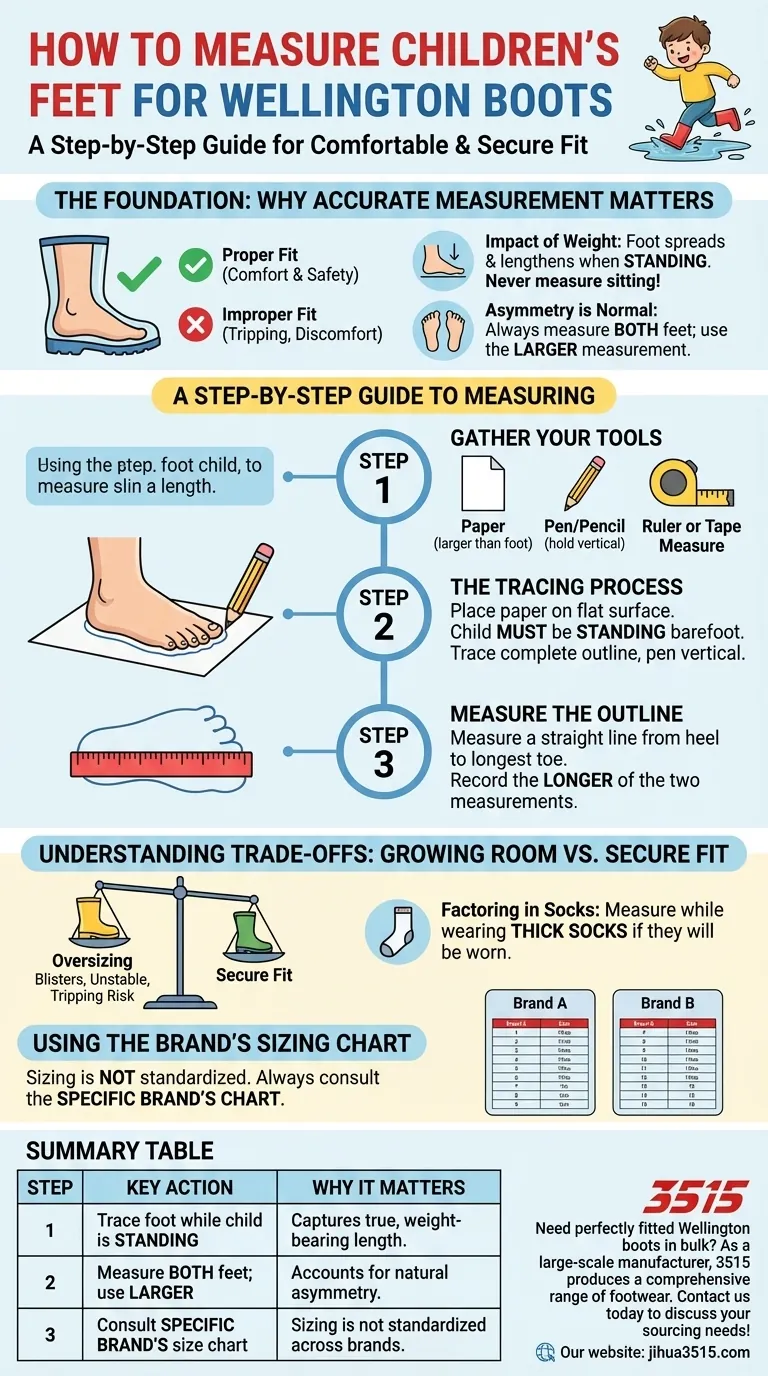
Visual Guide
Related Products
- Durable Waterproof Rain Boots | Custom Manufacturer for Wholesale & Brands
- Durable Goodyear Welt Leather Work Boots for Wholesale & Private Label
- Durable High-Ankle Tactical Boots Wholesale Manufacturer for Custom & Bulk Orders
- Durable Leather High-Ankle Tactical Boots for Wholesale & Custom Manufacturing
- Premium Wholesale Tactical Style Safety Shoes Boots with Quick Lacing
People Also Ask
- What are the main materials for waterproof rain boots? Choose the Right Material for Durability & Comfort
- What is the overall recommendation for choosing rain boot materials? A Guide to Rubber vs. PVC
- How does boot height affect waterproofing? Choose the Right Height for Ultimate Protection
- Why are rain boots more flexible and comfortable than snow boots? The Key Differences Explained
- What are the best types of shoes for different gardening conditions? Find Your Perfect Match.








