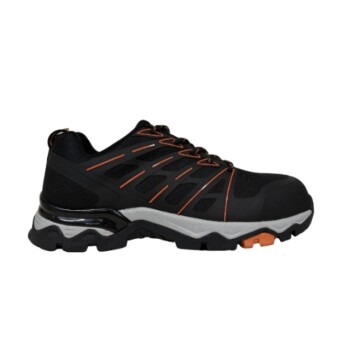
The selection of specialized footwear fundamentally alters the validity of biomechanical testing. By utilizing specific outsole patterns and materials to optimize the friction coefficient, safety shoes and tactical boots provide the necessary grip to execute side-cutting tasks at high intensities (typically 80% or more of maximum speed). This mechanical stability ensures that force transmission between the ground and the body is secure, allowing researchers and practitioners to observe authentic movement patterns and joint loading rather than guarded or compensatory behaviors.
Core Takeaway Professional-grade footwear is not merely a safety precaution; it is a prerequisite for accurate injury risk assessment. Without the high-speed stability provided by specialized grip and rigid structures, test subjects cannot generate the true joint loading forces necessary to expose actual biomechanical vulnerabilities.
The Mechanics of Stability and Force Transmission
Friction Coefficients and Grip
The primary variable introduced by specialized footwear is the friction coefficient. Safety shoes and tactical boots are engineered with specific outsole patterns designed to bite into the surface. This mechanical grip ensures that when a subject plants their foot to change direction, the shoe remains fixed relative to the ground.
Joint Loading and Authentic Data
When footwear lacks adequate traction, the body naturally compensates to prevent slipping. This leads to altered movement strategies that mask underlying risks. By using footwear that guarantees stability, you ensure that force transmission travels up the kinetic chain correctly. This allows for the measurement of true joint loading—the actual stress placed on knees and ankles during an aggressive maneuver.
Enabling High-Intensity Performance
The Importance of the 80% Threshold
To assess injury risk accurately, side-cutting tasks must replicate real-world conditions. This requires subjects to move at 80% or more of their maximum speed. Standard footwear may not provide the confidence required to reach these speeds on specific testing surfaces.
Eliminating Compensatory Deceleration
If a subject fears their footing is insecure, they will instinctively decelerate or widen their cutting angle before the turn. This "safety" adjustment corrupts the data. Specialized footwear removes this hesitation, allowing the subject to attack the turn aggressively. This elicits authentic biomechanical risk characteristics, exposing how the subject moves under actual physical duress.
The Role of Equipment Integration in Assessment
Ensuring Sensor Stability
Modern risk assessment often involves Inertial Measurement Units (IMUs). Tactical and safety footwear often feature rigid structures or integrated fastening capabilities. This ensures there is no relative movement or "sliding" between the sensor and the foot.
Accuracy of Motion Algorithms
For data assessment algorithms, such as Zero Velocity Update (ZUPT), precise detection of the stance phase is critical. The rigid connection provided by specialized boots ensures that the motion data captures actual walking or cutting dynamics. It prevents vibration interference and sensor wobbling, which are common sources of error in less structured footwear.
Understanding the Trade-offs
Rigidity vs. Natural Flexion
While the rigidity of safety shoes protects sensors and ensures stable mounting, it represents a departure from the flexibility of an athletic trainer. The rugged sole structure is excellent for protecting internal components and preventing slips, but it may alter the user's proprioception (ground feel) compared to lighter footwear.
Fatigue Management
High-performance protective footwear is designed to reduce foot fatigue during long shifts through support, but they are generally heavier than standard shoes. While they protect against external hazards (impact, fluids, abrasion), the added weight must be accounted for when assessing endurance-related performance changes over long durations.
Making the Right Choice for Your Goal
To ensure your side-cutting assessments yield valid, actionable data, choose footwear based on your specific testing parameters:
- If your primary focus is Biomechanical Validity: Prioritize footwear with high-friction outsoles that allow subjects to confidently reach >80% max speed without slipping.
- If your primary focus is Sensor Data Accuracy: Select tactical boots with rigid upper structures that eliminate relative motion between the IMU and the foot.
- If your primary focus is Environmental Safety: Ensure the footwear materials offer resistance to specific hazards (fluids, chemicals) present in the testing or work environment.
True injury risk assessment requires the subject to push their limits; the right footwear provides the platform that makes that intensity possible.
Summary Table:
| Factor | Specialized Footwear (Safety/Tactical) | Standard Athletic Footwear |
|---|---|---|
| Friction & Grip | High-coefficient outsole; prevents slipping | Variable; prone to sliding at high speeds |
| Movement Intensity | Enables >80% max speed for valid testing | Often triggers compensatory deceleration |
| Data Integrity | Rigid structure reduces IMU sensor noise | Flexible uppers cause sensor wobble |
| Joint Loading | Captures authentic biomechanical stress | Masks risks via guarded movement patterns |
| Durability | High resistance to impacts and fluids | Limited protection in hazardous zones |
Elevate Your Fleet’s Performance with 3515 Specialized Footwear
At 3515, we understand that specialized footwear is the foundation of both safety and high-stakes performance. As a large-scale manufacturer serving distributors and brand owners globally, we provide the engineering precision required for accurate biomechanical outcomes.
Our flagship Safety Shoes and Tactical Boots series offer the mechanical stability and high-friction grip necessary for elite-level side-cutting tasks, while our comprehensive portfolio—including outdoor, training, and formal shoes—meets diverse bulk requirements.
Partner with a manufacturer that delivers:
- Superior Traction: Optimized outsoles for maximum force transmission.
- Rigid Stability: Ideal for sensor integration and motion accuracy.
- Bulk Scalability: Robust production capabilities for global distributors.
Ready to equip your team with footwear designed for peak performance and safety? Contact us today to discuss your bulk requirements!
References
- Lauren Butler, Sophia Ulman. Concurrent Validity of The Expanded Cutting Alignment Scoring Tool (E-CAST). DOI: 10.26603/001c.87633
This article is also based on technical information from 3515 Knowledge Base .
Related Products
- Premium Suede Sport Safety Shoes for Wholesale & Bulk Orders
- Premium Lightweight Safety Shoes for Wholesale & Bulk Orders
- Premium KPU Injection Athletic Style Safety Shoes
- Advanced KPU Athletic Safety Shoe with Steel Toe Cap Anti-Slip Rotary Lacing System
- Premium Safety Shoes with Rotating Buckle Safety Sneakers
People Also Ask
- What are the primary functions of professional safety shoes? Maximize Safety in Water Supply Confined Spaces
- What industries have specific OSHA footwear requirements? Ensure Compliance & Protect Your Workforce
- What role do specialized safety shoes play in preventing falls? Engineering Stability in Industrial Environments
- What core functions do professional safety shoes serve? Enhance Construction & Industrial Safety Standards
- Why are customized foot sensors or professional safety shoes incorporated into biomechanical testing? Precision Insights