
Proper motorcycle boot maintenance is a straightforward process centered on a consistent routine of cleaning, drying, conditioning, and correct storage. By regularly removing harmful contaminants like dirt and road salt and preserving the boot's materials, you can ensure they last for years while providing optimal protection and comfort.
The core principle of boot maintenance is not just about aesthetics; it's about preserving the structural integrity of the materials. Proper care ensures your boots continue to provide the critical protection, support, and weather resistance you rely on with every ride.
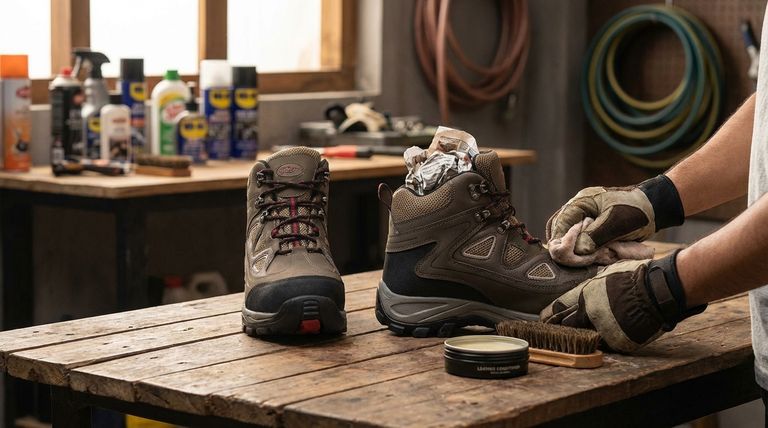
The Foundation: The Post-Ride Ritual
The most crucial habits are the ones you perform immediately after a ride. These simple steps prevent the long-term damage caused by accumulated dirt and moisture.
Step 1: Immediate Cleaning
After every ride, take a moment to wipe your boots down with a damp cloth or soft brush. This removes dirt, mud, and road salt before they can penetrate and degrade the materials.
Road salts are particularly corrosive to both leather and rubber components, so removing them promptly is essential for longevity.
Step 2: Proper Drying
If your boots get wet, resist the temptation to place them near a direct heat source like a radiator or in direct sunlight. This can cause leather to crack and synthetic materials to become brittle.
Instead, stuff the boots with crumbled newspaper or use a dedicated boot dryer on a low or no-heat setting. This allows them to air dry naturally and safely.
Preserving the Materials: Conditioning and Protection
While daily cleaning is fundamental, periodic conditioning is what keeps the materials supple, strong, and weather-resistant over the long haul.
Leather Care: Preventing Cracks
Leather boots require regular treatment with a dedicated leather conditioner or oil. This replenishes moisture that is lost over time, preventing the leather from drying out, stiffening, and cracking.
For brand new boots, allow a break-in period of around 100 hours before applying the first coat of oil or conditioner.
Synthetic and Mixed Materials
For boots made of synthetic textiles, suede, or nubuck, use cleaning and care products specifically designed for those materials. A suede brush or eraser is effective for removing stains from those surfaces. Using leather products on textiles can be ineffective or even damaging.
Waterproofing: Maintaining the Barrier
Even if your boots have a waterproof membrane, the outer material often has a water-repellent coating that wears off over time. Periodically reapplying a suitable waterproofing spray helps water bead up and roll off, preventing the boot from becoming waterlogged and heavy.
Common Pitfalls to Avoid
Mistakes in boot care can often cause more damage than simple neglect. Understanding what not to do is as important as knowing what to do.
The Danger of Direct Heat
As mentioned, this is the most common and damaging mistake. Direct, high heat fundamentally changes the structure of leather and can delaminate glues and synthetic layers, ruining the boot.
Using the Wrong Products
Never use harsh chemical cleaners on your boots. Stick to mild soap and water if necessary, but a damp cloth is usually sufficient for regular cleaning. Always match your conditioning and waterproofing products to the boot's specific material.
Neglecting Regular Inspection
Maintenance is the perfect time to inspect your gear. Regularly check the soles for significant wear, look for splitting seams, and ensure zippers, buckles, and other closures are functioning correctly. This turns routine care into a critical safety check.
Making the Right Choice for Your Goal
Your maintenance routine can be adapted to your riding frequency to ensure maximum effectiveness without being burdensome.
- If you are a daily commuter: Make a quick wipe-down and proper overnight drying a non-negotiable part of your post-ride routine.
- If you are a weekend rider: Perform a more thorough cleaning and inspection after your rides, and ensure you store the boots properly during the week.
- If you are storing boots for the off-season: Give them a final deep clean and conditioning, insert boot trees to maintain their shape, and store them in a cool, dry place away from sunlight.
Consistent care doesn't just make your boots last longer; it ensures they perform to their full protective capability when it matters most.
Summary Table:
| Maintenance Step | Key Action | Purpose |
|---|---|---|
| Post-Ride Cleaning | Wipe with damp cloth/brush | Remove dirt, mud, and corrosive road salts |
| Proper Drying | Air dry with newspaper; avoid direct heat | Prevent leather cracking and material damage |
| Conditioning | Apply leather conditioner or textile-specific products | Keep materials supple and prevent cracking |
| Waterproofing | Reapply suitable spray periodically | Maintain water resistance and comfort |
| Inspection | Check soles, seams, and closures regularly | Ensure ongoing safety and functionality |
Need Durable Motorcycle Boots Built to Last?
As a large-scale manufacturer, 3515 produces a comprehensive range of high-performance footwear for distributors, brand owners, and bulk clients. Our production capabilities encompass all types of motorcycle boots, engineered for superior protection and longevity. Proper maintenance starts with quality construction.
Contact our expert team today to discuss your footwear needs and discover how we can deliver reliable, high-quality boots for your customers.
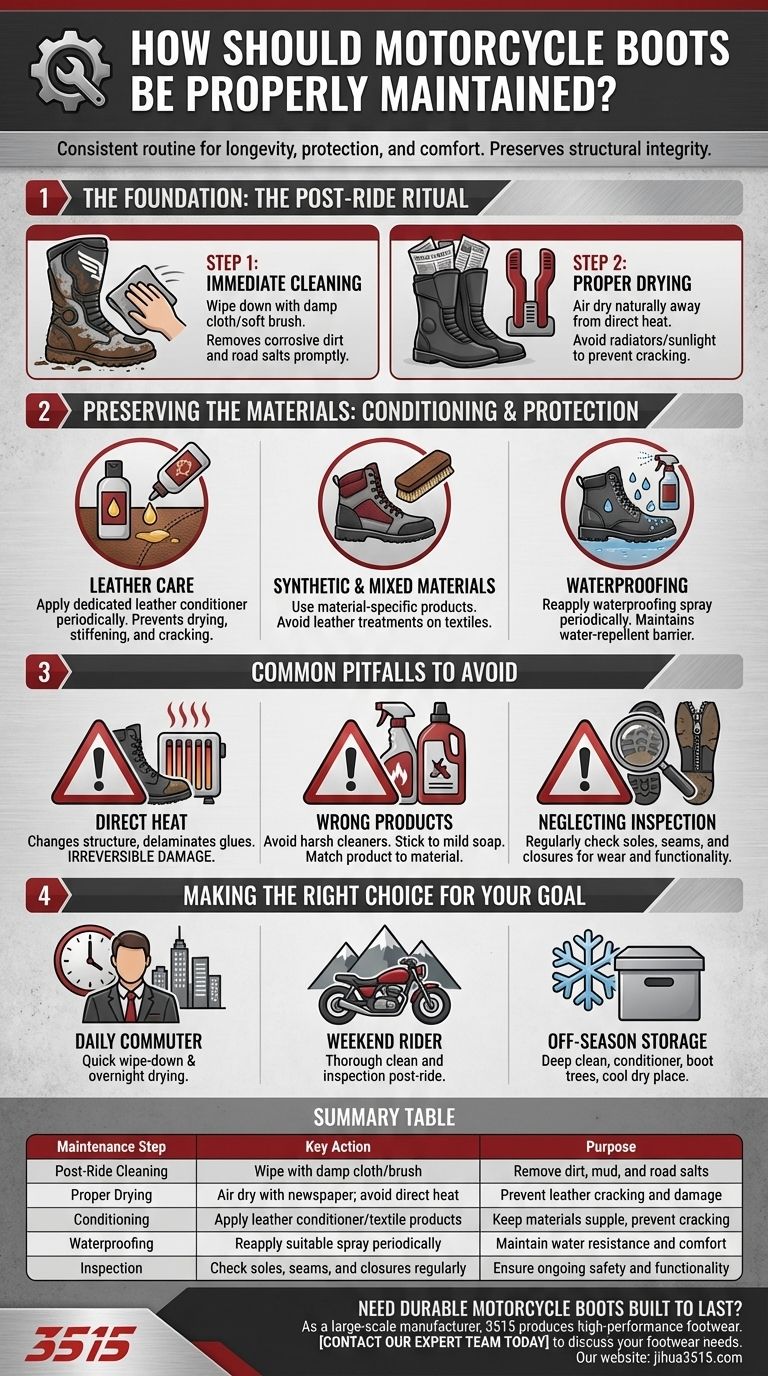
Visual Guide
Related Products
- Wholesale Tactical Boots High-Traction & Reflective for Bulk & Brand Orders
- High Performance Fire-Retardant Waterproof Safety Boots
- Durable Goodyear Welt Leather Work Boots for Wholesale & Private Label
- Wholesale High-Traction Camo Boots - Custom Manufacturer for Brands
- Heavy-Duty Waterproof Nubuck Safety Boots Safety Shoes for Bulk Supply
People Also Ask
- How do tactical boots protect against injuries? Discover the Integrated Safety System
- What makes tactical boots valuable for specialized use? Essential Protection & Performance for High-Stakes Roles
- What are the structural advantages of durable tactical boots? Elevate Performance in Rugged & Non-Standard Terrains
- How do high-performance tactical boots and training shoes support performance? Enhance Safety & Energy for Professionals
- How do combat boots and tactical boots differ in design and purpose? Choose the Right Boot for Your Mission



















