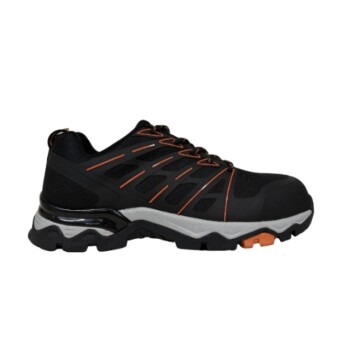
Zero Waste Pattern Cutting (ZWPC) technology fundamentally transforms the economics of safety footwear production by using optimized nesting algorithms and precision cutting to maximize material yield. By tightening the layout of pattern pieces during the raw material processing stage, this technology drastically reduces scrap, leading to an immediate decrease in the volume of raw materials required to produce the same number of work boots.
Traditional manufacturing often accepts material waste as an unavoidable overhead. ZWPC reverses this approach by utilizing algorithmic precision to minimize or eliminate offcuts, simultaneously lowering procurement costs and satisfying rigorous environmental sustainability requirements.
The Mechanics of Cost Reduction
Optimized Nesting Algorithms
The core driver of ZWPC efficiency is the use of advanced software to determine the most efficient layout for pattern pieces.
Unlike manual placement, these optimized nesting algorithms calculate the mathematical ideal for fitting irregular shoe components together.
This ensures that every available square inch of the raw material sheet is utilized effectively, leaving minimal gaps between the cut pieces.
Maximizing High-Value Materials
In the context of safety shoes and work boots, material waste is exceptionally costly due to the nature of the components used.
These products require high-value materials such as specialized leathers and abrasion-resistant fibers to meet safety standards.
ZWPC significantly increases the utilization rate of these expensive inputs, ensuring that your budget is spent on the final product rather than on scrap material sent to the landfill.
Strategic Efficiency and Sustainability
Precision Cutting Processes
Efficiency is not just about planning; it is about execution.
ZWPC pairs nesting software with precision cutting processes to translate digital efficiency into physical reality.
This reduces errors and re-works during the cutting stage, streamlining the workflow from raw material to assembly.
Meeting Environmental Standards
Beyond the balance sheet, manufacturers are increasingly pressured to meet environmental sustainability requirements.
By minimizing waste at the source, ZWPC allows manufacturers to align with these standards naturally.
This reduces the logistical and financial burden of waste disposal, turning regulatory compliance into a byproduct of efficient production.
Understanding the Operational Requirements
The Necessity of Algorithmic Reliance
Adopting ZWPC requires a shift from traditional manual expertise to a reliance on digital calculation.
To achieve the "zero waste" metric, the production line must strictly adhere to the layouts generated by the nesting algorithms.
Any deviation during the cutting process can negate the efficiency gains, making strict adherence to the precision cutting process mandatory.
Making the Right Choice for Your Production
To determine how to best integrate ZWPC into your manufacturing workflow, consider your primary operational objectives.
- If your primary focus is Cost Reduction: Prioritize ZWPC for your most expensive material lines, such as premium leathers and technical fibers, to see the fastest ROI.
- If your primary focus is Sustainability: Leverage ZWPC data to quantify your waste reduction, using these metrics to certify your products against environmental standards.
By treating material utilization as a precise science rather than an estimate, you turn the cutting room into a center of profit rather than a source of waste.
Summary Table:
| Feature | Traditional Cutting | Zero Waste Pattern Cutting (ZWPC) |
|---|---|---|
| Material Utilization | High scrap/waste levels | Maximum yield; minimal offcuts |
| Cost Management | Higher procurement due to waste | Significant reduction in material spend |
| Nesting Method | Manual/Sub-optimal placement | Advanced algorithmic optimization |
| Sustainability | High environmental impact | Meets strict ESG/environmental standards |
| Execution | Prone to human error | High-precision digital cutting |
| Best For | Standard low-cost materials | High-value leathers & technical fibers |
Maximize Your Profit Margins with 3515’s Advanced Manufacturing
As a large-scale manufacturer serving distributors and brand owners, 3515 offers comprehensive production capabilities for all footwear types, anchored by our flagship Safety Shoes series. Our integration of Zero Waste Pattern Cutting (ZWPC) technology ensures that your bulk orders are produced with maximum efficiency and minimum waste, directly lowering your procurement costs while upholding the highest environmental standards.
Whether you need work and tactical boots, outdoor shoes, training sneakers, or premium Dress & Formal shoes, 3515 provides the scale and precision to meet your diverse requirements. Contact us today to optimize your supply chain and leverage our technical expertise for your brand's success.
References
- Liana Biliakovych, Alina Vovk. Genesis, Features and Prospects for the Development of Digital Fashion. DOI: 10.1515/pdtc-2023-0043
This article is also based on technical information from 3515 Knowledge Base .
Related Products
- Premium Suede Sport Safety Shoes for Wholesale & Bulk Orders
- Premium Lightweight Safety Shoes for Wholesale & Bulk Orders
- Wholesale Anti-Smash & Puncture-Proof Safety Shoes Custom Manufacturing for Brands
- Premium KPU Injection Athletic Style Safety Shoes
- Premium Safety Shoes with Rotating Buckle Safety Sneakers
People Also Ask
- What industries have specific OSHA footwear requirements? Ensure Compliance & Protect Your Workforce
- What are the primary functions of professional safety shoes? Maximize Safety in Water Supply Confined Spaces
- What role do specialized safety shoes play in preventing falls? Engineering Stability in Industrial Environments
- How do gait analysis algorithms ensure accuracy in footwear? Master Step Length Precision for Boots & Sneakers
- How does professional industrial cleaning equipment maintain the performance stability of safety shoes? Pro Maintenance