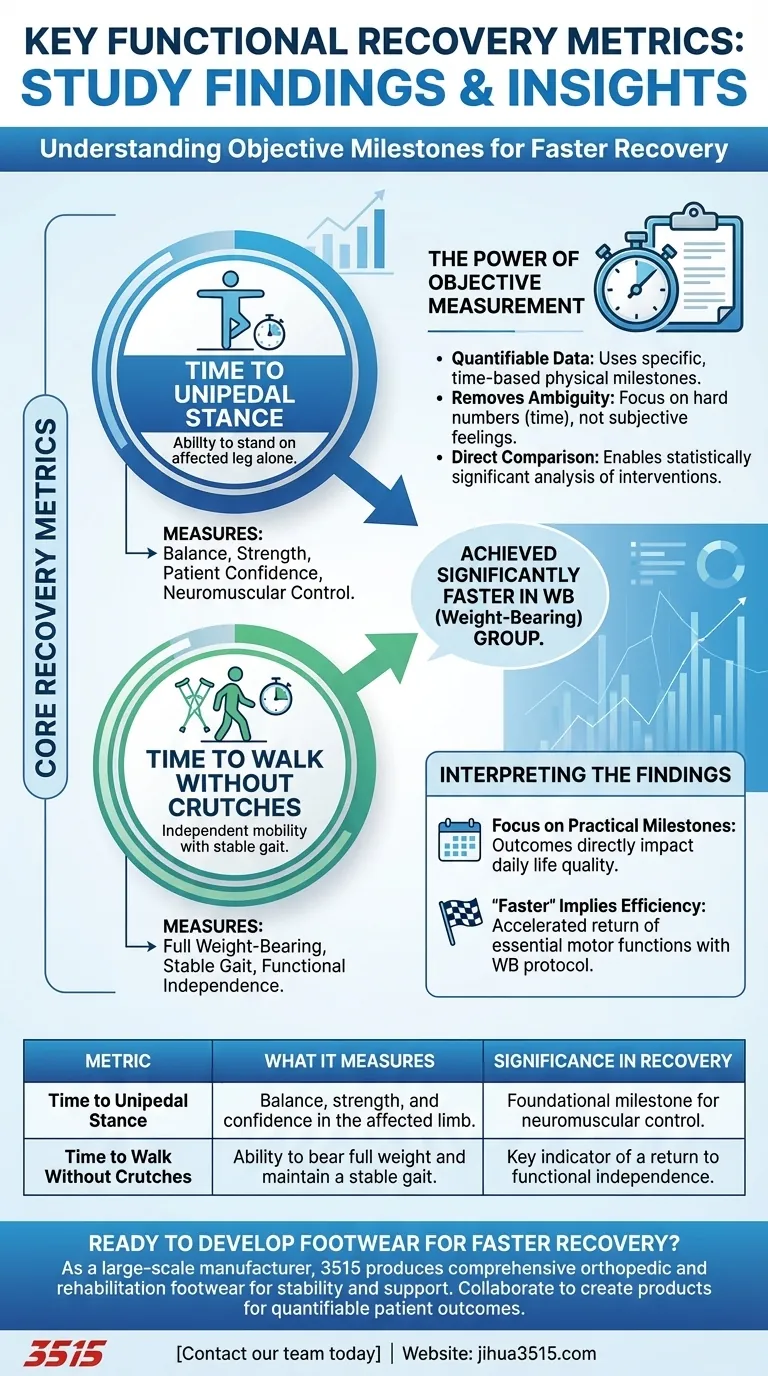
In this study, the key functional recovery metrics were the time required for a patient to stand on their affected leg alone (unipedal stance) and the time it took for them to walk without the aid of crutches. Both of these milestones were achieved significantly faster in the Weight-Bearing (WB) group.
The core insight is that recovery was not measured by subjective feelings of improvement, but by two specific, time-based physical milestones. These metrics provide an objective way to quantify how quickly a patient regains balance and independent mobility.
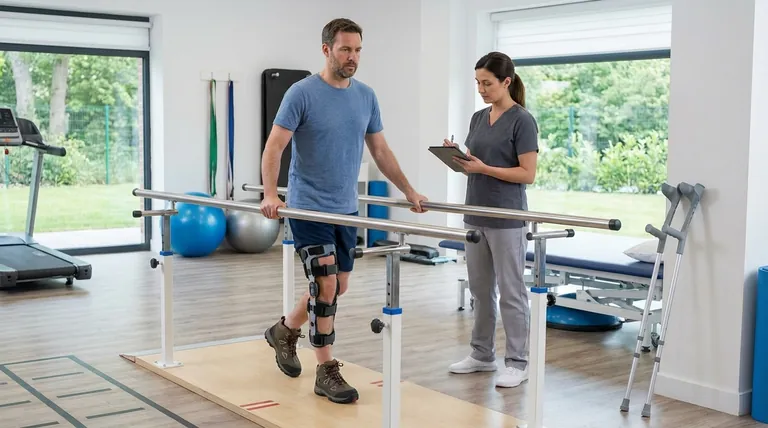
Deconstructing the Core Metrics
To understand the study's findings, we must first understand what each metric represents. These are not arbitrary tests; they are chosen because they signal critical stages of functional recovery.
Time to Unipedal Stance
A unipedal stance is the ability to stand on one leg. Measuring the time until a patient could do this on their affected side is a direct assessment of restored neuromuscular control.
This metric specifically gauges progress in balance, strength, and patient confidence in the injured limb. It is a foundational step before more complex movements can be safely attempted.
Time to Walk Without Crutches
Progressing to walking without crutches marks a major milestone in rehabilitation. It signifies a return to a more normal and independent level of mobility.
This metric evaluates a patient's ability to maintain a stable gait and bear their full weight during movement. Achieving this sooner indicates a more rapid return to functional independence and daily activities.
The Importance of Objective Measurement
The study's focus on "time to achieve" is a deliberate choice designed to remove ambiguity from the assessment of recovery.
Quantifying the Recovery Timeline
Using time as the primary variable provides a clear, quantifiable, and objective data point. Unlike a pain scale or a patient's self-reported feelings, time is a hard number that can be compared directly between individuals and groups.
A Direct Comparison of Interventions
Because these metrics are objective, they allow for a statistically significant comparison between different rehabilitation protocols. The finding that the WB group achieved these milestones in a "significantly shorter" time provides strong evidence for the effectiveness of that intervention.
How to Interpret These Findings
Understanding these metrics allows you to see the study's conclusion with greater clarity. The choice of measurement directly shapes the results.
The Focus is on Practical Milestones
The study prioritized functional outcomes that directly impact a patient's quality of life. Regaining the ability to stand and walk independently are tangible goals that matter most in day-to-day living.
"Faster" Implies a More Efficient Protocol
The key takeaway is not just that patients recovered, but that one group recovered more efficiently. The shorter timeframes in the WB group suggest that their rehabilitation protocol accelerated the return of essential motor functions.
Applying These Insights
When evaluating recovery, whether in a clinical or research context, the nature of the metrics used is paramount.
- If your primary focus is foundational stability: The unipedal stance is a crucial early-stage benchmark for assessing balance and strength in the affected limb.
- If your primary focus is overall functional independence: The time to walk without crutches serves as a more comprehensive indicator of a patient's readiness to resume normal life activities.
Ultimately, using clear, time-based functional milestones provides an unbiased roadmap for tracking and validating the rehabilitation process.
Summary Table:
| Metric | What It Measures | Significance in Recovery |
|---|---|---|
| Time to Unipedal Stance | Balance, strength, and confidence in the affected limb. | Foundational milestone for neuromuscular control. |
| Time to Walk Without Crutches | Ability to bear full weight and maintain a stable gait. | Key indicator of a return to functional independence. |
Ready to develop footwear that supports faster functional recovery?
As a large-scale manufacturer, 3515 produces a comprehensive range of orthopedic and rehabilitation-focused footwear for distributors, brand owners, and bulk clients. Our production capabilities encompass all types of shoes and boots designed to provide the stability and support patients need to achieve critical milestones like unipedal stance and independent walking.
Let's collaborate to create products that contribute to quantifiable, positive patient outcomes. Contact our team today to discuss your specific needs.
Visual Guide