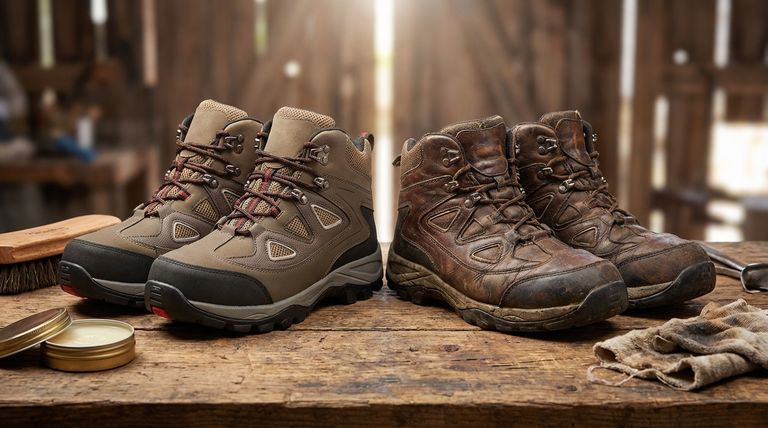
Over time, the leather of packer boots transforms from a uniform material into a unique testament to your work and life. It doesn't simply wear out; it evolves by developing a rich surface sheen, deeper color, and distinct character lines known as a patina. This aging process is what turns a functional tool into a personalized, long-term investment.
The evolution of packer boot leather is not a process of degradation but one of character development. Proper care guides this transformation, turning a new pair of boots into a durable tool that tells a story.
The Journey from New to Seasoned Leather
The change in your packer boots is a gradual and rewarding process. It begins the first day you wear them and continues for the life of the boot, with each stage adding more character.
The Initial Break-In Period
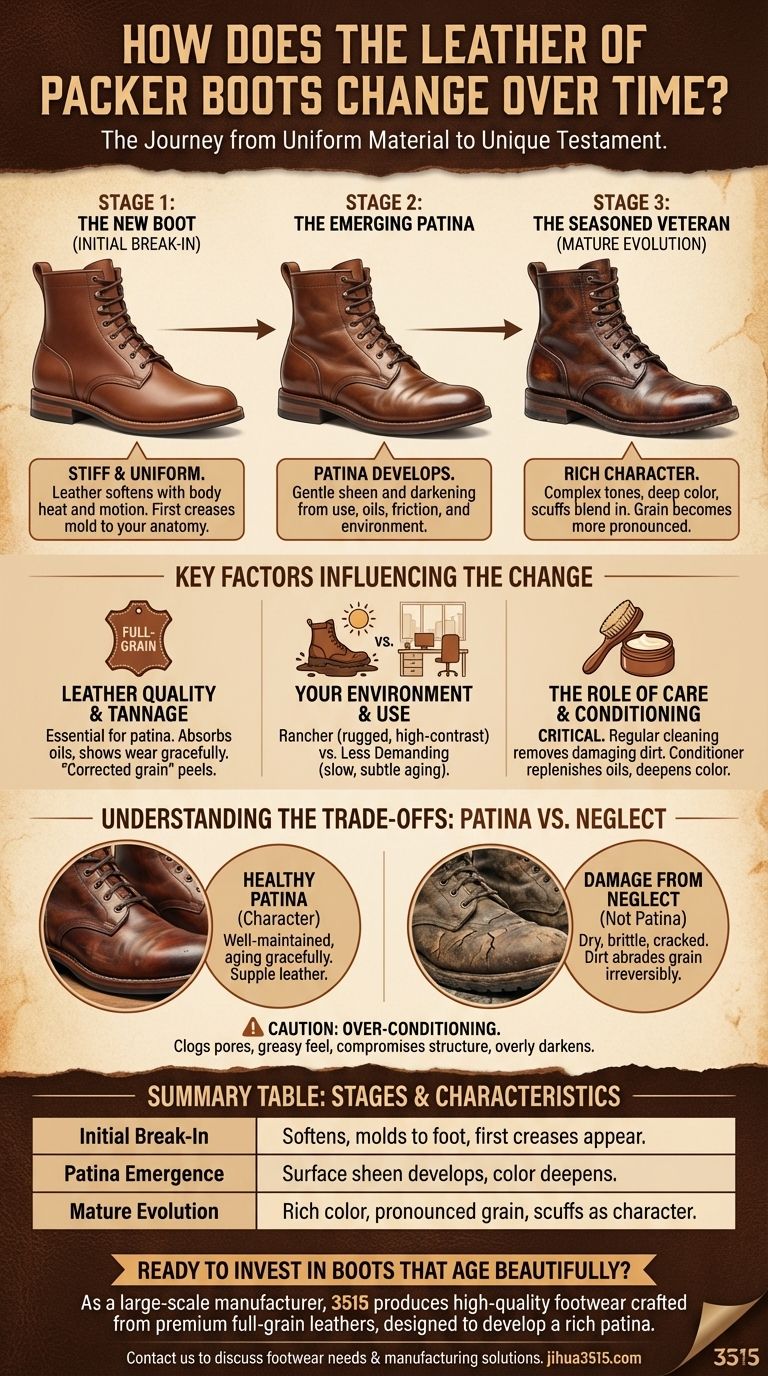
The journey starts with the leather being stiff and uniform. As you wear the boots, your body heat and the natural motion of your foot cause the leather to soften and mold precisely to your anatomy. This creates the first unique features: creases and folds across the vamp and ankle that are yours alone.
The Emergence of Patina
Patina is the gentle sheen and darkening that develops on high-quality leather through use. It's caused by a combination of factors, including sunlight, the natural oils from your hands, friction from movement, and the absorption of dirt and moisture from your environment.
Color and Texture Evolution
Lighter-colored leathers will darken and deepen into richer, more complex tones. Scuffs and small scratches, rather than appearing as damage, will blend into the overall character, often darkening as they absorb waxes and conditioners. The grain of the leather becomes more pronounced and visually interesting.
Key Factors Influencing the Change
Not all boots will age the same way. The final result is a direct reflection of the leather's quality, your environment, and how you care for the boots.
Leather Quality and Tannage
Full-grain leather is essential for developing a beautiful patina. As the highest quality grade, its surface is intact, allowing it to absorb oils and polish while gracefully showing wear. Lower-quality "corrected grain" leathers may simply flake or peel over time.
Your Environment and Use
The story your boots tell is written by your daily life. The boots of a rancher, exposed to sun, dirt, and moisture, will develop a rugged, high-contrast patina. In contrast, boots worn in a less demanding environment will age more slowly and subtly.
The Role of Care and Conditioning
How you maintain your boots is the most critical factor. Regular cleaning removes abrasive dirt that can damage fibers, while applying a quality leather conditioner replenishes essential oils. This keeps the leather supple, prevents cracking, and deepens the color, accelerating the development of a rich patina.
Understanding the Trade-offs: Patina vs. Neglect
It is crucial to distinguish between a well-earned patina and simple damage from neglect. They are not the same thing.
The Fine Line Between Character and Damage
A healthy patina is the mark of well-maintained leather that is aging gracefully. Neglect, however, leads to leather that is dry, brittle, and prone to cracking. Dirt and grime caked onto the surface will permanently abrade the grain, causing irreversible damage, not character.
The Risk of Over-Conditioning
While essential, too much conditioner can be harmful. Over-saturating the leather can clog its pores, making it feel greasy and preventing it from breathing. It can also overly soften the leather, potentially compromising its structure, and will darken the color dramatically and sometimes unevenly.
How to Cultivate Your Ideal Patina
Your maintenance routine should align with the look you want to achieve and the life of the boot you want to preserve.
- If your primary focus is a rich, dark patina: Embrace daily wear and condition the boots every few months with a quality oil or wax-based product to nourish the leather and deepen its color.
- If your primary focus is preserving the original color: Clean your boots frequently and use a cream-based conditioner with minimal oils, as these are less likely to significantly darken the leather.
- If your primary focus is maximum longevity: Prioritize cleaning off mud, salt, or chemicals immediately. Condition the boots only when they look and feel dry, rather than on a fixed schedule.
Ultimately, the way your packer boots age is a direct result of the life you lead in them, creating a truly personal and functional piece of gear.
Summary Table:
| Stage of Aging | Key Characteristics |
|---|---|
| Initial Break-In | Leather softens, molds to foot, first creases appear. |
| Patina Emergence | Surface sheen develops, color deepens from oils, sun, and use. |
| Mature Evolution | Rich, complex color; pronounced grain; scuffs blend into character. |
| Factors Influencing Change | Leather quality, environment, and maintenance routine. |
Ready to invest in packer boots that will age beautifully with you?
As a large-scale manufacturer, 3515 produces a comprehensive range of high-quality, durable footwear for distributors, brand owners, and bulk clients. Our production capabilities encompass all types of work boots and packer boots crafted from premium full-grain leathers, designed to develop a rich, unique patina over years of hard use.
Let us help you provide your customers with boots that aren't just tools, but long-term investments that tell a story.
Contact 3515 today to discuss your footwear needs and manufacturing solutions.
Visual Guide
Related Products
- Durable Leather Work Boots for Wholesale & Custom Manufacturing
- Durable Leather Work Boots for Wholesale & Custom OEM Manufacturing
- Durable Leather Work Boots Wholesale Manufacturer & Custom Factory
- Premium Waterproof High-Cut Industrial Safety Boots for Wholesale and Bulk Orders
- Wholesale Durable Mid-Cut Tactical Boots for Custom & Private Label Brands
People Also Ask
- What is the difference between full-grain and top-grain leather? Premium Material Guide for Boot Manufacturers
- What are the common workplace hazards that can be mitigated with the right work boots? Protect Your Workforce
- What are the common foot issues workers face due to uncomfortable work boots? Prevent Pain & Deformities
- What are the advantages of leather versus synthetic work boots? A Guide to Choosing the Right Material
- What are the key components of modern work boots? Engineered for Ultimate Durability and Comfort