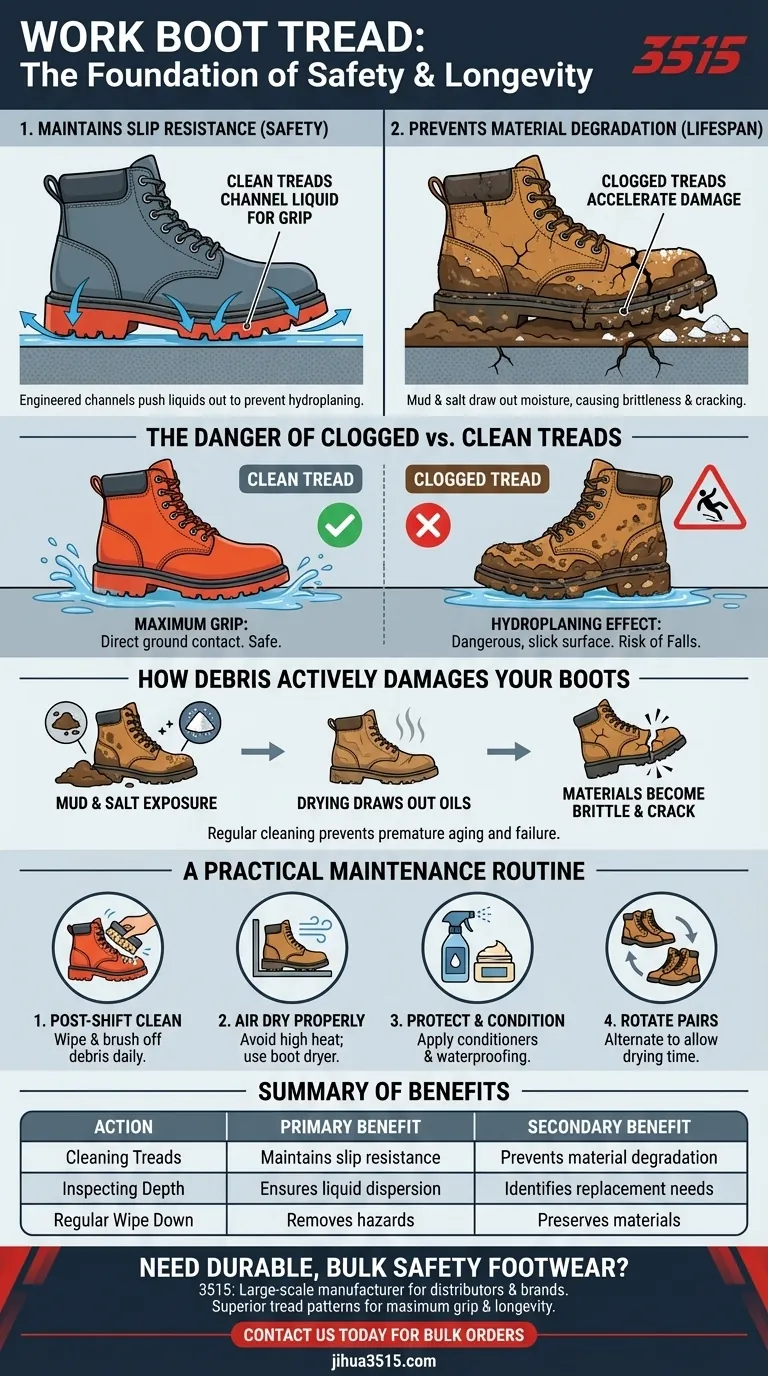
At its core, checking and cleaning the tread on your work boots is a critical practice for two fundamental reasons: it directly maintains the boot's slip resistance for your safety and prevents material degradation to extend the lifespan of your investment. Clogged treads cannot channel away liquids, turning a high-traction sole into a dangerous, slick surface.
The engineered channels in your boot's tread are designed to push liquids out from under your foot, ensuring the sole makes direct contact with the ground. When these channels are packed with mud, debris, or snow, this function is completely negated, dramatically increasing the risk of a slip-and-fall accident.
The Critical Role of Tread in Slip Resistance
A work boot's tread is not just for style; it's an engineered safety system. Understanding how it functions reveals why keeping it clean is non-negotiable for anyone working on potentially slick surfaces.
How Clean Treads Maintain Grip
Think of your boot's sole like the tire on a car. The deep grooves and patterns, known as treads or cleats, are designed to create pathways.
When you step on a wet or oily surface, these channels aggressively push the liquid out from underneath the sole. This allows the solid parts of the tread to make firm, direct contact with the ground, providing maximum grip.
The Danger of Clogged Treads
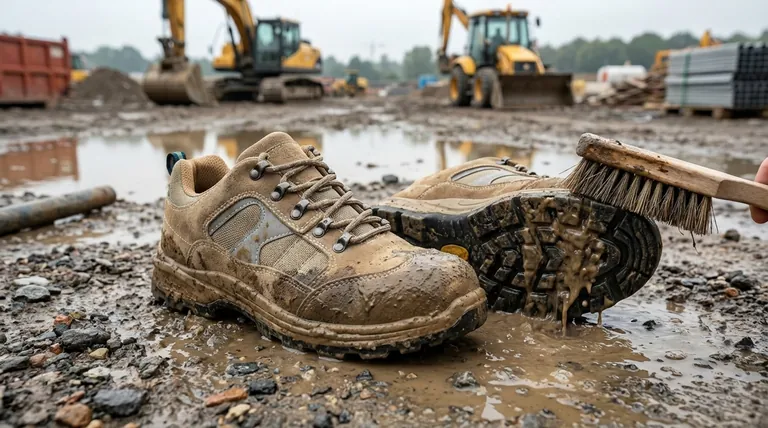
When the tread is packed with mud, gravel, or snow, these critical channels are filled in. This effectively creates a smooth, flat bottom on your boot.
Instead of channeling liquid away, a clogged sole traps a layer of liquid underneath it. This creates a hydroplaning effect, where your foot glides over the surface with little to no friction, leading to a sudden and often serious fall.
Why Tread Depth is Also Key
The same principle applies to worn-out treads. Even if a boot is clean, a sole with insufficient tread depth no longer has the necessary channels to disperse liquids.
Checking your tread involves looking for both debris and excessive wear. A worn-down tread is just as hazardous as a dirty one.
How Debris Actively Damages Your Boots
Beyond the immediate safety risk, neglecting your boot treads accelerates their destruction. The materials that get stuck in the soles can actively degrade the boot itself.
The Impact of Mud and Salt
Substances like mud and, more critically, winter de-icing salt are destructive to boot materials. As they dry, they draw essential moisture and oils out of both the leather uppers and the rubber soles.
From Dryness to Disintegration
This loss of moisture makes the materials brittle. Over time, this leads to cracking, splitting, and the eventual disintegration of the sole.
Regularly cleaning this debris off your boots isn't just about appearance; it's the most effective way to prevent premature aging and failure of the materials.
A Practical Maintenance Routine
Maintaining your boots doesn't have to be a major chore. A simple, consistent routine is all that's required to ensure safety and longevity.
Post-Shift Cleaning
After working in wet, snowy, or muddy conditions, take a moment to wipe the boots down with a damp cloth and use a stiff brush to clear the treads.
The Importance of Proper Drying
Always allow your boots to air dry completely. Forcing them to dry with high heat can damage leather and adhesives.
Using a boot dryer is an excellent way to speed up the process safely while also preventing the growth of odor-causing bacteria.
Long-Term Protection
To get the most out of your boots, consider rotating between two pairs. This gives each pair ample time to dry and recover, reducing overall wear and tear.
Periodically applying appropriate conditioners and waterproofing sprays will also help preserve the materials against the elements.
Making the Right Choice for Your Goal
Ultimately, boot maintenance is about protecting yourself and your investment. How you prioritize it depends on your primary concern.
- If your primary focus is workplace safety: Make a quick tread inspection a non-negotiable daily habit before starting your shift to prevent slips.
- If your primary focus is maximizing boot lifespan: View regular cleaning as the single most important action to protect your boots from material breakdown.
Consistent care transforms your work boots from a disposable expense into a reliable piece of long-term professional equipment.
Summary Table:
| Action | Primary Benefit | Secondary Benefit |
|---|---|---|
| Cleaning Treads | Maintains slip resistance for safety | Prevents material degradation |
| Inspecting Tread Depth | Ensures proper liquid dispersion | Identifies when replacement is needed |
| Regular Post-Shift Wipe Down | Removes immediate debris and hazards | Preserves leather and rubber materials |
Need Durable, High-Traction Work Boots for Your Team?
As a large-scale manufacturer, 3515 produces a comprehensive range of safety footwear for distributors, brand owners, and bulk clients. Our production capabilities encompass all types of durable work shoes and boots designed with superior tread patterns for maximum grip and longevity.
Contact us today to discuss your specific needs and discover how our reliable footwear can enhance workplace safety and provide long-term value for your customers.
Visual Guide
Related Products
- Durable Leather Work Boots for Wholesale & Custom Manufacturing
- Durable Leather Work Boots for Wholesale & Custom OEM Manufacturing
- Durable Leather Work Boots Wholesale Manufacturer & Custom Factory
- Durable Leather Moc Toe Work Boots for Wholesale & Custom Manufacturing
- Wholesale Leather Work Boots with Customizable Wedge Sole for Brands
People Also Ask
- What is the difference between full-grain and top-grain leather? Premium Material Guide for Boot Manufacturers
- What are the common workplace hazards that can be mitigated with the right work boots? Protect Your Workforce
- What are the common foot issues workers face due to uncomfortable work boots? Prevent Pain & Deformities
- What are the advantages of leather versus synthetic work boots? A Guide to Choosing the Right Material
- What are the key components of modern work boots? Engineered for Ultimate Durability and Comfort