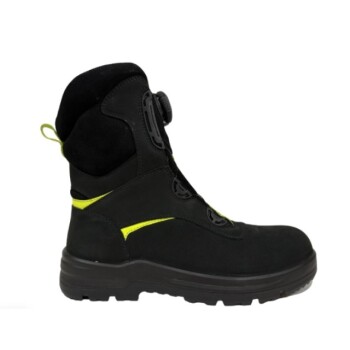
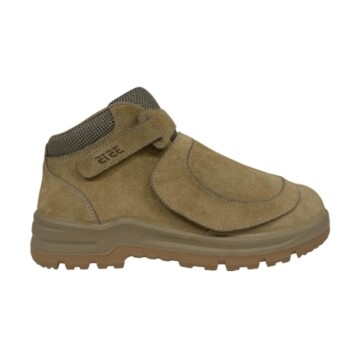
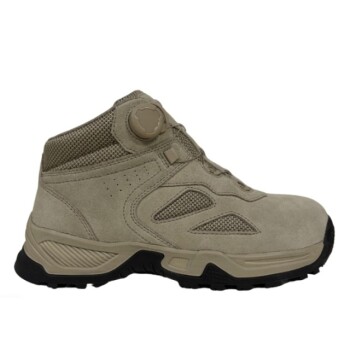
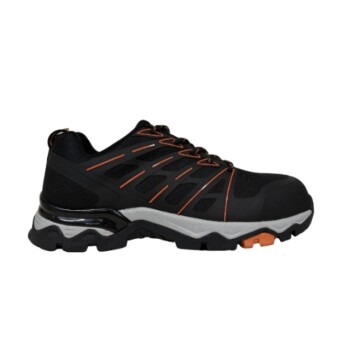
Puncture-resistant midsoles function as an integrated physical shield. Located within the sole structure, these barriers—crafted from steel or high-strength composites—arrest the momentum of sharp hazards like metal scrap, solidified welding slag, or stray nails before they can breach the shoe's interior. This engineered layer ensures that underfoot dangers in a welding shop cannot penetrate to cause mechanical trauma to the foot.
In welding environments, the floor is frequently scattered with unseen hazards such as iron scraps and cooling slag. A puncture-resistant midsole effectively turns the bottom of the foot into a fortified surface, neutralizing the risk of penetration injuries without compromising the flexibility required for active work.
The Mechanics of Protection
The Physical Barrier
The core function of a puncture-resistant midsole is to act as an impenetrable wall between the ground and the worker's foot.
Whether made of steel or composite materials, this layer is embedded within the shoe specifically to stop sharp objects from piercing the sole.
Defense Against Welding-Specific Hazards
Welding workshops present unique threats beyond standard nails or screws.
These midsoles are engineered to resist penetration from solidified welding slag, iron scraps, and sharp metal debris generated during heavy metal processing.
Preserving Skin Integrity
In complex industrial environments, minor foot traumas can lead to non-healing ulcers or infection.
By blocking sharp object penetration, these midsoles serve as a primary defense mechanism, maintaining the skin integrity of the foot against hidden debris.
Material Composition and Performance
Steel Midsoles
Traditionally, puncture resistance is achieved using a thin plate of steel.
This material provides robust, reliable protection against strong upward forces and sharp, rigid objects found in heavy industrial settings.
Composite Midsoles
Modern safety footwear often utilizes puncture-resistant composite midsoles.
These feature high-strength fiber structures that offer protection levels equivalent to steel but are significantly lighter.
Flexibility and Toughness
Regardless of the material, the midsole is engineered to maintain the shoe's overall flexibility.
This ensures that while the bottom of the shoe is tough enough to stop a metal shard, it remains pliable enough to allow for normal walking mechanics.
Understanding the Trade-offs
Weight and Fatigue
Adding a puncture-resistant layer inevitably adds mass to the footwear.
While steel offers proven protection, it can contribute to heavier footwear, potentially increasing wearer fatigue over long shifts.
Material Selection Limitations
Choosing the wrong material for the environment can impact comfort.
Composite midsoles are designed to possess better fatigue resistance than traditional materials, making them a superior choice for workers who are on their feet for extended periods.
Making the Right Choice for Your Goal
Selecting the correct safety footwear requires balancing the level of hazard with the need for endurance.
- If your primary focus is maximum fatigue reduction: Prioritize safety shoes with composite midsoles, as they offer equivalent protection to steel while being significantly lighter.
- If your primary focus is comprehensive hazard defense: Ensure the footwear combines the puncture-resistant midsole with reinforced steel toes and electrical insulation to cover falling objects and leakage risks.
The most effective safety shoe is one that provides an unyielding barrier against debris while remaining comfortable enough to wear for the entire shift.
Summary Table:
| Feature | Steel Midsoles | Composite Midsoles |
|---|---|---|
| Material | High-strength Steel Plate | Advanced Synthetic Fibers |
| Protection Level | Heavy-duty Penetration Defense | Equivalent to Steel (Standardized) |
| Weight | Heavier, may cause fatigue | Lightweight for all-day comfort |
| Flexibility | Rigid, less pliable | High flexibility for active movement |
| Best Use Case | Heavy industrial construction | Long shifts & high-mobility roles |
Secure Your Workforce with Premium Protective Footwear
As a large-scale manufacturer serving distributors and brand owners, 3515 offers comprehensive production capabilities for all footwear types, anchored by our flagship Safety Shoes series. Our puncture-resistant technology is specifically designed to neutralize industrial hazards like welding slag and metal debris while maintaining superior comfort.
Whether you need robust steel-plate protection or lightweight composite fiber midsoles, our extensive portfolio—covering work and tactical boots, outdoor shoes, training shoes, and sneakers—is built to meet your diverse bulk requirements.
Partner with 3515 today to elevate your product line with certified safety standards. Contact us now to discuss your custom manufacturing needs!
References
- Muammar Kadhafi. Evaluation of the Use of Personal Protective Equipment in the Welding Process at the Arjasa District Welding Workshop. DOI: 10.62012/collaborate.v1i1.8
This article is also based on technical information from 3515 Knowledge Base .
Related Products
- Wholesale Durable Safety Boots | Custom Steel Toe & Puncture-Resistant Manufacturing
- Athletic Safety Shoes with Dial Closure & Steel Toe for Wholesale & Custom Manufacturing
- Wholesale Anti-Smash & Puncture-Proof Safety Shoes Custom Manufacturing for Brands
- Wholesale Durable Breathable Safety Boots Custom OEM Manufacturer
- Premium High-Cut Waterproof Safety Boots Manufacturing & Wholesale Solutions
People Also Ask
- What are the consequences of not wearing safety boots? Protect Your Finances and Career
- What makes durable safety boots? The Ultimate Guide to Long-Lasting Work Footwear
- Why is proper storage important for safety boots? Preserve Protection and Extend Lifespan
- What materials are commonly used for outsoles in safety boots? A Guide to Durability, Grip, and Comfort
- What are the key features of safety boots? Essential Protection for Hazardous Workplaces