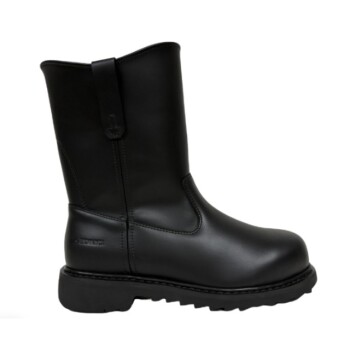
The longevity of motorcycle footwear is fundamentally determined by the precision of the boot toe profile and the strategic integration of a reinforced shifter patch. A slim toe design allows for seamless clearance under the gear lever, reducing mechanical stress on the boot’s structure, while a dedicated shifter patch on the left boot acts as a sacrificial barrier against the abrasive friction of repetitive gear changes. These elements work in tandem to prevent premature material failure, ensuring the footwear maintains its protective integrity over thousands of miles.
For high-volume distributors and brand owners, the design of the toe and shifter patch is a critical technical differentiator that extends the product lifecycle by five to ten times compared to standard footwear. Superior engineering in these high-wear zones is the hallmark of enterprise-level manufacturing.
Engineering for High-Volume Durability
The Critical Geometry of the Slim Toe
The boot toe must be engineered with a low-profile, slim silhouette to ensure it fits comfortably and efficiently beneath a motorcycle's shift lever.
This specific geometry prevents the rider from having to force the boot into position, which reduces repetitive stress and structural deformation of the toe box over time.
By minimizing the effort required for gear engagement, a well-designed toe profile preserves the bond between the upper material and the sole, preventing delamination.
The Shifter Patch as a Protective Barrier
A shifter patch is a reinforced layer added to the impact zone of the left boot to shield the primary material from constant friction and scuffs.
Without this patch, even high-quality leather would eventually thin and tear due to the aggressive texture of metal shift levers.
In a professional manufacturing context, these patches are often made from advanced synthetics or extra-thick leather, ensuring the boot remains aesthetically and functionally intact.
Material Science and Component Longevity
Modern motorcycle footwear utilizes oil-resistant and stain-resistant materials that are specifically formulated to withstand harsh road environments.
These specialized materials, combined with reinforced patches, allow professional-grade boots to far outlast fashion footwear when exposed to road chemicals and environmental rigors.
Our state-of-the-art production processes ensure these components are integrated with a level of precision that supports consistent large-volume delivery for global brands.
Structural Integrity Beyond the Surface
Torsional Stiffness and Rigidity
Longevity is not just about the surface; it is about the internal architecture of the boot.
High-performance designs incorporate technical materials to increase torsional stiffness, preventing the boot from twisting and breaking down under the physical demands of riding.
This rigidity ensures that the boot provides long-term support and protection, maintaining its shape even after years of prolonged contact with pedals and exposure to road vibrations.
Advanced Closing Systems
The longevity of a boot is also tied to how it is secured; zippered closures and adjustable straps allow for a customized fit that reduces internal movement.
Reducing internal friction prevents the breathable linings and cushioned insoles from wearing out prematurely.
By stabilizing the foot, these systems ensure that the exterior wear-points, like the shifter patch, remain perfectly aligned with the motorcycle's controls.
Understanding the Trade-offs
Profile vs. Impact Protection
While a slim toe profile is essential for shifting efficiency, there is a technical trade-off between a low profile and the volume available for internal toe armor.
Over-slimming a boot may reduce the space for molded protectors, potentially impacting the safety certifications required for certain markets.
Material Density and Weight
Adding heavy-duty shifter patches and reinforced soles increases the overall weight of the footwear.
While these additions significantly extend the service life, they can impact walking comfort if not balanced with lightweight, energy-absorbing midsoles.
Aesthetic Integration vs. Raw Functionality
A large, external shifter patch is a clear signal of technical performance, but it may limit the boot's appeal in the "lifestyle" or "urban" riding segments.
Manufacturers must decide between an integrated, subtle patch for aesthetics or a robust, external plate for maximum durability.
Making the Right Choice for Your Goal
How to Apply This to Your Product Line
As a brand owner or distributor, your choice of toe and shifter design should align with your specific market segment and durability requirements.
- If your primary focus is Professional Racing or Touring: Prioritize boots with external, high-density shifter plates and maximum torsional stiffness to handle extreme mechanical wear.
- If your primary focus is Urban/Lifestyle Riding: Select designs with integrated, internal shifter reinforcements and a slim toe profile that mimics the silhouette of high-end fashion boots while maintaining basic protection.
- If your primary focus is Value and Longevity: Focus on models utilizing oil-resistant synthetics and oversized shifter patches to maximize the replacement cycle for the end-user.
Investing in precision-engineered toe profiles and shifter patches is the most effective way to ensure your footwear exceeds the rigorous demands of the global motorcycle market.
Summary Table:
| Key Design Feature | Functionality & Purpose | Impact on Footwear Longevity |
|---|---|---|
| Slim Toe Profile | Optimizes gear lever clearance | Minimizes mechanical stress and prevents structural delamination. |
| Shifter Patch | Acts as a sacrificial friction barrier | Protects the upper material from abrasive wear during gear changes. |
| Torsional Stiffness | Enhances internal architecture | Prevents boot deformation and maintains shape after years of use. |
| Advanced Closures | Secures foot and reduces movement | Minimizes internal friction to preserve breathable linings and insoles. |
| Specialized Materials | Resists oils and road chemicals | Prevents material thinning and tearing in harsh environmental conditions. |
Scale Your Brand with Enterprise-Level Manufacturing Excellence
As a large-scale manufacturer serving distributors and brand owners since 1951, 3515 delivers the engineering precision required for high-performance footwear. Our flagship Safety Shoes series and comprehensive portfolio—including tactical boots, outdoor shoes, and professional motorcycle footwear—are designed to exceed rigorous global standards.
Why Partner with 3515?
- Massive Production Scale: Robust supply chain stability for consistent, large-volume delivery.
- Premium OEM/ODM Capabilities: Expertly integrated features like reinforced shifter patches and slim toe profiles tailored to your brand.
- Global Compliance: Comprehensive international certifications to ensure market readiness.
- Heritage & Innovation: Over 70 years of craftsmanship combined with state-of-the-art production equipment.
Empower your product line with footwear built for durability and performance.
Contact Our Export Team for Bulk Requirements
Related Products
- Heavy-Duty Goodyear Welted Pull-On Safety Rigger Boot
- Wholesale Tactical Boots High-Traction & Reflective for Bulk & Brand Orders
- High Performance Fire-Retardant Waterproof Safety Boots
- Wholesale High-Traction Camo Boots - Custom Manufacturer for Brands
- Wholesale Waterproof Tactical Boots Custom Suede & High-Traction Soles
People Also Ask
- What are the key elements of quality boot construction? Ensure Longevity & Performance
- Are Goodyear welted boots worth it? The Ultimate Guide to Lifelong Footwear
- What is a Goodyear welt on a boot? The Secret to Durable, Repairable Footwear
- What makes Goodyear Welt boots suitable for harsh environments? Unmatched Durability & Repairability
- What additional high-quality materials are used in Goodyear Welt boots? A Guide to Advanced Components