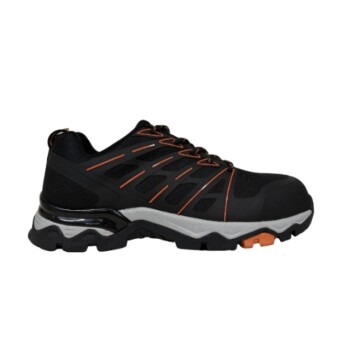
The Body Map scale functions as a critical diagnostic tool that transforms subjective user discomfort into precise, actionable data. It contributes to the evaluation process by allowing researchers to record specific anatomical locations where a user experiences pain or pressure, rather than relying on vague, general feedback about the wearing experience.
The Body Map scale moves beyond simply identifying that a product is uncomfortable to pinpointing exactly where the design fails. By isolating specific zones of pressure and pain, it provides the spatial data necessary to re-engineer contact points and optimize the physical interface between the human body and the device.
Transforming Feedback into Engineering Data
The primary contribution of the Body Map scale is its ability to convert human sensation into a spatial map for design teams.
Pinpointing Anatomical Discomfort
General feedback often fails to distinguish between different types of fit issues. The Body Map scale forces a specific record of the exact anatomical locations involved.
This precision is vital for complex wearables like safety shoes or assistive exoskeletons. It helps differentiation between discomfort caused by weight, friction, or constriction.
Diagnosing Pressure vs. Pain
The tool is specifically used to record where a user experiences pressure or pain. Distinguishing between these two sensations is crucial for evaluation.
Pressure indicates load distribution issues, while pain often signals sharp contact points or improper sizing. This distinction guides the specific type of engineering solution required.
Driving Design Optimizations
Once the locations of discomfort are mapped, the data directly informs physical changes to the product.
Adjusting Contact Materials
When the Body Map identifies surface-level pain or abrasion, design teams can focus on adjusting contact materials.
This might involve changing the cushioning density, texture, or breathability of the materials at that specific coordinate to reduce irritation.
Redistributing Load Pressure
If the map indicates concentrated pressure in structural areas, engineers can modify the design to redistribute load pressure.
For safety shoes, this could mean altering the sole density. For assistive devices, it may involve widening straps or shifting the center of gravity to spread the weight over a larger anatomical area.
Optimizing Support Structures
The data allows teams to optimize support structures to align better with human biomechanics.
By reinforcing areas that lack support and relieving areas that are over-constrained, the device is engineered for long-term wearability rather than just static fit.
Understanding the Trade-offs
While the Body Map scale is powerful, it is important to recognize its nature as a qualitative assessment tool.
Qualitative vs. Quantitative
This is a diagnostic qualitative assessment, meaning it relies on user perception. It does not measure force in Newtons or pressure in Pascals; it measures the user's experience of those forces.
Subjectivity of Sensation
Because it relies on the user to self-report, the data can be influenced by the user's pain threshold. It is most effective when used to identify patterns across multiple users rather than relying on a single data point.
Applying the Body Map to Product Goals
To utilize the Body Map scale effectively, align the output with your specific development objectives.
- If your primary focus is Ergonomics: Use the scale to identify high-pressure zones that require load redistribution across the structural frame.
- If your primary focus is User Comfort: Use the mapped pain points to target specific areas for softer contact materials or additional padding.
By systematically addressing the specific locations identified by the Body Map scale, you ensure that design iterations are driven by user reality rather than guesswork.
Summary Table:
| Feature | Contribution to Evaluation | Impact on Design |
|---|---|---|
| Anatomical Pinpointing | Maps exact locations of pain or pressure | Guides localized structural adjustments |
| Pressure vs. Pain Analysis | Distinguishes between load issues and sharp contact | Informs material choice vs. mechanical redesign |
| Load Redistribution | Identifies areas of over-concentration | Optimizes sole density and weight distribution |
| Material Validation | Highlights surface-level abrasion and friction | Directs changes in cushioning and breathability |
Elevate Your Footwear Standards with 3515
As a leading large-scale manufacturer serving global distributors and brand owners, 3515 leverages ergonomic insights to deliver superior performance. Our flagship Safety Shoes series, alongside our extensive portfolio of tactical boots, outdoor shoes, and formal footwear, is engineered for maximum comfort and durability.
Partner with us to access comprehensive production capabilities tailored to your bulk requirements. Contact us today to discuss your next project and experience the value of professional-grade manufacturing.
References
- Jérémy Lefint, António Moniz. Assessment of Exoskeletons for Work Activities: The Dilemma behind the Product. DOI: 10.3390/app14167108
This article is also based on technical information from 3515 Knowledge Base .
Related Products
- Premium Suede Sport Safety Shoes for Wholesale & Bulk Orders
- Premium Lightweight Safety Shoes for Wholesale & Bulk Orders
- Wholesale Anti-Smash & Puncture-Proof Safety Shoes Custom Manufacturing for Brands
- Premium KPU Injection Athletic Style Safety Shoes
- Premium Safety Shoes with Rotating Buckle Safety Sneakers
People Also Ask
- What are the primary functions of professional safety shoes? Maximize Safety in Water Supply Confined Spaces
- What industries have specific OSHA footwear requirements? Ensure Compliance & Protect Your Workforce
- What role do specialized safety shoes play in preventing falls? Engineering Stability in Industrial Environments
- Why wear protective masks, gloves, and safety shoes in 5S Shine? Elevate Safety and Discipline
- Why is barefoot walking used as a baseline in gait safety research? Unlocking Natural Biomechanics for Shoe Design