
Promptly drying your boots and socks is one of the most critical and overlooked habits for staying safe and warm in winter. This simple act directly prevents moisture from compromising your gear's insulation, which is essential for maintaining warmth, preventing dangerous cold-related injuries, and avoiding common skin conditions.
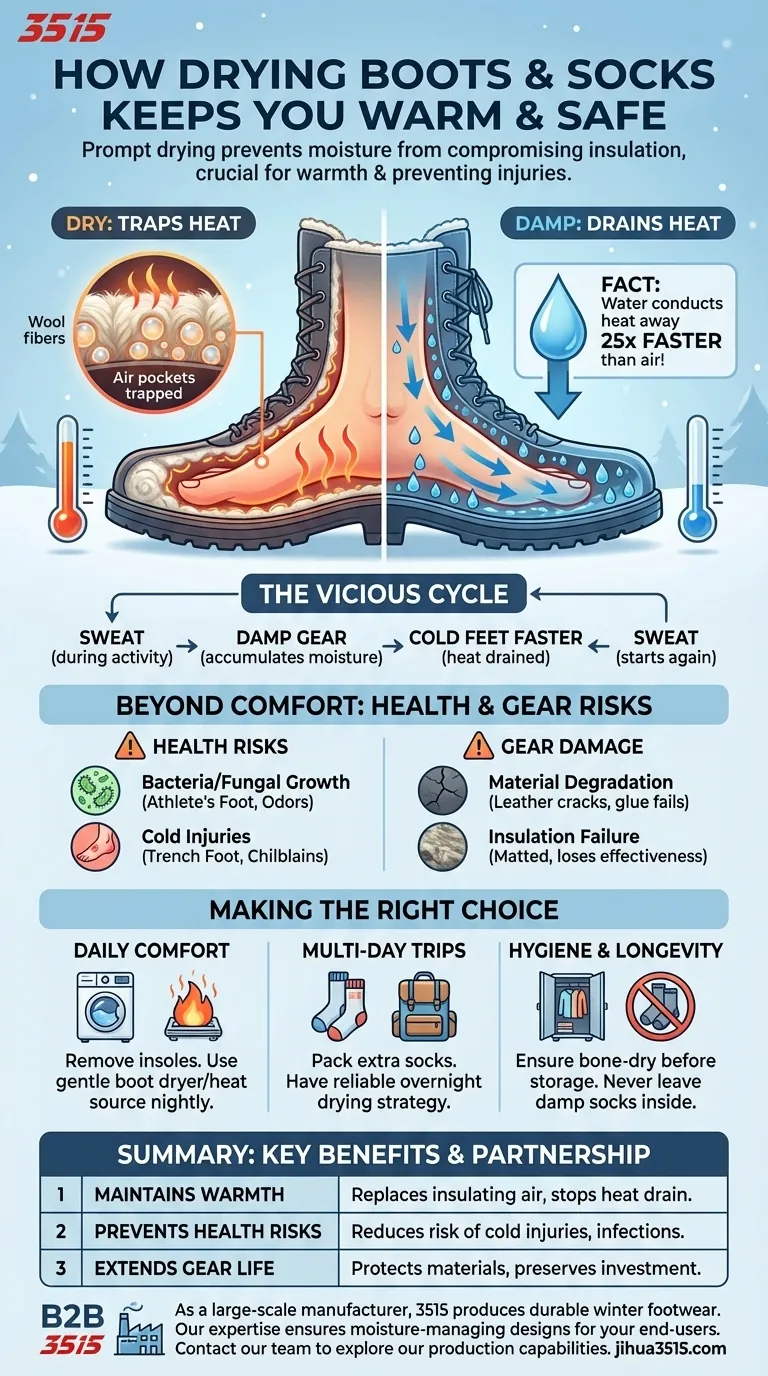
In the battle against cold, your greatest enemy is not the temperature but the moisture trapped in your gear. Water conducts heat away from your body 25 times faster than air, meaning damp socks and boots will actively drain your warmth, no matter how thick they are.
The Physics of Warmth and Moisture
To understand why drying your gear is so vital, you first need to understand how insulation actually functions. It’s a simple system that moisture can easily defeat.
How Insulation Works
Insulation, whether in a boot liner or a thick wool sock, does not create heat. Its sole purpose is to trap a layer of air next to your skin. Your body warms this trapped air, creating a thermal barrier that slows the rate at which you lose heat to the colder environment outside.
Water: The Enemy of Insulation
When socks or boot liners become damp from snow, slush, or sweat, water molecules fill those crucial air pockets. Because water is an excellent thermal conductor, it replaces your insulating air barrier with a heat-draining bridge, actively pulling warmth from your feet. This is why feet can feel freezing cold even in mild temperatures if they are wet.
The Vicious Cycle of Sweat
Your feet can sweat even when you feel cold, especially during physical activity. If boots and socks are not dried thoroughly between uses, this moisture accumulates. You start the day with slightly damp gear, your feet get cold faster, and the miserable cycle continues.
Beyond Comfort: The Health and Gear Implications
Consistently wearing damp footwear goes beyond simple discomfort. It introduces genuine health risks and significantly shortens the lifespan of your expensive gear.
Preventing Fungal and Bacterial Growth
The dark, damp, and warm environment inside a wet boot is a perfect breeding ground for bacteria and fungi. This directly leads to conditions like athlete's foot and persistent, unpleasant odors that are difficult to remove.
Reducing Cold Injury Risk
Prolonged exposure to cold, damp conditions is the primary cause of non-freezing cold injuries like trench foot and chilblains. These painful conditions can occur even in temperatures above freezing and can cause lasting damage to skin and nerve tissue. Keeping feet dry is your primary defense.
Protecting Your Investment
Moisture degrades the materials your boots are made from. Leather can become stiff and crack, glues can weaken and fail, and synthetic insulation can become compressed and matted, permanently losing its ability to trap air effectively. Drying your boots promptly is essential maintenance for preserving their function and longevity.
Making the Right Choice for Your Goal
Based on this, you can adopt a strategy that matches your specific needs.
- If your primary focus is daily warmth and comfort: Make a habit of removing the insoles and placing your boots on a gentle boot dryer or near a heat source (but not too close) every single night.
- If your primary focus is performance on multi-day trips: Pack at least one extra pair of socks to swap out midday and have a reliable strategy for drying your boots and liners completely overnight.
- If your primary focus is hygiene and gear longevity: Ensure your boots are bone-dry before storing them, and never leave damp socks balled up inside them.
Ultimately, managing moisture is just as important as the quality of the gear itself, turning a simple daily habit into your most effective defense against the cold.
Summary Table:
| Benefit | Key Takeaway |
|---|---|
| Maintains Warmth | Moisture replaces insulating air, conducting heat away from your body. |
| Prevents Health Risks | Reduces risk of trench foot, chilblains, and fungal infections like athlete's foot. |
| Extends Gear Life | Prevents leather from cracking and insulation from matting, protecting your investment. |
As a large-scale manufacturer, 3515 produces a comprehensive range of durable winter boots and footwear for distributors, brand owners, and bulk clients. Our expertise ensures your products are built with materials and construction techniques designed to manage moisture effectively and protect end-users. Let's discuss how we can help you provide superior winter footwear. Contact our team today to explore our production capabilities.
Visual Guide
Related Products
- Wholesale Durable Safety Boots | Custom Steel Toe & Puncture-Resistant Manufacturing
- Premium Wholesale Tactical Style Safety Shoes Boots with Quick Lacing
- Durable Goodyear Welt Leather Work Boots for Wholesale & Private Label
- Durable Leather Work Boots for Wholesale & Custom Manufacturing
- Premium Wholesale Waterproof Safety Boots High Performance Protection for Industrial Markets
People Also Ask
- What are the key features of safety boots? Essential Protection for Hazardous Workplaces
- Why is proper storage important for safety boots? Preserve Protection and Extend Lifespan
- What are the risks of using ordinary rubber boots in forest clearing? Why professional safety boots are essential
- What are the consequences of not wearing safety boots? Protect Your Finances and Career
- How should safety boots be cleaned to avoid damage? A Gentle Guide to Preserve Your Boots



















