Winter cycling shoes retain warmth by creating an integrated defense system that combines insulation, weatherproofing, and a sealed construction. Unlike standard shoes, which prioritize ventilation, winter models are engineered to trap body heat while simultaneously blocking external elements like wind, water, and cold air from reaching your foot.
The core principle is not just adding insulation, but creating a stable microclimate for your foot. A dedicated winter shoe achieves this by systematically eliminating the three primary sources of heat loss: convective (wind), conductive (moisture), and radiative (heat escaping).
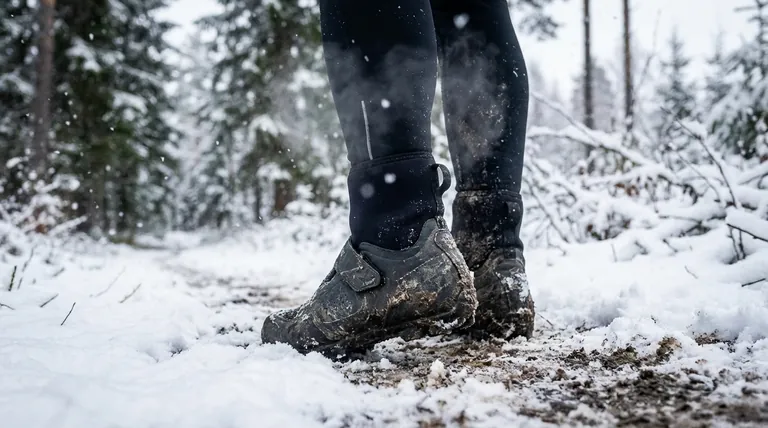
The Core Principles of Warmth
To understand how a winter shoe works, it's essential to grasp the fundamental strategies it employs to combat the cold. These are not just individual features, but parts of a cohesive system.
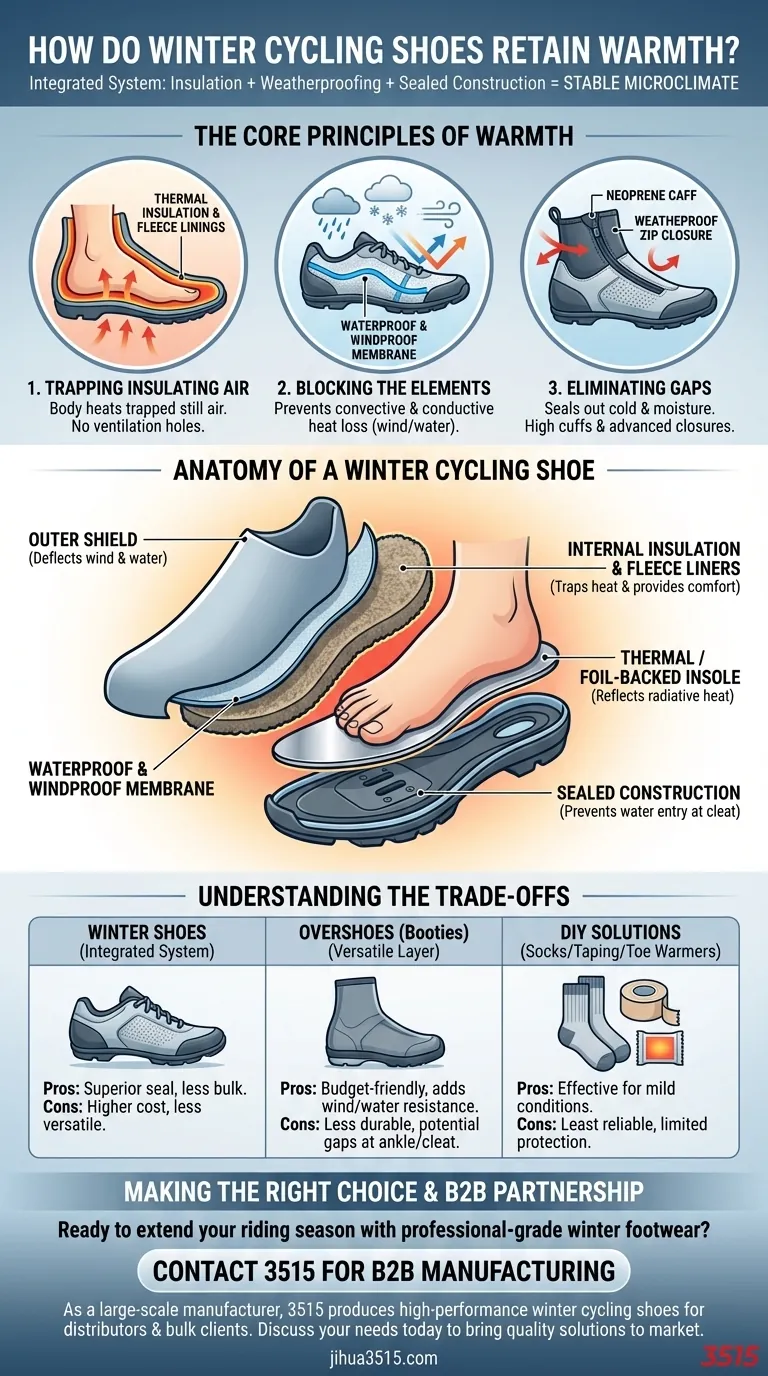
Principle 1: Trapping Insulating Air
The primary defense against cold is insulation. Winter shoes achieve this by trapping a layer of still air close to the foot, which your body then heats.
They accomplish this with thermal insulation materials and fleece linings built directly into the shoe's structure.
Critically, they also feature fewer or no ventilation holes, preventing the cold outside air from displacing the warm air your body has generated.
Principle 2: Blocking the Elements
Your feet will lose heat dramatically faster when they are wet or exposed to wind. This is known as convective and conductive heat loss.
Winter shoes incorporate an insulated, waterproof membrane within their layers. This membrane is the key to blocking water and wind from the outside.
This outer barrier ensures that the internal insulation remains dry and effective, as wet insulation provides very little thermal protection.
Principle 3: Eliminating Gaps and Cold Spots
Even the best insulation is useless if there are gaps that allow cold air and water to enter. Winter shoes are designed to create a comprehensive seal.
Many models feature a high ankle cuff, often made of neoprene, which bridges the gap between the shoe and your tights or leg warmers.
They also use advanced closure systems like weatherproof zips, Boa dials, and Velcro straps instead of traditional laces, which are difficult to seal and operate with gloves.
Anatomy of a Winter Cycling Shoe
A winter shoe is a purpose-built piece of equipment where every component is designed for warmth and protection.
The Outer Shield
Most winter shoes have a wraparound outer shield or an integrated tongue. This serves as the first line of defense, deflecting wind and water before it can even reach the main body of the shoe.
Internal Insulation and Liners
Beneath the outer shield lies the core of the shoe. This area contains the waterproof and windproof membrane and is often lined with soft, insulating materials like fleece to provide both warmth and comfort.
Specialized Insoles
Heat can easily be lost through the stiff, conductive sole of a cycling shoe. To combat this, many winter shoes include thermal or foil-backed insoles. These work by reflecting radiative heat back toward the bottom of your foot.
Understanding the Trade-offs: Winter Shoes vs. Other Solutions
A dedicated winter shoe is an excellent investment, but it's not the only option. Understanding the alternatives helps clarify its specific advantages.
Winter Shoes: The Integrated System
This is the most effective solution. Because all components work together, it provides a superior seal against the elements with less bulk than ad-hoc solutions. The primary trade-off is its higher initial cost and lack of versatility in warmer weather.
Overshoes (Booties): The Versatile Layer
Overshoes, often made of neoprene, fit over your existing summer shoes. They are a good, budget-friendly option that adds wind and water resistance. However, they are less durable and never seal perfectly around the ankle or the cleat, creating potential entry points for water.
DIY and Accessory Solutions
This category includes using wool socks, taping over vents, or adding chemical toe warmers. These methods can be effective for milder conditions or shorter rides but are the least reliable defense against persistent cold and wet weather.
Making the Right Choice for Your Ride
Your ideal solution depends entirely on your riding conditions and goals.
- If your primary focus is riding in freezing or consistently wet conditions: A dedicated winter cycling shoe is the most reliable investment for sustained warmth and comfort.
- If your primary focus is riding in milder, mostly dry winter conditions: A quality pair of neoprene overshoes combined with wool socks will likely provide sufficient protection.
- If your primary focus is budget or occasional cold-weather riding: Start with layering wool socks and using shoe covers before committing to a more specialized solution.
Ultimately, understanding these principles empowers you to build the right system to keep your feet warm and extend your riding season.
Summary Table:
| Warmth Principle | Key Feature | Purpose |
|---|---|---|
| Trapping Insulating Air | Thermal Insulation & Fleece Linings | Creates a warm microclimate around the foot |
| Blocking the Elements | Waterproof & Windproof Membrane | Prevents conductive and convective heat loss |
| Eliminating Gaps | High Ankle Cuffs & Advanced Closures | Seals out cold air and moisture for total protection |
Ready to extend your riding season with professional-grade winter footwear?
As a large-scale manufacturer, 3515 produces a comprehensive range of cycling shoes for distributors, brand owners, and bulk clients. Our production capabilities encompass all types of technical footwear, including high-performance winter cycling shoes designed with the precise insulation, waterproofing, and sealing systems detailed above.
We can help you equip your customers with the reliable warmth and protection they need. Contact our team today to discuss your manufacturing needs and bring high-quality winter cycling solutions to market.
Visual Guide
Related Products
- Premium Insulated Safety Boots and Shoes for Wholesale & Bulk Orders
- Wholesale Durable Camouflage Canvas Shoes with High-Traction Cleated Rubber Sole
- Premium Suede Sport Safety Shoes for Wholesale & Bulk Orders
- Advanced KPU Athletic Safety Shoe with Steel Toe Cap Anti-Slip Rotary Lacing System
- Lightweight Breathable Sneakers with Wet-Traction Grip for Wholesale & Private Label
People Also Ask
- What are the recommended insulation ratings for mild winter conditions? A Guide for Active & Stationary Workers
- How does insulation thickness correlate with temperature ranges? A Guide to Choosing the Right Warmth
- What insulation level is needed for severe cold and stationary work? 1200g or Higher is Essential
- What safety advantages do insulated boots offer beyond warmth? Dielectric Protection & Superior Grip
- How does fleece lining contribute to the warmth of insulated boots? Trapping Air for Superior Cold Protection