
Boot heel heights are universally classified into five key categories based on their measurement in inches. These standard ranges are Flat (under 1 inch), Low (1-2 inches), Mid (2-3 inches), High (3-4 inches), and Ultra-High (4 inches and taller). This measurement is taken from where the heel meets the sole down to the very bottom tip.
Choosing the right boot heel height is less about rigid rules and more about balancing your desired aesthetic with the practical demands of comfort and stability for the intended occasion.
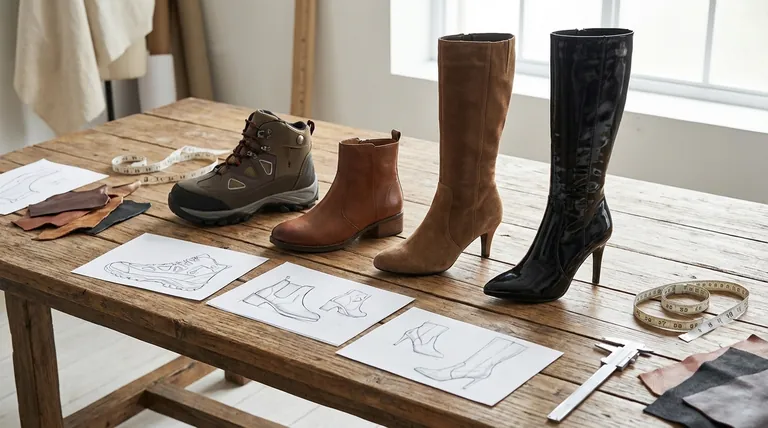
A Breakdown of Each Heel Height Category
Understanding what each category offers is the key to selecting the right boot. The change of a single inch can dramatically alter a boot's function, feel, and overall look.
Flat Heels (0 to 1 inch): The Foundation of Comfort
This category provides the most stability and is designed for all-day, active wear. The minimal elevation ensures your weight is distributed naturally across your foot.
Flat boots are the standard for casual, everyday use, making them perfect for commuting, running errands, or any situation involving significant walking.
Low Heels (1 to 2 inches): The Versatile Workhorse
Often considered the sweet spot, low heels offer a subtle lift that can slightly elevate your posture without sacrificing significant comfort.
This is arguably the most versatile category, easily transitioning from a professional office environment to a casual evening out. Block heels in this range are exceptionally practical.
Mid Heels (2 to 3 inches): The Elegant Elevation
Here, the aesthetic purpose of the heel becomes more pronounced. Mid-range heels provide a noticeable lift that elongates the leg line for a more dressed-up or formal appearance.
While still manageable for many, comfort for extended periods of standing or walking begins to decrease in this range. These are ideal for dinners, parties, or shorter events.
High Heels (3 to 4 inches): The Statement-Maker
High-heeled boots are explicitly designed to make a stylistic impact. They dramatically alter your posture and create a commanding silhouette.
These boots are best reserved for special occasions where walking is limited. They demand more effort to walk in and place considerable pressure on the ball of the foot.
Ultra-High Heels (4+ inches): The Apex of Formality
This category is the pinnacle of high-fashion footwear. To make the extreme height wearable, these boots almost always incorporate a platform at the front of the sole.
Ultra-high heels are intended for maximum visual drama at formal events. They are the least practical for walking and require confidence and experience to wear comfortably.
Understanding the Trade-offs: Comfort vs. Aesthetic
The choice of heel height is a direct negotiation between how you want to look and what you need to do. Ignoring this balance is the most common pitfall.
The Impact on Posture and Pressure
As heel height increases, your body weight is forced forward onto the balls of your feet. This shift puts increased pressure on your forefoot and can alter the alignment of your ankles, knees, and spine.
The Stability Factor
A higher heel creates a steeper angle for your foot, which inherently reduces your stability. Furthermore, the type of heel matters immensely—a 3-inch block heel will always be more stable than a 3-inch stiletto.
Occasion Appropriateness
The context in which you'll wear the boots is paramount. A flat combat boot is perfect for a weekend outing but out of place at a black-tie event. Conversely, a 4-inch stiletto boot is impractical and unsafe for a day of sightseeing.
How to Choose the Right Heel for Your Goal
Use your primary objective as your guide to narrow down the best option.
- If your primary focus is all-day comfort and practicality: Choose flat or low heels (up to 2 inches), prioritizing block heels for added stability.
- If your primary focus is a versatile balance of style and wearability: A low to mid-range heel (1 to 3 inches) is your most reliable and adaptable option.
- If your primary focus is making a formal statement for an event: High or ultra-high heels (3+ inches) provide the most dramatic aesthetic, but plan for limited walking.
Ultimately, the best boot is one that aligns with both your personal style and the reality of your day.
Summary Table:
| Heel Height Category | Measurement (Inches) | Best For |
|---|---|---|
| Flat Heels | Under 1" | All-day comfort, active wear, casual use |
| Low Heels | 1" - 2" | Versatile wear, office to casual outings |
| Mid Heels | 2" - 3" | Elegant elevation, dinners, shorter events |
| High Heels | 3" - 4" | Statement-making, special occasions |
| Ultra-High Heels | 4" and taller | High-fashion, formal events |
Ready to produce the perfect boot collection for your market? As a large-scale manufacturer, 3515 produces a comprehensive range of footwear for distributors, brand owners, and bulk clients. Our production capabilities encompass all types of shoes and boots, from comfortable flats to stylish high heels, ensuring quality and consistency for every order. Contact us today to discuss your specific needs and let us help you build a successful footwear line.
Visual Guide

Related Products
- Durable Leather High-Ankle Tactical Boots for Wholesale & Custom Manufacturing
- Durable High-Ankle Tactical Boots for Wholesale & Custom Manufacturing
- Durable High-Ankle Tactical Boots Wholesale Manufacturer for Custom & Bulk Orders
- Wholesale Durable Leather Work Boots | 8-Inch Goodyear Welt Manufacturer
- Durable Steel Toe Safety Boots Wholesale & Custom Manufacturing
People Also Ask
- How do military uniforms and tactical boots impact the prediction of thermal risk? Essential Safety Insights
- How does the material of tactical boots affect their performance? Choose the Right Material for Your Mission
- Why is sequential analysis utilized to evaluate tactical boots? Master Dynamic Boot Development and Ergonomic Performance
- How do tactical boots differ from regular boots? Performance, Durability & Design Explained
- What are the primary differences between tactical boots and combat boots? Choose the Right Boot for Your Mission
















