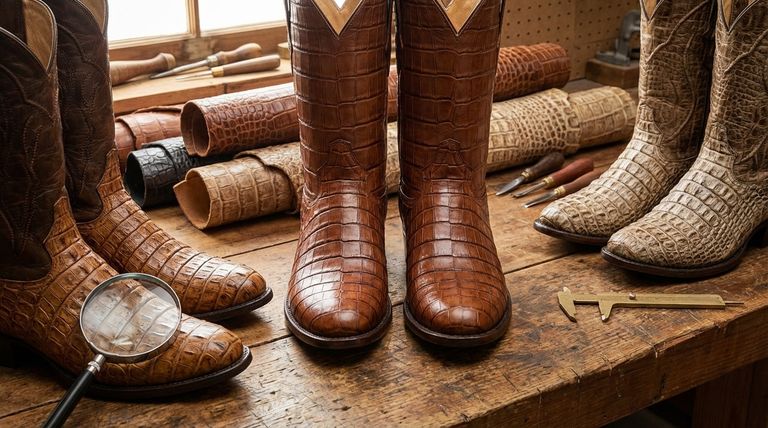
To the untrained eye, alligator and crocodile leathers appear nearly identical, but the definitive difference lies in the scales themselves. True crocodile leather has a tiny, distinct pinhole pore in each scale—the remnant of a sensory hair—which is completely absent in alligator leather. While both are premier exotic materials, alligator is generally sourced from farms in the Southern U.S., often resulting in a softer feel and more symmetrical scale patterns prized for luxury boots.
The core distinction between these two luxury leathers is simple: crocodile scales have a visible pore, and alligator scales do not. This subtle detail is the most reliable way to differentiate between them, with secondary differences in pattern symmetry, feel, and cost stemming from the animals' biology and sourcing.
The Core Distinctions: A Side-by-Side Comparison
While often grouped together, alligator and crocodile leathers have several key characteristics that set them apart for the discerning boot owner.
The Telltale Pore
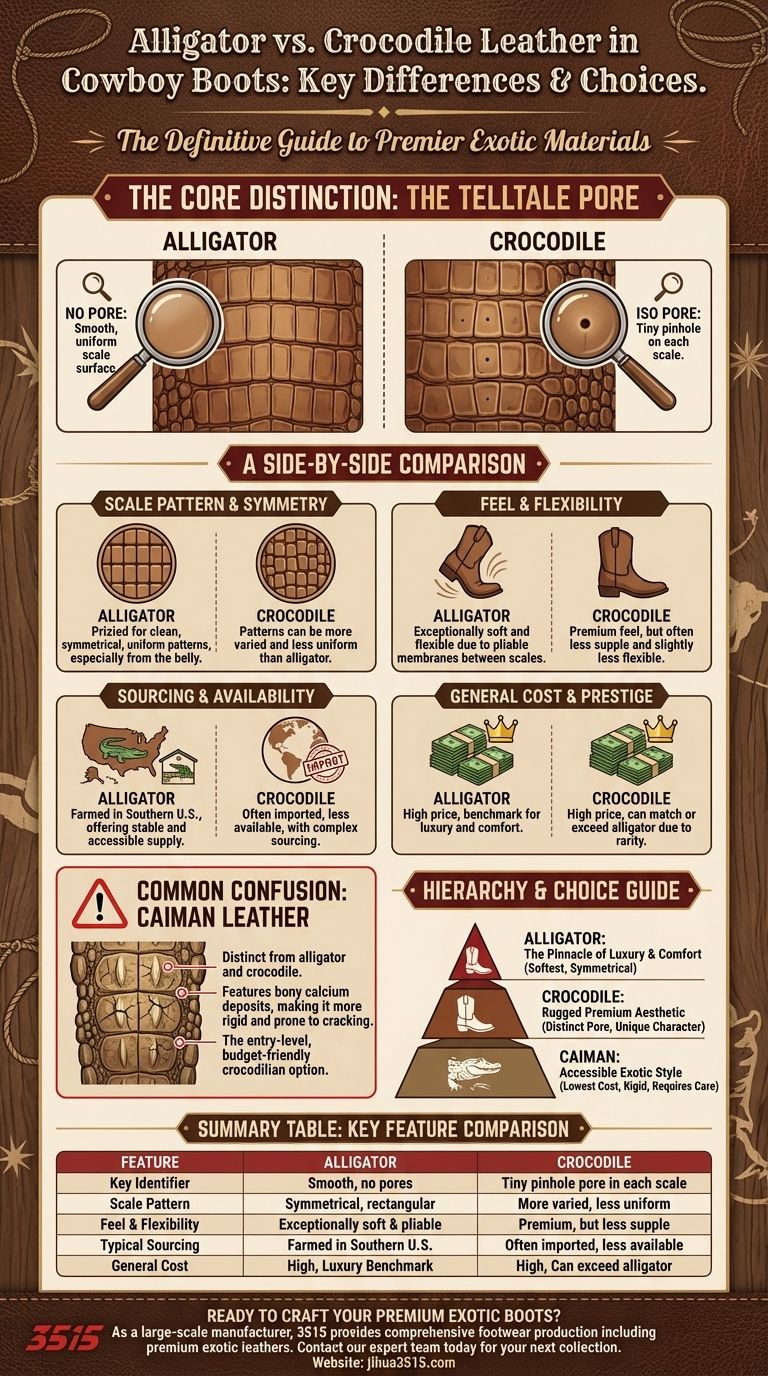
The single most reliable identifier is the integumentary sense organ, or ISO pore.
This tiny pinhole, located on each scale, is a signature of the crocodile family. Alligator scales are smooth and lack this feature entirely.
Scale Pattern and Symmetry
Alligator leather, particularly from the belly, is prized for its clean, consistent, and symmetrical pattern of large, rectangular scales.
This uniformity makes it a preferred choice for high-end dress boots where a flawless aesthetic is paramount. Crocodile patterns can be slightly more varied.
Feel and Flexibility
Alligator hide is known for having soft, pliable membranes between its tough scales.
This biological trait translates into a finished leather that is exceptionally soft and flexible, making for a boot that is comfortable from the very first wear.
Sourcing and Availability
The American Alligator is farmed domestically in the Southern United States, creating a more stable and accessible supply chain for bootmakers.
Crocodiles are not farmed to the same extent in the U.S., meaning the leather is often less available and can be more expensive due to import and sourcing complexities.
A Common Point of Confusion: Caiman Leather
It is crucial to distinguish both alligator and crocodile from caiman, a related but distinctly different material often found in the boot market.
What is Caiman?
Caiman is a smaller member of the crocodilian family. Its hide is also used for exotic boots but is considered a step down in quality from alligator or true crocodile.
Why Caiman is Different
Caiman hide is characterized by bony calcium deposits within its scales. This makes the leather more rigid and prone to cracking or splitting over time if not meticulously cared for. This brittleness is why caiman boots are significantly less expensive.
Understanding the Trade-offs
Choosing an exotic leather is an exercise in balancing aesthetics, durability, and budget.
The Price and Prestige Hierarchy
Alligator sits at the top as the benchmark for luxury crocodilian leather due to its softness and clean patterns.
Crocodile is in the same top tier, with its price often matching or exceeding alligator's based on rarity and species.
Caiman is the entry-level option, offering the crocodilian look for a fraction of the cost but with a significant trade-off in flexibility and long-term durability.
A Note on Durability
Both alligator and crocodile are exceptionally tough leathers suitable for dress boots. However, it's worth noting that other exotics can compete on longevity.
Some experts consider lizard leather, with a structure similar to alligator, to be even more durable over the long term. This highlights that the highest price doesn't always equal the most rugged material for every application.
Making the Right Choice for Your Boots
Your final decision should be guided by your primary goal, whether it's achieving a specific look, prioritizing comfort, or meeting a budget.
- If your primary focus is ultimate luxury and comfort: American Alligator is the classic choice, prized for its soft feel and perfectly symmetrical scales.
- If your primary focus is a rugged yet premium aesthetic: Crocodile offers a similar prestige with its own unique character and the distinct, telltale pore on each scale.
- If your primary focus is an accessible exotic style: Caiman provides the signature crocodilian look at a much lower price, but be mindful of its inherent rigidity and need for proper care.
Understanding these key differences ensures you are investing not just in a style, but in the specific quality and character you desire.
Summary Table:
| Feature | Alligator Leather | Crocodile Leather |
|---|---|---|
| Key Identifier | Smooth scales, no pores | Tiny pinhole pore in each scale |
| Scale Pattern | Symmetrical, rectangular | More varied, less uniform |
| Feel & Flexibility | Exceptionally soft & pliable | Premium but can be less supple |
| Typical Sourcing | Farmed in the Southern U.S. | Often imported, less available |
| General Cost | High, benchmark for luxury | High, can match or exceed alligator |
Ready to Craft Your Premium Exotic Boots?
As a large-scale manufacturer, 3515 produces a comprehensive range of footwear for distributors, brand owners, and bulk clients. Our production capabilities encompass all types of shoes and boots, including premium exotic leathers. We can guide you in selecting the perfect material—be it luxurious alligator or distinctive crocodile—for your next collection.
Contact our expert team today to discuss your manufacturing needs and leverage our expertise in creating high-quality, durable boots that meet your exact specifications.
Visual Guide
Related Products
- Durable Leather Tactical Boots Wholesale & Custom Manufacturing for Brands
- Durable Leather High-Ankle Tactical Boots for Wholesale & Custom Manufacturing
- Durable Leather Work Boots for Wholesale & Custom Manufacturing
- Durable Leather Work Boots for Wholesale & Custom OEM Manufacturing
- Durable Leather Work Boots Wholesale Manufacturer & Custom Factory
People Also Ask
- What specialized protections do tactical boots offer? Maximize Endurance with High-Performance Footwear
- What features should law enforcement officers look for in tactical boots? Essential Guide for Safety & Performance
- Importance of Professional Tactical Boots in Loess Gully Regions: Ensure Safety and Precision for Field Monitoring
- What is rucking, and why are tactical boots suitable for it? Discover the Ultimate Footwear for Heavy Loads
- What makes the traction of tactical boots superior? Unlock the Science of Unbeatable Grip