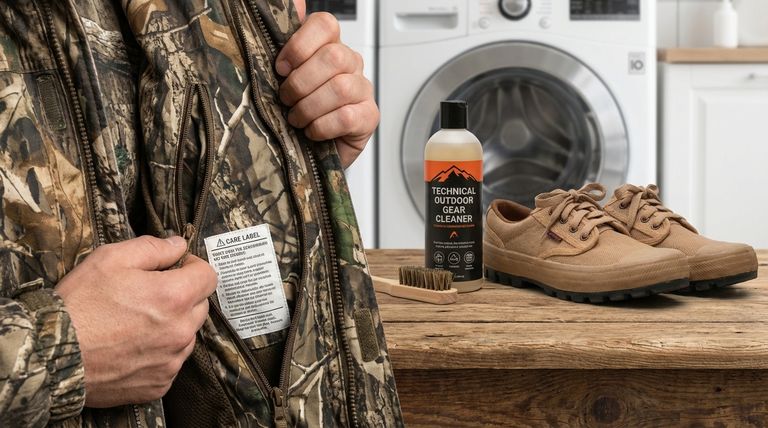
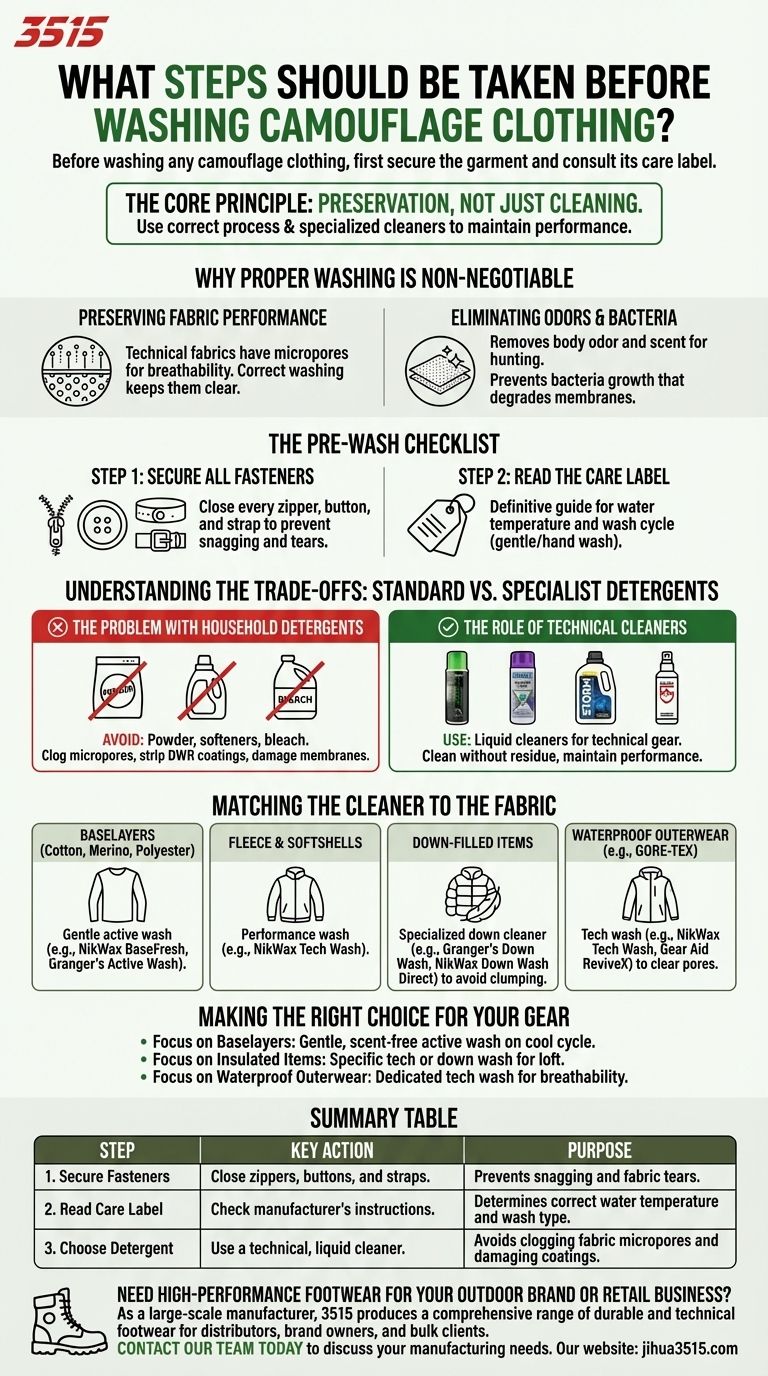
Before washing any camouflage clothing, you must first secure the garment and then consult its care label. This involves closing all zippers, fastening any buttons on pockets, and securing loose flaps or straps to prevent snagging and damage during the wash cycle.
The core principle of washing camouflage is preservation, not just cleaning. Standard laundry products can permanently damage the technical fabrics, so using the correct process and specialized cleaners is essential to maintain the garment's performance and longevity.
Why Proper Washing is Non-Negotiable
Washing technical camouflage gear correctly is about more than just removing dirt. The process directly impacts the clothing's ability to function as intended in the field.
Preserving Fabric Performance
Most modern camouflage is made from technical fabrics with micropores designed to be breathable, allowing sweat to escape. The right washing technique keeps these pores clear and functional.
Eliminating Odors and Bacteria
Proper cleaning removes body odor and other scents like blood, which is critical for hunting. It also prevents the growth of bacteria that can degrade waterproof membranes and the seam-sealed tape, which eventually leads to leaks.
The Pre-Wash Checklist
Follow these two steps before the garment ever touches water. Skipping them is the most common cause of damage.
Step 1: Secure All Fasteners
Close every zipper, button every pocket, and fasten all straps. This simple action prevents the hardware from snagging on the fabric of the garment itself or other items in the wash, which can cause tears and abrasion.
Step 2: Read the Care Label
The manufacturer's care instruction label is your definitive guide. It will tell you the correct water temperature and whether the item is safe for a gentle machine wash or requires hand washing.
Understanding the Trade-offs: Standard vs. Specialist Detergents
The single biggest mistake is choosing the wrong cleaning agent. What works for your everyday clothes can ruin high-performance gear.
The Problem with Household Detergents
Avoid powder detergents, fabric softeners, bleach, and conventional stain removers at all costs. These products contain harsh chemicals and fillers that clog the micropores of breathable fabrics, rendering them useless. They can also strip away durable water-repellent (DWR) coatings and damage waterproof membranes.
The Role of Technical Cleaners
Always use a liquid cleaner specifically formulated for technical outdoor gear. Brands like Granger's, NikWax, STORM, and Gear Aid create products that effectively clean without leaving behind residues that harm performance.
Matching the Cleaner to the Fabric
Different materials require different formulas for optimal care.
- For baselayers (cotton, merino, polyester): Use a gentle active wash like NikWax BaseFresh or Granger's Active Wash.
- For fleece or softshells: A performance wash like NikWax Tech Wash is the standard choice.
- For down-filled items: You must use a specialized down cleaner like Granger's Down Wash or NikWax Down Wash Direct to avoid stripping natural oils and clumping the insulation.
- For waterproof outerwear (e.g., GORE-TEX): Use a cleaner like NikWax Tech Wash or Gear Aid ReviveX Pro Cleaner to safely remove dirt and prepare the surface for re-waterproofing treatments.
Making the Right Choice for Your Gear
Use this simple guide to ensure you're taking the right steps for your specific item.
- If your primary focus is washing baselayers: Secure the garment and use a gentle, scent-free active wash on a cool cycle.
- If your primary focus is washing insulated items (fleece or down): Use the specific tech or down wash required to preserve the material's loft and insulating properties.
- If your primary focus is washing waterproof outerwear: Use a dedicated tech wash to clear the fabric's pores and maintain its breathability.
Following these steps ensures your gear will continue to perform when you need it most.
Summary Table:
| Step | Key Action | Purpose |
|---|---|---|
| 1. Secure Fasteners | Close zippers, buttons, and straps. | Prevents snagging and fabric tears. |
| 2. Read Care Label | Check manufacturer's instructions. | Determines correct water temperature and wash type. |
| 3. Choose Detergent | Use a technical, liquid cleaner. | Avoids clogging fabric micropores and damaging coatings. |
Need High-Performance Footwear for Your Outdoor Brand or Retail Business?
As a large-scale manufacturer, 3515 produces a comprehensive range of durable and technical footwear for distributors, brand owners, and bulk clients. Our production capabilities encompass all types of boots and shoes designed to meet the demands of outdoor professionals and enthusiasts.
Let us help you equip your customers with reliable gear. Contact our team today to discuss your manufacturing needs.
Visual Guide
Related Products
- Wholesale High-Traction Camo Boots - Custom Manufacturer for Brands
- Wholesale Durable Camouflage Canvas Shoes with High-Traction Cleated Rubber Sole
- Men's Breathable Perforated Loafers Wholesale & OEM Manufacturing
People Also Ask
- What are the key features of the new line of camo boots? Built for Extreme Cold & Rugged Terrain
- Are camo boots necessary for hunting success? Prioritize Performance Over Pattern
- How does the Rank Score Test identify the primary causes of premature failure in tactical and work boots? Key Insights
- What is the technical logic behind using closed-eye testing for tactical boots? Unlocking Peak Footwear Stability
- What shoes to wear for a security job? Durable, Protective Footwear for Long Shifts