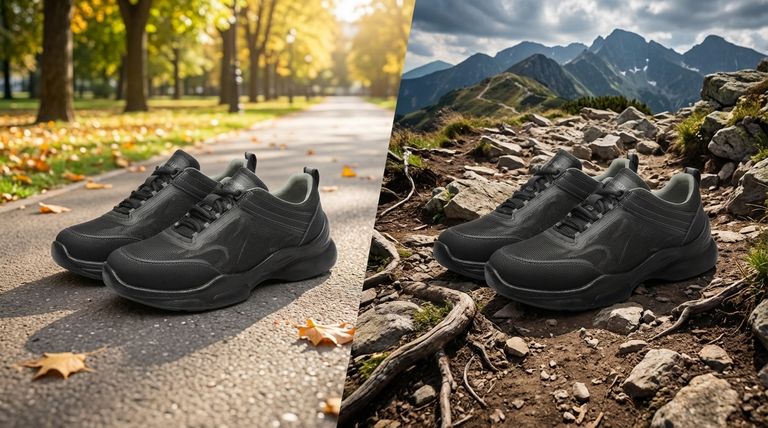
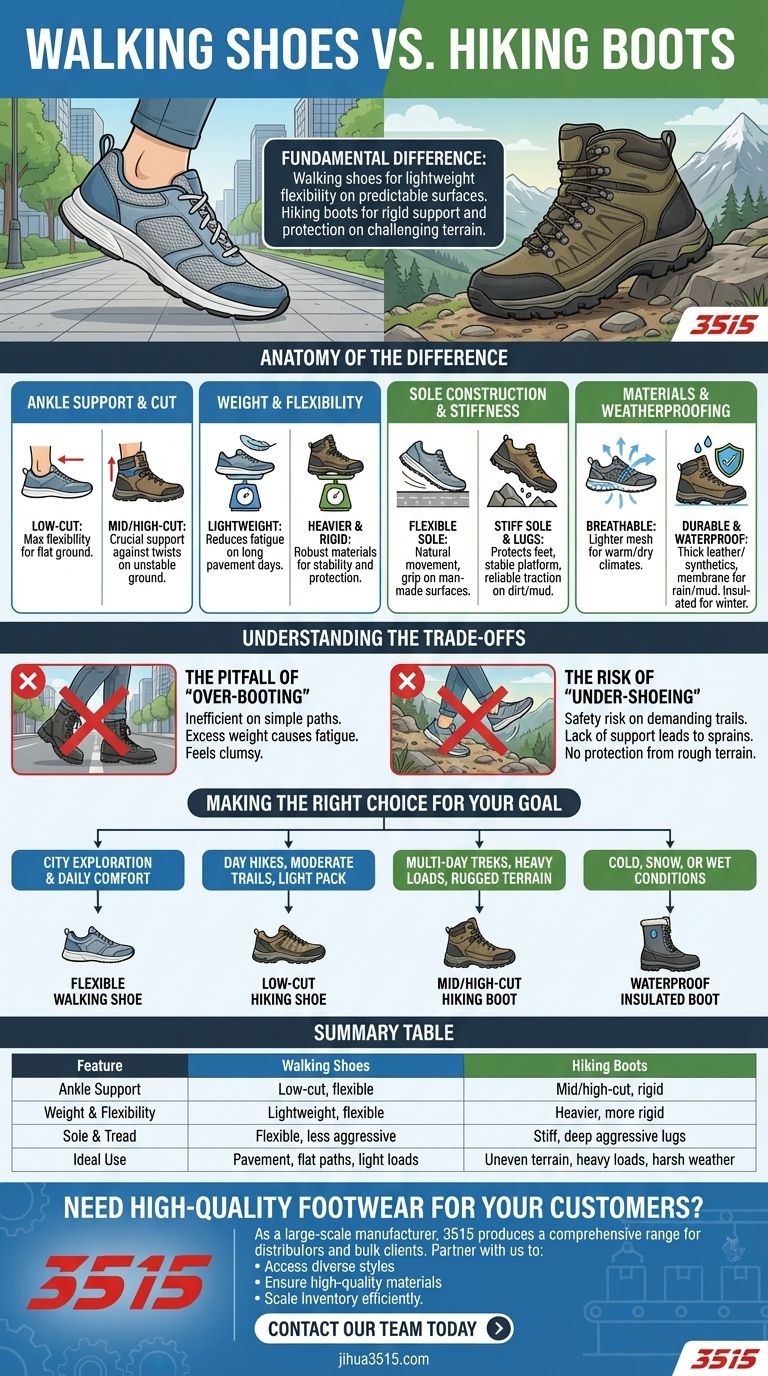
At a fundamental level, walking shoes are designed for lightweight flexibility on predictable surfaces, while hiking boots are engineered for rigid support and protection on challenging, uneven terrain. The primary differences lie in the height of the ankle cuff, the stiffness of the sole, and the overall weight and durability of the construction materials.
Your choice is not about which footwear is "better," but which is the correct tool for the job. The decision hinges on three key factors: the terrain you will cover, the load you will carry, and the weather you anticipate.
The Anatomy of the Difference
To make an informed choice, you must understand how the construction of each type of footwear serves a different purpose.
Ankle Support and Cut
Walking shoes are almost always low-cut, exposing the ankle to allow for maximum flexibility and agility on flat ground.
Hiking boots come in mid-cut or high-cut designs. This higher cuff wraps around the ankle, providing crucial support that prevents twists and sprains when navigating rocky or unstable ground.
Weight and Flexibility
A key advantage of walking shoes is their light weight and flexibility, which reduces fatigue during long days on pavement or simple paths.
Hiking boots are significantly heavier and more rigid. This added weight is a direct result of more robust materials and a stiffer sole, which are necessary for stability and protection.
Sole Construction and Stiffness
The sole of a walking shoe is flexible, allowing your foot to move naturally. The tread is typically less aggressive, designed for grip on man-made surfaces.
Hiking boot soles are extremely stiff and feature deep, aggressive lugs (treads). This stiffness protects your feet from sharp rocks underfoot and provides a stable platform, while the lugs ensure reliable traction on dirt, mud, and scree.
Materials and Weatherproofing
Walking shoes often prioritize breathability, using lighter mesh and synthetic materials suitable for warm or dry climates.
Hiking boots are built with durability in mind, using thick leather or rugged synthetics. They almost always feature a waterproof and breathable membrane to protect against rain, mud, and stream crossings. For winter use, specialized boots add significant insulation.
Understanding the Trade-offs
Choosing the wrong footwear for the conditions introduces significant compromises in comfort and safety.
The Pitfall of "Over-booting"
Wearing heavy hiking boots for a simple city walk or on a paved path is inefficient. The excess weight and rigidity will cause premature fatigue and can feel clumsy and restrictive. You are carrying protection you do not need.
The Risk of "Under-shoeing"
Using walking shoes on a demanding mountain trail is a serious safety risk. The lack of ankle support makes you vulnerable to sprains, and the flexible sole offers little protection from rough terrain, leading to bruised and sore feet.
Making the Right Choice for Your Goal
Select your footwear based on the demands of your specific activity, not on a general sense of which is "better."
- If your primary focus is daily comfort and city exploration: A flexible, lightweight walking shoe is the ideal choice for comfort on predictable surfaces.
- If your primary focus is day hikes on moderate trails with a light pack: A low-cut hiking shoe offers the perfect balance of support, traction, and reduced weight.
- If your primary focus is multi-day treks, heavy loads, or rugged terrain: A mid or high-cut hiking boot is non-negotiable for the required ankle support and underfoot protection.
- If your primary focus is cold, snow, or wet conditions: A dedicated waterproof and insulated boot is essential for warmth, safety, and specialized traction.
Ultimately, matching your footwear to your environment is the most critical step in ensuring a safe and comfortable journey.
Summary Table:
| Feature | Walking Shoes | Hiking Boots |
|---|---|---|
| Ankle Support | Low-cut, flexible | Mid or high-cut, rigid support |
| Weight & Flexibility | Lightweight, flexible | Heavier, more rigid |
| Sole & Tread | Flexible sole, less aggressive tread | Stiff sole, deep, aggressive lugs |
| Ideal Use | Pavement, flat paths, light loads | Uneven terrain, heavy loads, harsh weather |
Need High-Quality Footwear for Your Customers?
As a large-scale manufacturer, 3515 produces a comprehensive range of footwear for distributors, brand owners, and bulk clients. Whether your market demands comfortable walking shoes or durable hiking boots, our production capabilities encompass all types of shoes and boots to meet your exact specifications.
Partner with us to:
- Access a diverse catalog of styles built for performance and comfort.
- Ensure your products are crafted with high-quality materials and construction.
- Scale your inventory efficiently with our reliable manufacturing power.
Let's discuss your footwear needs → Contact Our Team Today
Visual Guide
Related Products
- Wholesale Durable Camouflage Canvas Shoes with High-Traction Cleated Rubber Sole
- Durable Rubber Sole Outdoor Shoes Wholesale & Custom Manufacturing
- Premium Suede Sport Safety Shoes for Wholesale & Bulk Orders
- Durable Goodyear Welt Leather Work Boots for Wholesale & Private Label
- Wholesale Comfortable Business Casual Shoes Custom Manufacturing
People Also Ask
- Why is the selection of high-strength fabric materials necessary in the production of canvas shoes and training shoes?
- What are the properties of canvas as a shoe material? A Guide to Lightweight Comfort & Style
- Can canvas shoes be worn in rainy conditions? The Truth About Water Resistance
- What are some examples of vulcanized shoes? Discover the Flexibility and Board Feel of Classic Sneakers
- What are the characteristics of canvas as a shoe material? A Guide to Lightweight, Breathable Footwear