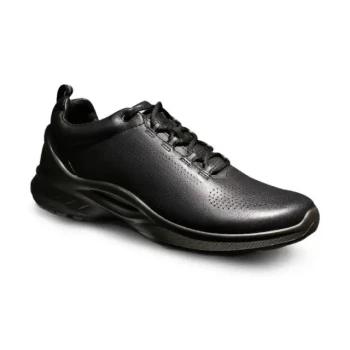
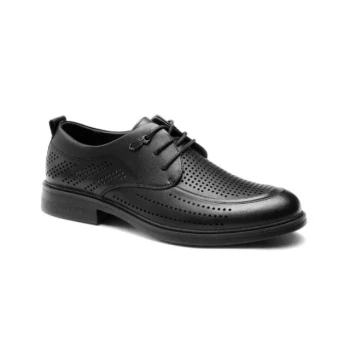
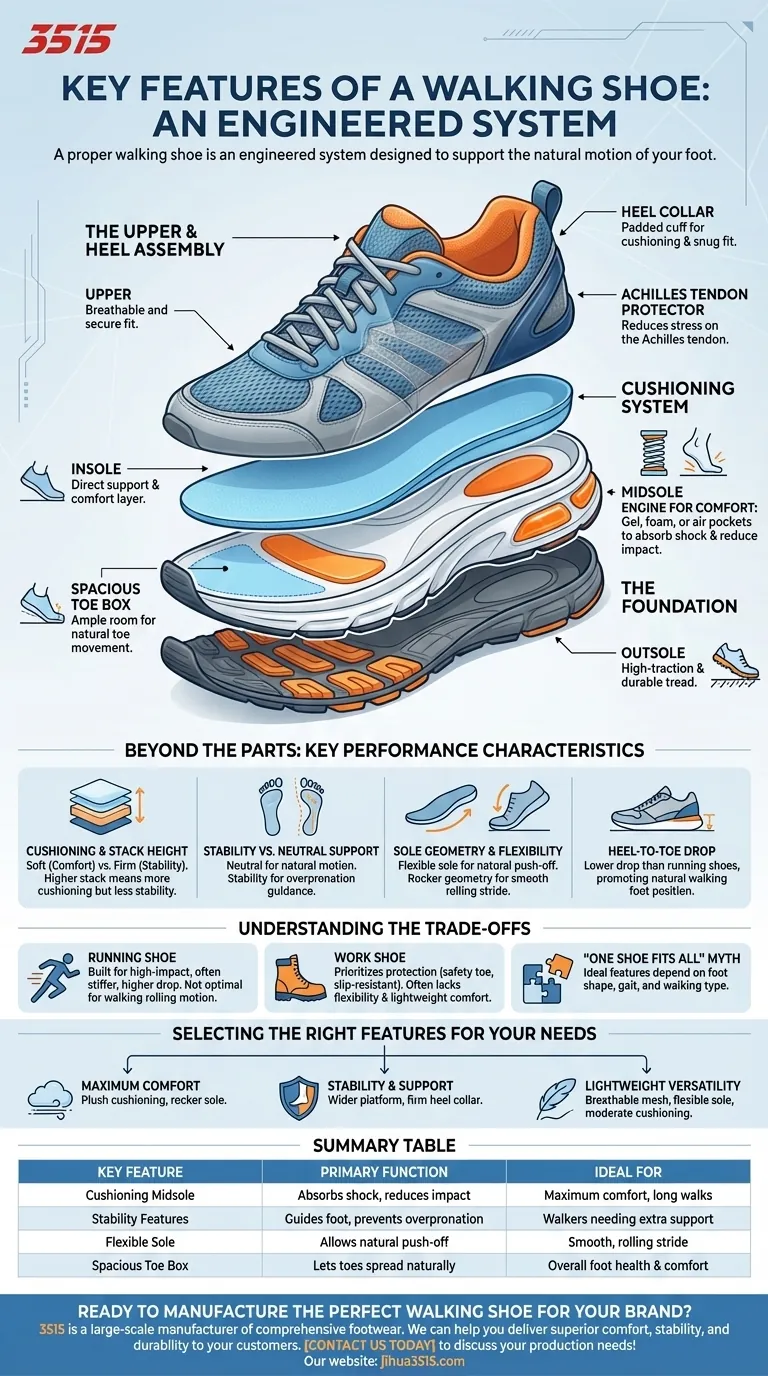
A proper walking shoe is an engineered system of distinct parts, each designed to support the natural motion of your foot. The key features include a protective Achilles tendon protector and heel collar, a supportive upper and insole, a shock-absorbing midsole, a high-traction outsole, and a spacious toe box that allows your toes to spread.
Beyond the individual components, the defining characteristic of a great walking shoe is how its features combine to serve the unique mechanics of walking: a flexible sole for a natural push-off, appropriate cushioning for impact, and a stable platform for the heel-to-toe rolling motion of your stride.
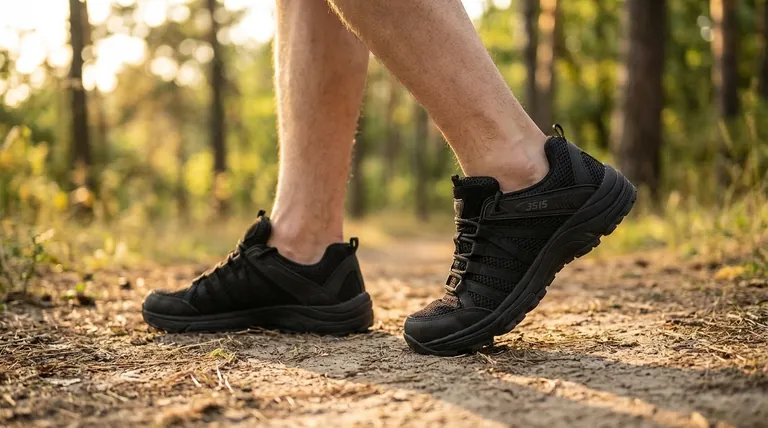
The Core Components: An Anatomical Breakdown
Every walking shoe is built from a few fundamental parts. Understanding their function is the first step in choosing the right pair.
The Upper and Heel Assembly
The upper is the fabric or leather portion of the shoe that holds it onto your foot. It should be breathable yet secure.
The heel collar is the padded cuff that surrounds your ankle, providing cushioning and ensuring a snug fit.
Working with the collar, the Achilles tendon protector locks the shoe around your heel, reducing stress on this critical tendon.
The Cushioning System
The insole is the removable layer inside the shoe that directly supports your foot and arch.
Beneath that lies the midsole, which is the shoe's engine for comfort. Made of gel, foam, or air pockets, its primary job is to absorb shock and reduce the impact of each step.
The Foundation
The outsole is the bottom layer that makes contact with the ground. Its tread provides traction and durability.
Finally, the toe box is the space at the front of the shoe. A proper walking shoe provides ample room for your toes to move and spread out naturally.
Beyond the Parts: Key Performance Characteristics
How the core components are implemented determines how the shoe actually feels and performs. These characteristics are what truly differentiate one walking shoe from another.
Cushioning and Stack Height
Cushioning can range from soft and plush to firm and responsive. Softer cushioning provides more comfort, while firmer options offer more stability.
The stack height refers to the amount of material between your foot and the ground. A higher stack means more cushioning but can sometimes feel less stable.
Stability vs. Neutral Support
A neutral shoe allows your foot to move naturally.
A stability shoe includes features like a widened platform or denser foam to help guide the foot of someone who overpronates (whose foot rolls excessively inward).
Sole Geometry and Flexibility
A key feature of a walking shoe is a flexible sole. This allows your foot to push off the ground easily and complete the natural walking gait.
Some modern shoes feature a rocker geometry, a curved sole that helps promote a smooth, rolling stride from heel to toe.
Heel-to-Toe Drop
This measures the height difference between the heel and the forefoot. Walking shoes typically have a lower heel drop than many running shoes, which promotes a more natural foot position for the walking motion.
Understanding the Trade-offs
A walking shoe is a specialized tool. Choosing the right one means understanding what it is—and what it is not.
Why a Running Shoe Isn't Always Ideal
Running shoes are built to absorb the high impact of running. They are often stiffer and have a higher heel drop to accommodate a different foot strike, which may not be optimal for the rolling motion of walking.
Why a Work Shoe Has a Different Goal
Work and safety shoes prioritize protection over all else. They may include features like slip-resistant outsoles, steel toes, and water resistance, but often at the cost of the flexibility and lightweight cushioning essential for a good walking shoe.
The Myth of "One Shoe Fits All"
There is no single "best" walking shoe. The ideal set of features depends entirely on your foot shape, your gait, and the type of walking you do. A shoe designed for stability may feel restrictive to someone with a neutral foot.
Selecting the Right Features for Your Needs
Use your understanding of these features to find a shoe that aligns with your personal goals.
- If your primary focus is maximum comfort for long distances: Look for a shoe with plush midsole cushioning (gel or foam) and a rocker sole geometry to promote a smooth stride.
- If your primary focus is stability to prevent overpronation: Prioritize shoes with a wider platform, a firm heel collar, and supportive midsole construction.
- If your primary focus is a lightweight, versatile shoe for daily wear: Choose a model with a breathable mesh upper, a flexible sole, and a moderate level of cushioning.
Ultimately, understanding these features empowers you to choose a shoe that works with your body, not against it.
Summary Table:
| Key Feature | Primary Function | Ideal For |
|---|---|---|
| Cushioning Midsole | Absorbs shock and reduces impact | Maximum comfort on long walks |
| Stability Features | Guides the foot and prevents overpronation | Walkers needing extra support |
| Flexible Sole | Allows natural push-off during gait | A smooth, rolling stride |
| Spacious Toe Box | Lets toes spread naturally | Overall foot health and comfort |
Ready to manufacture the perfect walking shoe for your brand?
As a large-scale manufacturer, 3515 produces a comprehensive range of footwear for distributors, brand owners, and bulk clients. Our production capabilities encompass all types of shoes and boots, including high-performance walking shoes tailored to your specifications. We can help you deliver superior comfort, stability, and durability to your customers.
Contact us today to discuss your production needs and bring your vision to life!
Visual Guide
Related Products
- Durable Rubber Sole Outdoor Shoes Wholesale & Custom Manufacturing
- Wholesale Durable Camouflage Canvas Shoes with High-Traction Cleated Rubber Sole
- Premium Suede Sport Safety Shoes for Wholesale & Bulk Orders
- Premium Lightweight Safety Shoes for Wholesale & Bulk Orders
- Wholesale Comfortable Business Casual Shoes Custom Manufacturing
People Also Ask
- What is the function of the sole in outdoor shoes? Find the Perfect Grip and Support
- What role do outdoor shoes and sneakers play in navigating external terrains? Engineered Stability for Every Surface
- How is AI utilized in the design of outdoor and safety footwear? Harnessing Big Data for Market-Driven Shoe Innovation
- Why is durability important when selecting outdoor shoes? A Guide to Safety & Long-Term Value
- What are the key components of outdoor shoes that affect comfort and sturdiness? A Guide to Durable, High-Performance Footwear