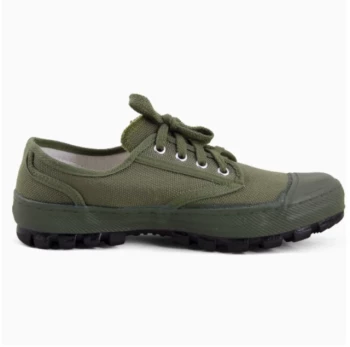
When walking on concrete, the right shoe is not a luxury; it's a necessity for your long-term joint health. The essential characteristics are a significant amount of firm cushioning to absorb shock and a thick, highly durable rubber outsole to withstand the abrasive surface. These two features work together to protect your body from the repetitive impact of walking on an unforgiving surface.
The ideal shoe for concrete isn't about finding the softest cushion, but about a balanced system. You need durable shock absorption combined with stable support to counteract the harsh, repetitive forces that travel from the ground up through your joints.
The Core Challenge: Concrete vs. Your Body
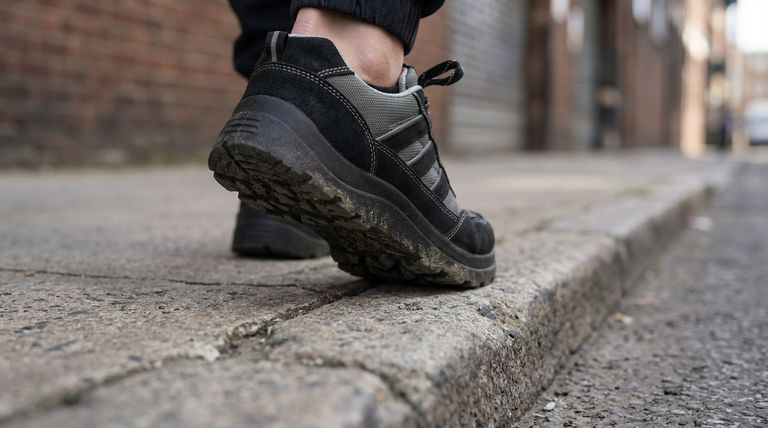
Concrete is an incredibly hard, non-absorbent surface. Unlike walking on grass or a dirt trail, it provides zero "give" when your foot strikes the ground.
This lack of natural shock absorption means that with every step, a significant impact force travels up from your feet through your ankles, knees, hips, and lower back. Over time, this repetitive stress can lead to fatigue, soreness, and more serious joint issues.
Deconstructing the Ideal Concrete Walking Shoe
To combat the harshness of concrete, a shoe must be engineered with specific features that create a protective barrier between you and the ground.
Cushioning: The First Line of Defense
A shoe's midsole is its primary shock absorber. For concrete, this component is critical.
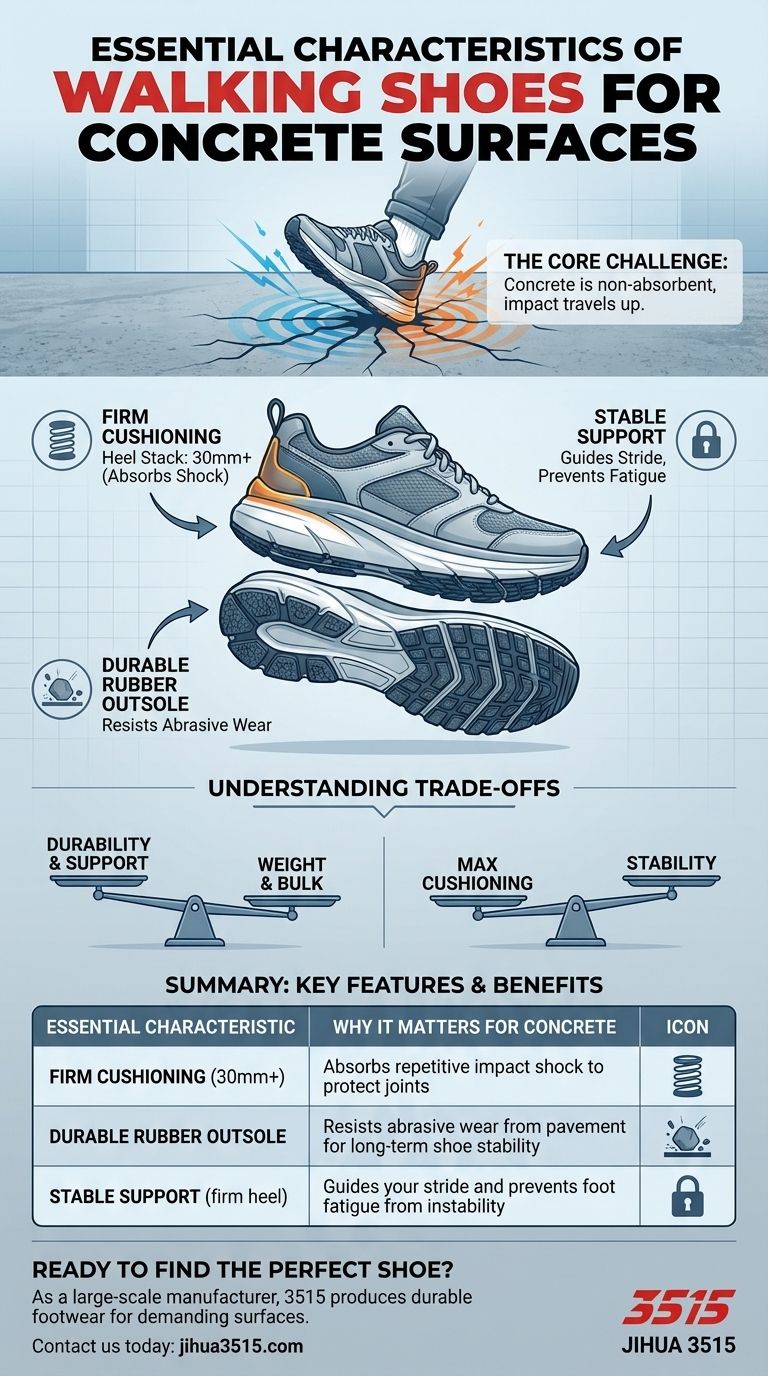
Look for a heel stack height of at least 30mm. This measurement refers to the amount of material between your heel and the ground, and it's a good indicator of substantial cushioning.
The "Not Too Soft" Principle
This is a crucial and often misunderstood point. While a shoe that feels like a marshmallow might seem ideal, excessively soft foam can cause problems.
Overly soft cushioning can feel unstable, forcing the small muscles in your feet and ankles to work overtime just to keep you balanced. This can lead to fatigue and strain.
The best midsoles for concrete offer firm cushioning. They absorb impact effectively while providing a stable, responsive platform that returns a bit of energy with each step.
The Outsole: Durability Meets Grip
The outsole is the part of the shoe that makes direct contact with the pavement. Concrete is highly abrasive and will quickly wear down inferior materials.
Your shoe must have a thick outsole made of highly abrasion-resistant rubber. This ensures the shoe lasts longer and protects the cushioning midsole from being ground down. A durable outsole provides a long-lasting, stable foundation for the entire shoe.
Support and Stability: The Unsung Heroes
Cushioning alone is not enough. The shoe must also guide your foot through a proper stride, especially over long distances.
Look for features like a firm heel counter (the part that cups your heel) and a wider base through the midfoot and heel. These elements create a stable platform that prevents your foot from rolling inward or outward excessively, reducing strain on your joints.
Understanding the Trade-offs
Choosing the right shoe always involves balancing competing characteristics.
Durability vs. Weight
Features that make a shoe great for concrete—thick rubber outsoles and dense, supportive foam—add weight. A highly durable, protective shoe will almost always be heavier than a minimalist, lightweight alternative.
Cushioning vs. Stability
Maximum cushioning can sometimes compromise stability. Shoes with extremely high stack heights can feel less planted on the ground. The key is finding a shoe that offers ample protection without making you feel unstable.
Making the Right Choice for Your Goal
Select your footwear based on your primary walking objective.
- If your primary focus is maximum joint protection for long-distance walks: Prioritize a shoe with a high stack height (over 30mm) and firm, responsive cushioning to absorb the most impact over time.
- If your primary focus is all-day comfort for commuting and daily errands: Look for a balanced shoe with moderate, durable cushioning and a stable base that won't feel overly bulky or heavy.
- If you are prone to foot fatigue or instability: Pay close attention to support features like a structured heel and a wide platform, ensuring the cushioning is firm rather than excessively soft.
Ultimately, investing in the right footwear transforms concrete from an adversary into your pathway.
Summary Table:
| Essential Characteristic | Why It Matters for Concrete |
|---|---|
| Firm Cushioning (30mm+ heel stack) | Absorbs repetitive impact shock to protect ankles, knees, and hips. |
| Durable Rubber Outsole | Resists abrasive wear from pavement for long-term shoe stability. |
| Stable Support (firm heel counter) | Guides your stride and prevents foot fatigue from instability. |
Ready to find the perfect shoe for your needs?
As a large-scale manufacturer, 3515 produces a comprehensive range of durable footwear for distributors, brand owners, and bulk clients. Our production capabilities encompass all types of shoes and boots engineered for demanding surfaces like concrete. We can help you provide the joint protection and long-lasting comfort your customers need.
Contact us today to discuss your footwear requirements and discover how we can support your business.
Visual Guide
Related Products
- Durable Leather Work Boots Wholesale Manufacturer & Custom Factory
- Durable Goodyear Welt Leather Work Boots for Wholesale & Private Label
- Durable Rubber-Soled Utility Shoes for Wholesale & Custom Brand Manufacturing
- Durable Leather Moc Toe Work Boots for Wholesale & Custom Manufacturing
- Wholesale Durable Camo Canvas Shoes with High-Traction Rubber Soles
People Also Ask
- What are the common workplace hazards that can be mitigated with the right work boots? Protect Your Workforce
- How do PVC, neoprene, and rubber work boots compare in weight? Choose the Right Boot for All-Day Comfort
- Which brands are known for high-quality work boots? A Guide to Durable, Safe Footwear
- What are the main differences between 6 inch and 8 inch boots? Support vs. Mobility Explained
- What options are available for restoring worn-out work boots? Expert Strategies for Longevity