Beyond sturdy boots, the most effective protective gear to prevent snake bites are snake gaiters or snake chaps. These specialized items are designed to cover the lower legs and ankles—the most common targets for a defensive snake strike—with fang-resistant material. They provide a critical barrier between you and a potential bite.
True snake bite prevention is a system, not a single piece of gear. It combines specialized protective equipment with disciplined situational awareness to minimize risk effectively.
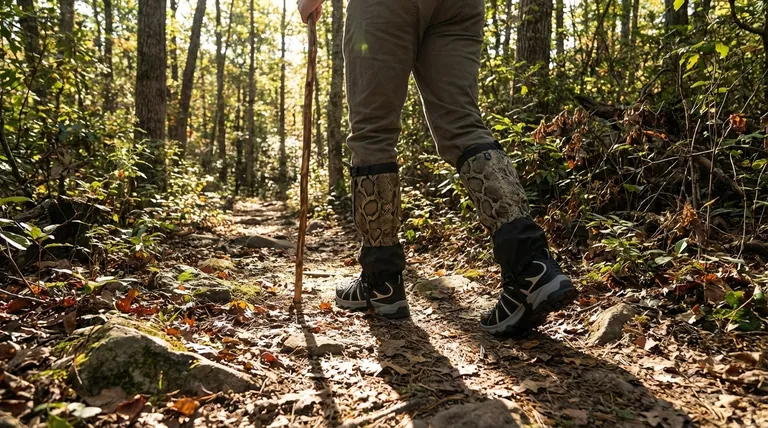
The Role of Specialized Protective Gear
Your footwear is the foundation, but it doesn't protect your lower legs. This is where specialized gear becomes essential for anyone venturing into snake-prone environments.
Snake Gaiters: Your First Line of Defense
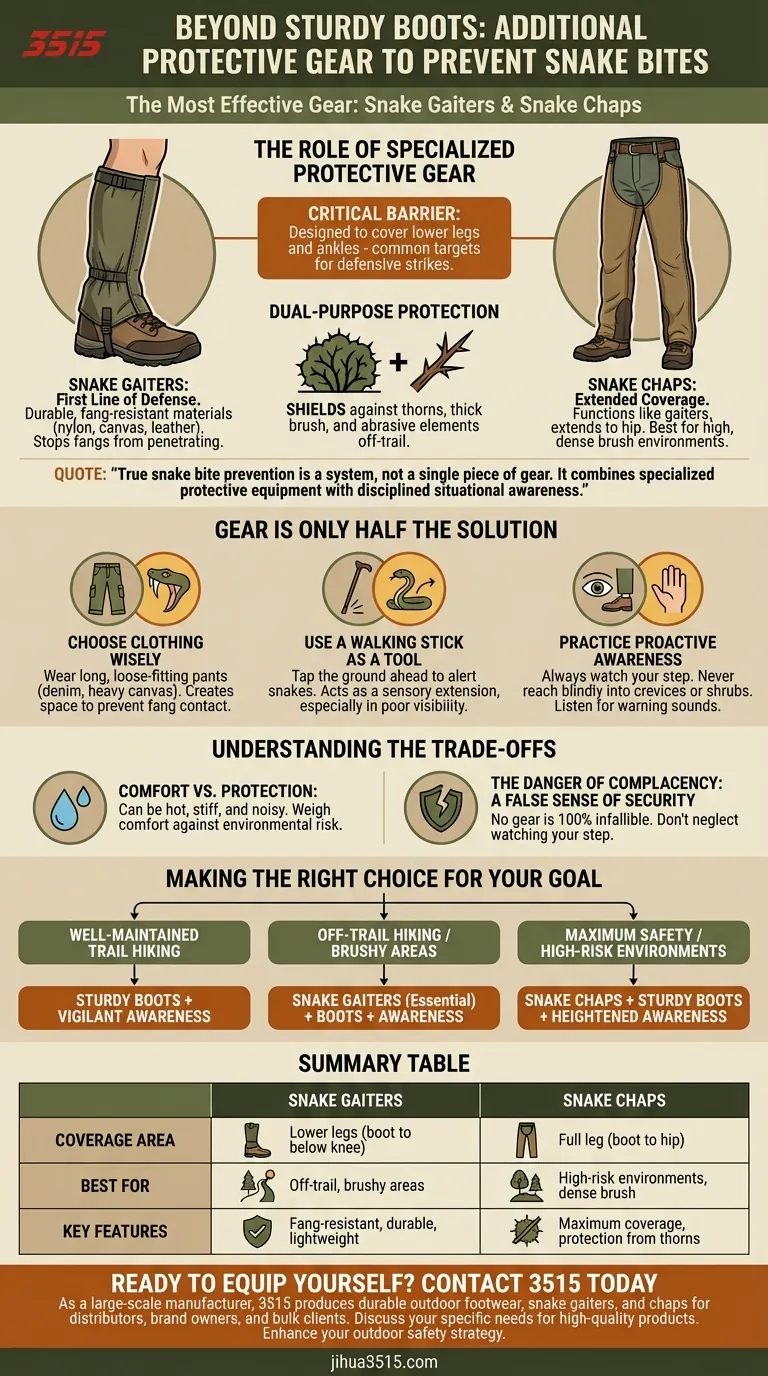
Snake gaiters are durable sheaths that wrap around your lower legs, typically extending from the top of your boot to just below your knee. They are specifically engineered to stop snake fangs from penetrating.
Most gaiters are made from tough materials like high-denier nylon, canvas, or even leather, providing a rigid and impenetrable surface.
Snake Chaps: For Extended Coverage
Snake chaps offer more extensive protection, functioning like gaiters but extending higher up the leg, often to the hip.
This level of coverage is typically reserved for those working or moving through very high, dense brush where the risk of a strike above the knee is more pronounced.
Dual-Purpose Protection
A significant secondary benefit of gaiters and chaps is their robust protection against other common outdoor hazards.
They will effectively shield your legs from sharp thorns, thick brush, and other abrasive elements you encounter while walking off-trail.
Gear is Only Half the Solution
Wearing protective equipment without adjusting your behavior creates a false sense of security. The most crucial safety tool is your own awareness and a strategic approach to movement.
Choose Clothing Wisely
Wear long, loose-fitting pants made from a sturdy material like denim or heavy canvas. The looseness creates space between the fabric and your skin, which can prevent fangs from making contact even if they penetrate the material.
Use a Walking Stick as a Tool
A simple walking stick is more than a support; it's a sensory extension. Use it to tap the ground ahead of you, especially before stepping over logs or into areas with poor visibility.
This tapping can alert a snake to your presence from a safe distance, giving it a chance to move away before you get too close.
Practice Proactive Awareness
Always watch where you step and place your hands. Never blindly reach into crevices, under rocks, or into shrubs where a snake may be sheltering.
Be attentive to your surroundings. Listen for warning sounds like a rattle or a hiss and be extra cautious in areas with heavy ground cover or deep shade, which are prime spots for snakes to rest.
Understanding the Trade-offs
While highly effective, incorporating snake-proof gear isn't without its considerations. Understanding these limitations is key to making an informed decision.
Comfort vs. Protection
Snake gaiters and chaps can be hot, stiff, and sometimes noisy as you walk. This trade-off in comfort is something you must weigh against the level of risk in the environment you're entering.
The Danger of Complacency
The most significant risk is developing a false sense of security. No gear is 100% infallible. Relying solely on your equipment can lead to carelessness, such as not watching your step, which is the most critical preventative measure of all.
Making the Right Choice for Your Goal
Your specific activity dictates the appropriate level of protection.
- If your primary focus is well-maintained trail hiking: Sturdy, over-the-ankle boots and vigilant awareness are your most important tools.
- If your primary focus is off-trail hiking or work in brushy areas: Snake gaiters should be considered essential, non-negotiable gear.
- If your primary focus is maximum safety in high-risk environments: Combine snake chaps, sturdy boots, and heightened situational awareness for the most comprehensive protection.
True safety in the outdoors is achieved by combining the right equipment with mindful, informed behavior.
Summary Table:
| Protective Gear | Coverage Area | Best For | Key Features |
|---|---|---|---|
| Snake Gaiters | Lower legs (boot to below knee) | Off-trail hiking, brushy areas | Fang-resistant material, durable, lightweight |
| Snake Chaps | Full leg (boot to hip) | High-risk environments, dense brush | Maximum coverage, protection from thorns and brush |
Ready to Equip Yourself with the Best Protective Gear?
As a large-scale manufacturer, 3515 produces a comprehensive range of durable outdoor footwear and protective gear for distributors, brand owners, and bulk clients. Our production capabilities encompass all types of safety boots, snake gaiters, and chaps designed for maximum protection and comfort in high-risk environments.
Let us help you stay safe and prepared. Contact us today to discuss your specific needs and discover how our high-quality products can enhance your outdoor safety strategy.
Visual Guide
Related Products
- Lightweight Breathable Sneakers with Wet-Traction Grip for Wholesale & Private Label
- Wholesale Breathable Athletic Sneakers - Custom Lightweight Cushioned Footwear Manufacturer
- Wholesale Lightweight Cushioned Athletic Sneakers for Custom Bulk Production
- Wholesale Durable Camouflage Canvas Shoes with High-Traction Cleated Rubber Sole
- Durable High-Ankle Tactical Boots Wholesale Manufacturer for Custom & Bulk Orders
People Also Ask
- Why are breathable sneakers necessary for tropical commuting? Stay Cool and Dry in High Humidity
- What role do lightweight training shoes play in urban traffic? Boost Agility and Reaction for Safer City Navigation
- How do lightweight shoes provide support? The Science of Efficient Cushioning & Stability
- What are the style advantages of lightweight shoes? Sleek, Versatile & Modern Comfort
- How do lightweight shoes contribute to healthier feet? Reduce Fatigue & Prevent Foot Problems