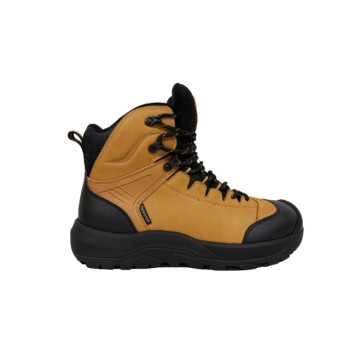
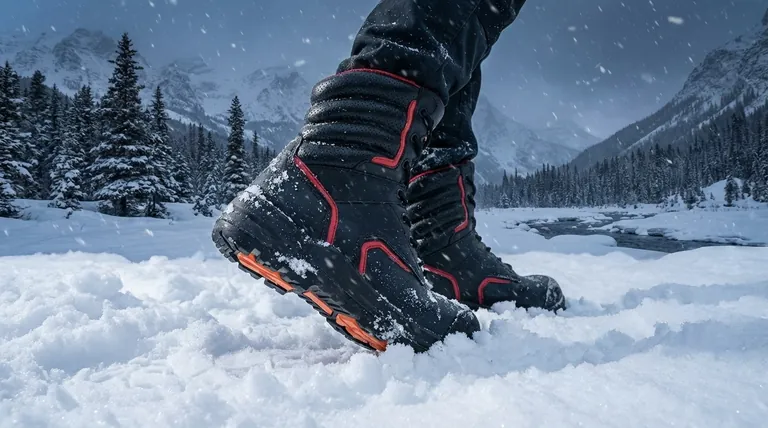
The definitive conclusion is that snow boots are an indispensable tool for specific, harsh winter conditions. Their utility is not as an everyday winter shoe, but as specialized equipment designed to provide maximum warmth, dryness, and safety when facing heavy snow, slush, or ice. They are purpose-built for protection where other footwear would fail.
While many boots are suitable for cold weather, a true snow boot is a piece of technical gear. Its value lies in its uncompromising ability to protect your feet from extreme cold and wetness, a function that requires specific design trade-offs in weight and breathability.
What Defines a True Snow Boot?
To understand the utility of a snow boot, you must first understand its core components. These features work in concert to create a barrier against the elements.
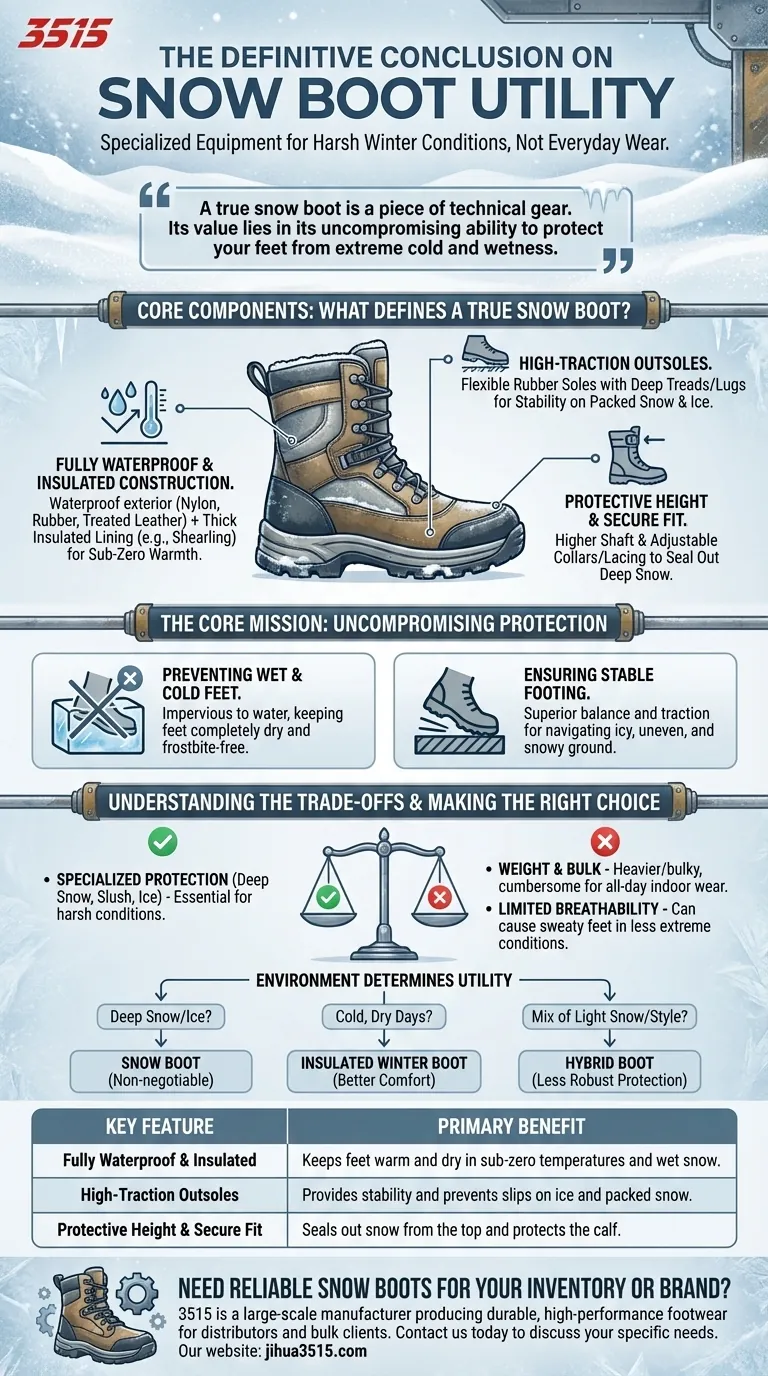
Fully Waterproof and Insulated Construction
A snow boot’s primary job is to keep your feet warm and dry. This is achieved through a fully waterproof exterior, often made of nylon, rubber, or treated leather, combined with a thick insulated lining.
Some models use materials like shearling to provide exceptional warmth even in sub-zero temperatures.
High-Traction Outsoles
Safety on slick surfaces is paramount. Snow boots feature flexible rubber soles with deep treads or lugs designed to grip firmly on packed snow and ice.
This aggressive tread pattern provides stability and helps prevent dangerous slips and falls.
Protective Height and Secure Fit
Snow boots are designed with a higher shaft to prevent snow from entering the boot from the top.
Many also feature adjustable collars or lacing systems that create a tight seal around the calf, further protecting your legs from deep snow.
The Core Mission: Uncompromising Protection
The features of a snow boot serve a single purpose: to provide a level of protection that general-purpose winter boots cannot match.
Preventing Wet and Cold Feet
In snowy or slushy conditions, moisture is the greatest enemy. Snow boots are engineered to be impervious to water, ensuring your feet remain completely dry, which is critical for staying warm and preventing frostbite.
Ensuring Stable Footing
The specialized outsoles offer a level of balance and traction that is essential for navigating icy sidewalks, unshoveled paths, or uneven, snow-covered ground.
Understanding the Trade-offs
The specialized nature of snow boots means they are not the ideal choice for every winter scenario. Understanding their limitations is key to using them correctly.
Weight and Bulk
The robust materials required for waterproofing and heavy insulation make snow boots inherently heavier and bulkier than other boots. This can make them feel cumbersome for all-day wear, especially indoors or for long-distance walking on clear pavement.
Limited Breathability
The same membranes that make snow boots waterproof also limit their breathability. In less extreme conditions or during high-exertion activities, this can lead to sweaty, uncomfortable feet.
Making the Right Choice for Your Conditions
Ultimately, the utility of a snow boot depends entirely on the environment you plan to use it in.
- If you face deep snow, slush, or icy ground: A dedicated snow boot is non-negotiable for its specialized waterproofing, insulation, and traction.
- If your primary concern is cold on dry, clear days: A less bulky, insulated winter boot may offer sufficient warmth with better all-day comfort and breathability.
- If you need a balance of protection and everyday style: Many hybrid boots can handle light, occasional snow, but they lack the robust protective features of a true snow boot for harsh conditions.
A snow boot is the right tool for the job when conditions are at their worst, providing a critical layer of safety and comfort.
Summary Table:
| Key Feature | Primary Benefit |
|---|---|
| Fully Waterproof & Insulated | Keeps feet warm and dry in sub-zero temperatures and wet snow. |
| High-Traction Outsoles | Provides stability and prevents slips on ice and packed snow. |
| Protective Height & Secure Fit | Seals out snow from the top and protects the calf. |
Need reliable snow boots for your inventory or brand?
As a large-scale manufacturer, 3515 produces a comprehensive range of durable and high-performance footwear for distributors, brand owners, and bulk clients. Our production capabilities encompass all types of insulated and waterproof boots designed to meet the demands of harsh winter conditions.
Contact us today to discuss your specific needs and discover how we can provide the right footwear solutions for your market.
Visual Guide
Related Products
- Premium Insulated Safety Boots and Shoes for Wholesale & Bulk Orders
- Durable Waterproof Rain Boots | Custom Manufacturer for Wholesale & Brands
- Factory Direct Wholesale Rain Boots Durable Waterproof & Fully Customizable
- Wholesale Waterproof Tactical Boots Custom Suede & High-Traction Soles
- Wholesale Lightweight Tactical Boots Custom Manufacturer for Desert & Combat Use
People Also Ask
- What are the recommended insulation ratings for mild winter conditions? A Guide for Active & Stationary Workers
- How does insulation thickness correlate with temperature ranges? A Guide to Choosing the Right Warmth
- What insulation level is needed for severe cold and stationary work? 1200g or Higher is Essential
- What safety advantages do insulated boots offer beyond warmth? Dielectric Protection & Superior Grip
- How does fleece lining contribute to the warmth of insulated boots? Trapping Air for Superior Cold Protection