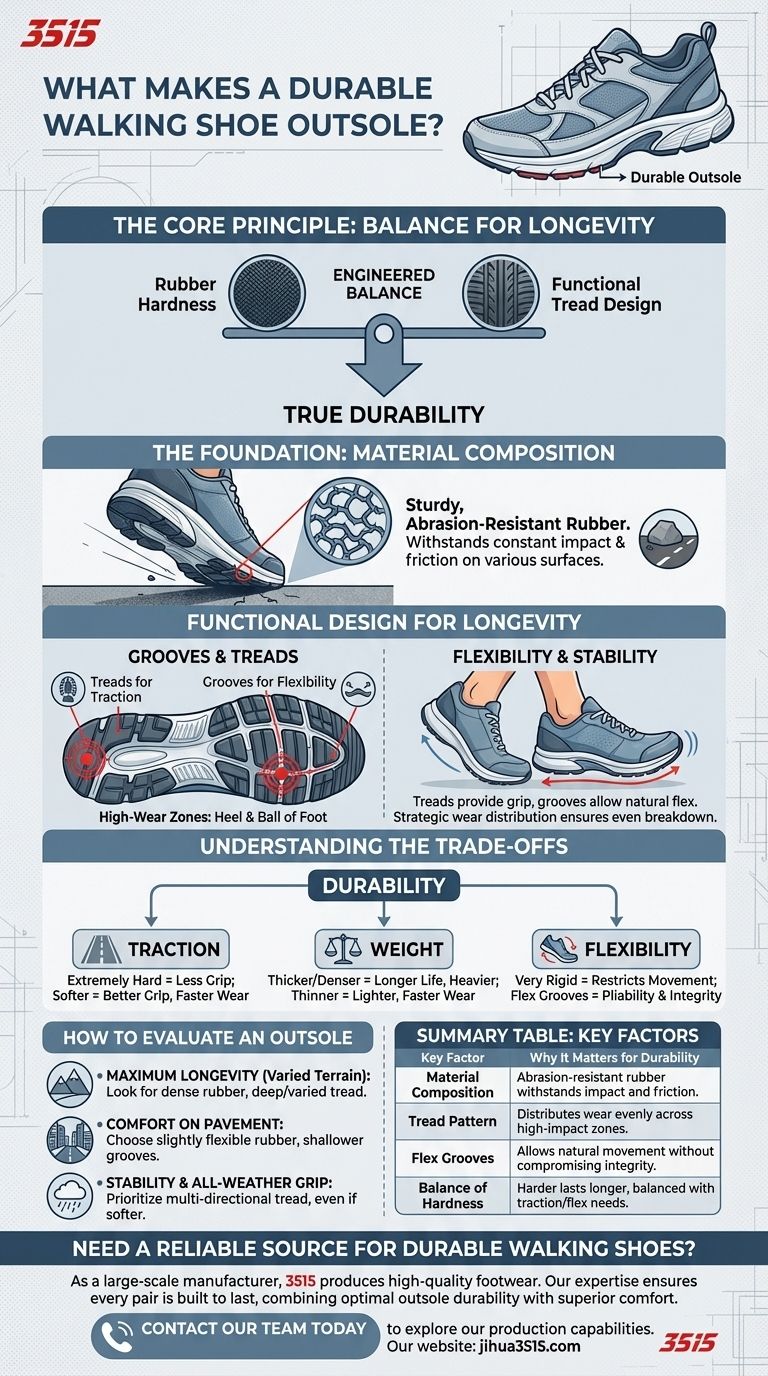
A durable walking shoe outsole is primarily defined by its material composition—specifically, a sturdy, abrasion-resistant rubber. This material is engineered to withstand the constant impact and friction of various walking surfaces while its tread pattern provides essential traction and stability.
The true durability of a walking shoe's outsole lies in a carefully engineered balance between the hardness of the rubber compound and a functional tread design that distributes wear effectively without compromising flexibility.
The Foundation: Material Composition
The single most important factor in outsole durability is the material it's made from. This component makes direct contact with the ground and absorbs the majority of wear and tear.
The Critical Role of Rubber
The outsole is almost universally made from rubber due to its unique combination of toughness and resilience. It is specifically formulated to resist being worn away by abrasive surfaces like pavement and trails.
Why It Withstands Damage
This sturdy rubber is designed to handle repeated impact across different terrains. It provides the core structure that prevents the bottom of the shoe from breaking down prematurely.
Functional Design for Longevity
Beyond the material itself, the physical design of the outsole plays a crucial role in how long it lasts. The pattern of grooves and treads is engineered for more than just grip.
The Purpose of Grooves and Treads
Treads are the protruding parts of the outsole that make contact with the ground, providing traction. Grooves are the channels between them that allow the shoe to flex and bend with your foot's natural movement.
How Design Dictates Wear
A well-designed outsole features a tread pattern that strategically places more durable material in high-wear zones, like the heel and the ball of the foot. This ensures the shoe wears down more evenly over time.
Maintaining Flexibility and Stability
While the rubber must be tough, the outsole cannot be a rigid plank. The grooves allow for necessary flexibility, ensuring a comfortable and natural walking gait, which in turn contributes to the shoe's overall stability.
Understanding the Trade-offs
Choosing an outsole is never about a single feature. Durability must always be balanced against other critical performance factors.
Durability vs. Traction
Extremely hard rubber compounds are highly durable but can sometimes offer less grip on smooth, wet surfaces. Softer, "stickier" rubbers provide excellent traction but tend to wear out much faster.
Durability vs. Weight
Thicker, denser rubber outsoles will almost always last longer. However, this adds significant weight to the shoe, which can lead to foot fatigue on longer walks.
Durability vs. Flexibility
A very rigid and durable outsole can restrict the natural movement of your foot. The best designs use flex grooves to provide pliability in key areas without sacrificing the structural integrity of the high-wear zones.
How to Evaluate an Outsole
When selecting your next pair of walking shoes, use these guidelines to assess the outsole based on your needs.
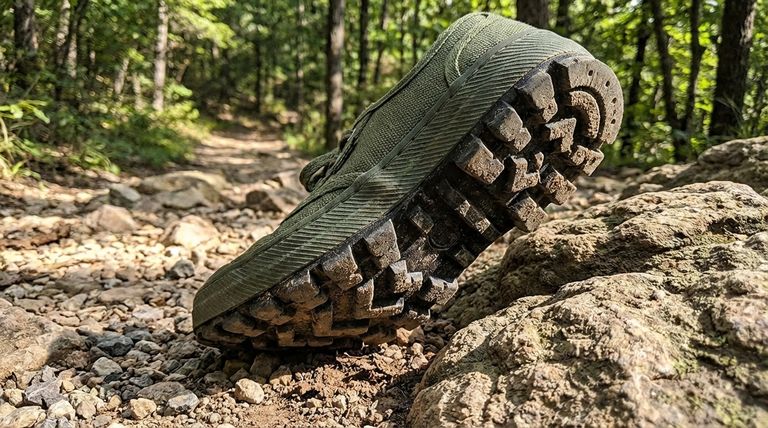
- If your primary focus is maximum longevity for varied terrain: Look for a dense rubber outsole with a relatively deep and varied tread pattern.
- If your primary focus is comfort for walking on pavement: A slightly more flexible rubber with shallower grooves will likely provide sufficient durability and better comfort.
- If your primary focus is stability and all-weather grip: Prioritize an outsole with a clear, multi-directional tread pattern, even if the rubber feels slightly softer to the touch.
Understanding these core principles empowers you to look beyond marketing claims and choose a shoe built to last.
Summary Table:
| Key Factor | Why It Matters for Durability |
|---|---|
| Material Composition | Abrasion-resistant rubber withstands impact and friction from various surfaces. |
| Tread Pattern | Distributes wear evenly across high-impact zones like the heel and ball of the foot. |
| Flex Grooves | Allows natural foot movement without compromising the outsole's structural integrity. |
| Balance of Hardness | Harder rubber lasts longer, but must be balanced with traction and flexibility needs. |
Need a reliable source for durable walking shoes?
As a large-scale manufacturer, 3515 produces a comprehensive range of high-quality footwear for distributors, brand owners, and bulk clients. Our expertise in material science and production engineering ensures every pair is built to last, combining optimal outsole durability with superior comfort.
Let's discuss your specific needs. Contact our team today to explore our production capabilities and find the perfect footwear solution for your market.
Visual Guide
Related Products
- Durable Rubber Sole Outdoor Shoes Wholesale & Custom Manufacturing
- Durable Rubber-Soled Utility Shoes for Wholesale & Custom Brand Manufacturing
- Wholesale Durable Camouflage Canvas Shoes with High-Traction Cleated Rubber Sole
- Durable Canvas Work Shoes with Rubber Lug Sole | Wholesale Manufacturer
- Wholesale Durable & Breathable Training Shoes for Custom Brands
People Also Ask
- What is the function of the sole in outdoor shoes? Find the Perfect Grip and Support
- What role do outdoor shoes and sneakers play in navigating external terrains? Engineered Stability for Every Surface
- How is AI utilized in the design of outdoor and safety footwear? Harnessing Big Data for Market-Driven Shoe Innovation
- Why is durability important when selecting outdoor shoes? A Guide to Safety & Long-Term Value
- What are the key components of outdoor shoes that affect comfort and sturdiness? A Guide to Durable, High-Performance Footwear