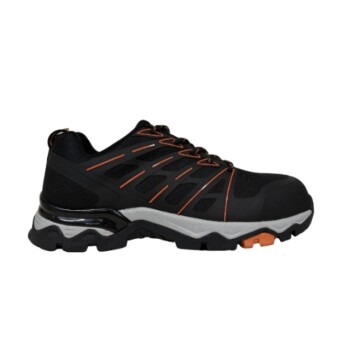
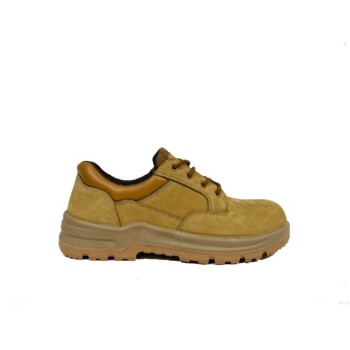
Inorganic nanomaterials and functional additives enhance leather durability by creating a molecular-level barrier directly on the leather fibers. Applied during the finishing stage using high-pressure spraying or immersion, these agents prevent the penetration of oils, water, and mild chemicals, ensuring the material retains its flexibility and strength even in harsh industrial settings.
By forming a protective layer on individual fibers, these treatments prevent the chemical absorption that causes standard leather to harden and crack, thereby preserving the structural integrity of safety shoes in corrosive environments.
The Mechanism of Protection
Precision Application
The integration of these protective agents occurs during the crucial leather finishing stage.
To ensure uniform coverage and deep penetration, manufacturers utilize high-pressure spraying or immersion processes. This is not merely a surface coating; it forces the materials to interact deeply with the leather structure.
Molecular-Level Bonding
Once applied, the inorganic nanomaterials and additives do not just sit on top of the hide.
They form a molecular-level protective layer that coats the leather fibers. This microscopic shield is the fundamental reason the leather can repel contaminants without losing its natural characteristics.
Resistance Capabilities
Repelling Industrial Fluids
The primary function of this treatment is to provide exceptional resistance to common industrial liquids.
The treated leather effectively repels oil and water, preventing them from soaking into the fibers. This is critical for environments like petroleum sites where saturation would ruin untreated footwear.
Chemical Stability
Beyond standard liquids, these functional additives provide a defense against corrosive chemical agents.
The protective layer offers specific resistance to weak acids and alkalis. This prevents the chemical degradation that typically breaks down organic materials in chemical processing facilities.
Preserving Structural Integrity
Preventing Hardening
A common failure point in safety shoes is the hardening of leather after repeated exposure to chemicals.
By blocking chemical penetration, these nanomaterials ensure the leather remains pliable. This prevents the stiffening that makes boots uncomfortable and unsafe for workers.
eliminating Cracking
When leather hardens and dries out from chemical exposure, it inevitably cracks, compromising the user's safety.
This technology maintains the leather's elasticity, ensuring that the shoe does not succumb to cracking. This extends the lifespan of the equipment and maintains the protective barrier for the wearer.
Understanding the Trade-offs
Application Complexity
While effective, this level of protection requires specialized manufacturing processes.
The reliance on high-pressure spraying or immersion implies a more complex production line than standard leather finishing. It requires precise control to ensure the molecular layer forms correctly.
Scope of Chemical Resistance
It is critical to note the limitations regarding chemical strength defined in the protection profile.
The reference specifies resistance to weak acids and alkalis. This implies that while the leather is highly durable, it may not be suitable for environments with highly concentrated or caustic substances without additional protective measures.
Making the Right Choice for Your Environment
When selecting safety footwear, understanding the specific environmental hazards is crucial to leveraging this technology effectively.
- If your primary focus is petroleum or oily environments: Rely on this treatment to prevent the oil saturation that leads to rapid material degradation and hardening.
- If your primary focus is chemical processing: Verify that the exposure risks are limited to weak acids or alkalis to ensure the molecular barrier remains effective.
Advanced finishing with inorganic nanomaterials is the definitive solution for extending the lifecycle of safety footwear in chemically aggressive industries.
Summary Table:
| Feature | Protection Mechanism | Performance Benefit |
|---|---|---|
| Application | High-pressure spraying/immersion | Deep fiber-level penetration |
| Fluids | Oil and water repellency | Prevents saturation and rot |
| Chemicals | Weak acid & alkali resistance | Prevents material degradation |
| Durability | Flexible molecular barrier | Eliminates hardening and cracking |
Partner with 3515 for High-Performance Safety Footwear
As a large-scale manufacturer serving global distributors and brand owners, 3515 leverages advanced nanomaterial technology to deliver superior environmental resistance. Our flagship Safety Shoes series is engineered to withstand the harshest industrial conditions without compromising comfort.
From tactical boots and training sneakers to formal dress shoes, our comprehensive production capabilities ensure your bulk requirements are met with precision and quality. Contact us today to discuss your manufacturing needs and see how our expertise can add value to your brand.
References
- P. S. Bardyugov, M.V. Parshikov. Foot deformities in patients with diabetic foot disease (literature review). DOI: 10.18019/1028-4427-2022-28-3-452-458
This article is also based on technical information from 3515 Knowledge Base .
Related Products
- Premium Suede Sport Safety Shoes for Wholesale & Bulk Orders
- Premium Lightweight Safety Shoes for Wholesale & Bulk Orders
- Wholesale Anti-Smash & Puncture-Proof Safety Shoes Custom Manufacturing for Brands
- Premium KPU Injection Athletic Style Safety Shoes
- Premium Safety Shoes with Rotating Buckle Safety Sneakers
People Also Ask
- What industries have specific OSHA footwear requirements? Ensure Compliance & Protect Your Workforce
- What are the primary functions of professional safety shoes? Maximize Safety in Water Supply Confined Spaces
- What role do specialized safety shoes play in preventing falls? Engineering Stability in Industrial Environments
- What are the main components of safety shoes? A Guide to Protective Footwear Design
- Why is barefoot walking used as a baseline in gait safety research? Unlocking Natural Biomechanics for Shoe Design