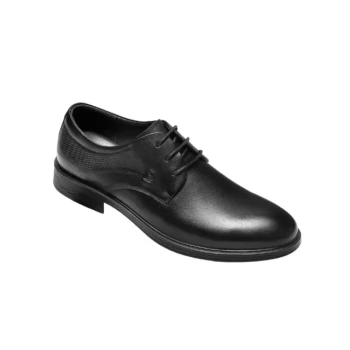
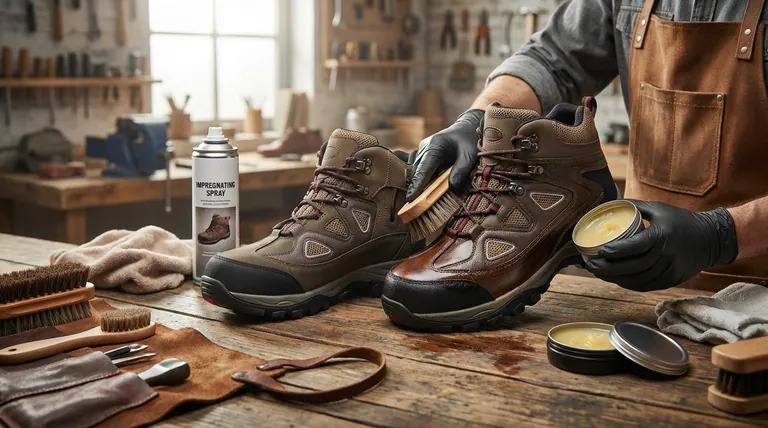
The primary benefits of treating leather work shoes are significantly increased water repellency and the preservation of the leather's flexibility. Proper care with leather grease or an impregnating spray prevents the material from drying out and cracking, while also making it easier to clean off dirt and dust. This regular maintenance is crucial for extending the lifespan and ensuring the consistent performance of your footwear.
The core reason to treat your leather work shoes is not just about keeping your feet dry today, but about investing in the longevity and structural integrity of the shoe for tomorrow. It's a fundamental step in preventative maintenance.
Why Leather Requires Treatment
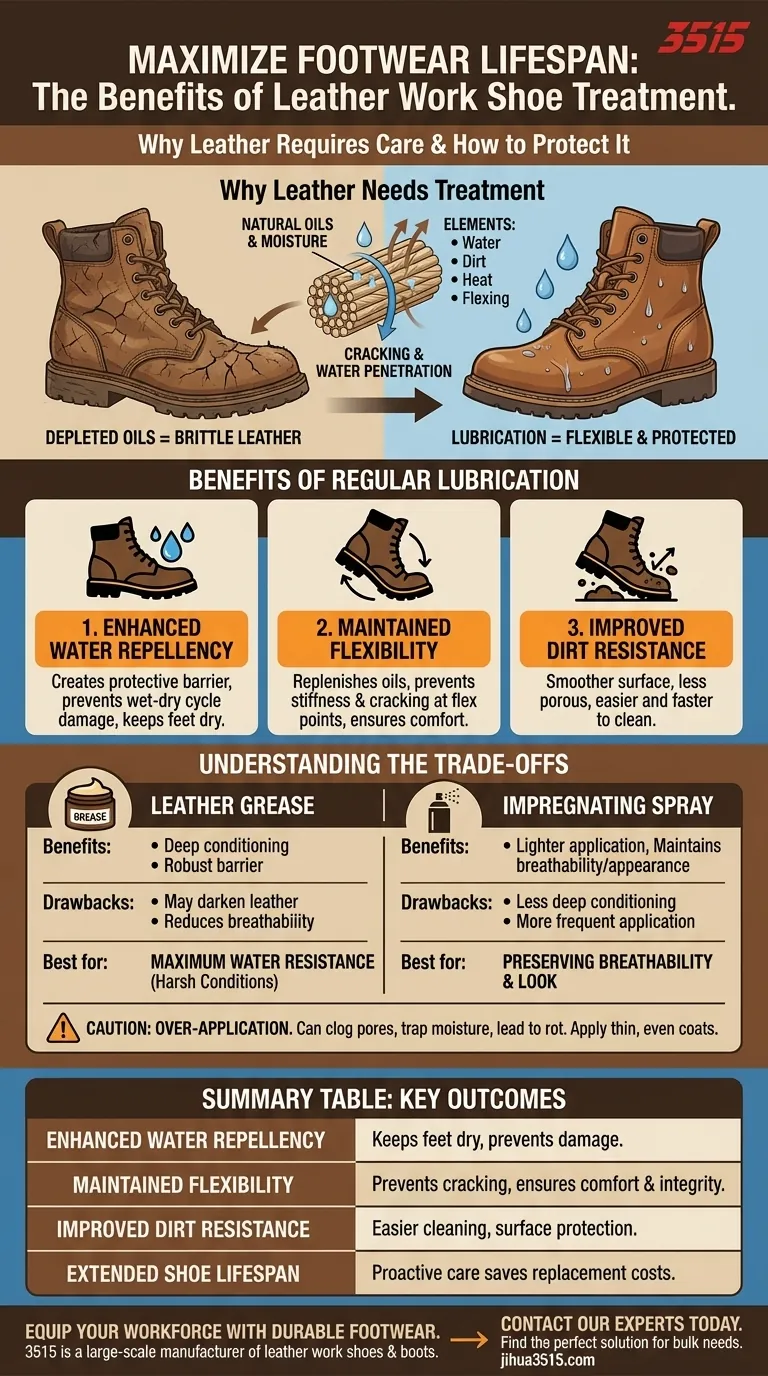
Leather is a natural material, essentially a skin. Like your own skin, it contains natural oils and moisture that keep it supple and strong. Over time, exposure to the elements—water, dirt, heat, and constant flexing—depletes these essential oils.
The Impact of Depleted Oils
When leather loses its natural oils, the fibrous structure becomes dry and brittle. This leads to stiffness, discomfort, and eventually, cracking.
Once cracks form, the leather's protective barrier is permanently compromised. This not only allows water to penetrate easily but also weakens the shoe's overall structure.
The Role of Water
Water is particularly damaging. As it soaks into untreated leather and then evaporates, it draws out even more of the natural oils, accelerating the drying and hardening process. This cycle of wetting and drying is a primary cause of leather degradation.
The Benefits of Regular Lubrication
Applying a product like leather grease or an impregnating spray proactively addresses these issues, providing a clear return on the small investment of time.
1. Enhanced Water Repellency
This is the most immediate and noticeable benefit. Both grease and sprays create a protective barrier on the leather's surface.
This barrier causes water to bead up and roll off rather than soaking into the material, keeping your feet dry and preventing the damaging effects of the wet-dry cycle.
2. Maintained Flexibility
By replenishing the oils within the leather's fibers, lubrication keeps the material supple and pliable.
Flexible leather moves with your foot, preventing the stiffness that can cause discomfort and blisters. It also drastically reduces the likelihood of the leather cracking at key flex points, like across the toe box.
3. Improved Dirt and Dust Resistance
A treated surface is smoother and less porous than dry, untreated leather.
This makes it more difficult for dirt, dust, and other debris to cling to the shoe. Consequently, cleaning your work shoes becomes a much faster and easier task.
Understanding the Trade-offs
While treatment is essential, it's important to choose the right product and apply it correctly. Over-application can also present issues.
Leather Grease vs. Impregnating Spray
Leather grease offers deep conditioning and a very robust water-repellent barrier. However, it can slightly darken the leather and may reduce its breathability.
Impregnating sprays are lighter, easier to apply, and have less impact on the leather's appearance and breathability. However, they may offer less deep conditioning and require more frequent application than grease.
The Risk of Over-Application
Applying too much grease can clog the pores of the leather entirely. This traps moisture inside the shoe and can lead to the leather becoming overly soft or even rotting over time. Always apply thin, even coats and allow the product to absorb fully.
How to Apply This to Your Maintenance Routine
Your goal will determine the best approach for maintaining your work shoes.
- If your primary focus is maximum water resistance in harsh, wet conditions: Use a quality leather grease for its deep conditioning and robust protective barrier.
- If your primary focus is preserving breathability and the original look of the shoe: Opt for a high-quality impregnating spray, and be prepared to apply it more frequently.
- For general-purpose care and longevity: A balanced approach of cleaning your boots regularly and applying a moderate coat of grease every few months is the most effective strategy.
Ultimately, consistent care is the single most important factor in extending the life and performance of your leather work shoes.
Summary Table:
| Benefit | Key Outcome |
|---|---|
| Enhanced Water Repellency | Keeps feet dry and prevents leather damage from wet-dry cycles. |
| Maintained Flexibility | Prevents cracking and stiffness, ensuring comfort and structural integrity. |
| Improved Dirt Resistance | Makes cleaning easier and protects the leather's surface. |
| Extended Shoe Lifespan | Proactive care prevents irreversible damage, saving on replacement costs. |
Ready to equip your workforce with durable, high-performance footwear?
As a large-scale manufacturer, 3515 produces a comprehensive range of leather work shoes and boots designed for demanding environments. We ensure every pair is built to last, but proper maintenance is key to maximizing their lifespan.
Let us help you find the perfect footwear solution for your distributors, brand owners, or bulk clients. Contact our experts today to discuss your needs and discover how our production capabilities can benefit your business.
Visual Guide
Related Products
- Durable Goodyear Welt Leather Work Boots for Wholesale & Private Label
- Wholesale Leather Work Boots with Customizable Wedge Sole for Brands
- Durable Leather Work Boots for Wholesale & Custom OEM Manufacturing
- Durable Leather Work Boots for Wholesale & Custom Manufacturing
- Durable Leather Work Boots Wholesale Manufacturer & Custom Factory
People Also Ask
- What is the difference between full-grain and top-grain leather? Premium Material Guide for Boot Manufacturers
- What are the advantages of leather as an upper material for work boots? Unmatched Durability & Custom Comfort
- Why is it important to waterproof leather work boots? Protect Your Investment and Performance
- How should new leather work boots be broken in? A Guide to Comfort and Durability
- What are the advantages of leather uppers in work boots? Unmatched Durability & Protection