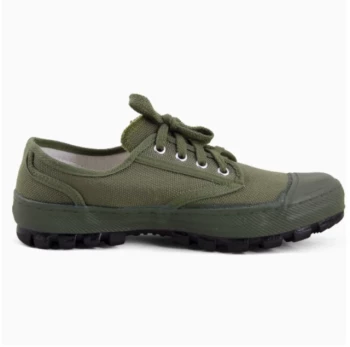
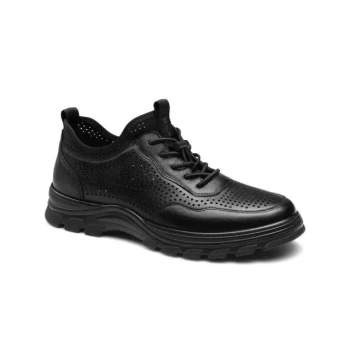
The integration of industrial-grade wear-resistant rubber with re-entrant hexagonal structures creates a responsive, bio-mimetic outsole system. This design functions by utilizing high-hardness rubber as a durable outer shield while relying on the specific hexagonal geometry to facilitate movement. The structure allows the sole to expand laterally and displace under pressure, ensuring the shoe adapts to the foot's changing shape during motion rather than restricting it.
Core Insight: This system solves the conflict between rigid protection and natural flexibility. By allowing the outsole to dynamically expand and displace with the foot, it maintains stability and distributes pressure, significantly reducing the risk of injuries caused by local stress concentration.
The Mechanical Roles of Each Component
The Protective Shell: High-Hardness Rubber
The foundation of this system is industrial-grade, wear-resistant rubber.
Its primary function is to act as the critical contact layer with the ground. Because this material possesses high hardness, it provides the necessary grip and traction required for intense movement.
Crucially, it protects the softer or more complex internal structures from abrasion and environmental damage.
The Kinetic Engine: Re-entrant Hexagonal Structures
While the rubber provides protection, the re-entrant hexagonal structure dictates how the outsole moves.
This specific geometry is "auxetic," meaning it possesses unique deformation properties. When subjected to compression (stepping down) or tension (pushing off), the hexagonal lattice undergoes lateral expansion and displacement.
Instead of resisting the force, the structure physically changes shape to accommodate it.
The Biomechanical Advantage
Adapting to Dynamic Deformation
The human foot is not a static block; it splays and expands upon impact.
Standard outsoles often restrict this natural movement, but the re-entrant structure facilitates it. This mechanism enables the outsole to fit the natural dynamic deformation of the foot in real-time.
The shoe effectively moves with the foot's skeletal structure, rather than forcing the foot to conform to the shoe.
Reducing Local Stress Concentration
A major cause of foot injury is "local stress concentration," where force accumulates in a single, small area.
By expanding laterally under compression, the hexagonal structure distributes these forces across a wider area. This enhances overall stability and lowers the risk of injury by ensuring no single point of the foot bears excessive load.
Understanding the Trade-offs
Balancing Grip and Flexibility
There is an inherent tension between the hardness of the rubber and the flexibility of the structure.
If the rubber is too hard, it may override the geometry's ability to expand. The design relies on a precise calibration where the rubber is tough enough to resist wear but thin or segmented enough to allow the underlying hexagonal mechanism to function.
Exposure to Debris
Re-entrant structures rely on open spaces and voids to allow for displacement and expansion.
In industrial or outdoor environments, these mechanical voids can potentially trap debris. While the wear-resistant rubber protects the surface, the geometry itself requires maintenance to ensure the expansion gaps remain clear for optimal performance.
Making the Right Choice for Your Goal
This technology is best applied when the user requires both longevity and high agility.
- If your primary focus is Durability: Ensure the outsole specifies "high-hardness" or "industrial-grade" rubber as the contact compound to maximize lifespan.
- If your primary focus is Injury Prevention: Prioritize designs that explicitly mention "re-entrant" or "auxetic" structures to ensure the sole creates the lateral expansion necessary to reduce stress concentration.
The most effective footwear designs do not force the foot to compromise; they use geometry to harmonize the durability of rubber with the biology of movement.
Summary Table:
| Feature | Component: Wear-Resistant Rubber | Component: Re-entrant Hexagonal Structure |
|---|---|---|
| Primary Function | Ground traction and surface protection | Kinetic movement and lateral expansion |
| Mechanical Property | High hardness and abrasion resistance | Auxetic deformation (expands under pressure) |
| Biomechanical Benefit | Ensures longevity and grip on harsh terrain | Reduces local stress and adapts to foot splay |
| Ideal Application | High-intensity work and outdoor environments | High-agility movements requiring flexibility |
Partner with 3515 for Advanced Footwear Engineering
As a premier large-scale manufacturer serving global distributors and brand owners, 3515 leverages cutting-edge material science to deliver superior performance. Our production capabilities integrate industrial-grade durability with bio-mimetic design across our entire range.
Why choose 3515 as your manufacturing partner?
- Specialized Safety Series: High-hardness rubber compounds tailored for maximum protection.
- Versatile Portfolio: Expertise in tactical boots, outdoor shoes, training sneakers, and formal dress footwear.
- Bulk Customization: Advanced hexagonal outsole structures designed to meet your specific brand requirements.
Ready to elevate your product line with innovative footwear technology? Contact us today to discuss your bulk production needs.
References
- R. P. Emerson, Jongeun Rhee. Analyzing Auxetic Cellular Structures for Personal Protective Gear Designs. DOI: 10.31274/itaa.17641
This article is also based on technical information from 3515 Knowledge Base .
Related Products
- Durable Rubber-Soled Utility Shoes for Wholesale & Custom Brand Manufacturing
- Durable Canvas Work Shoes with Rubber Lug Sole | Wholesale Manufacturer
- Durable Rubber Sole Outdoor Shoes Wholesale & Custom Manufacturing
- Durable High-Traction Canvas Sneakers Wholesale & Custom Manufacturing
- Wholesale Durable Camo Canvas Shoes with High-Traction Rubber Soles
People Also Ask
- Why are rubber-soled shoes considered multi-weather footwear? Unlock All-Season Traction & Protection
- Why should we wear rubber soled shoes? Unlock Superior Safety and Durability
- How do rubber soles affect a shoe's appearance? Defining Your Shoe's Style and Formality
- What are the types of rubber sole shoes available? Choose the Right Sole for Durability & Comfort
- When were rubber sole shoes invented? From 1800s Concept to Modern Mainstay