At its core, natural rubber is a remarkable agricultural product. It is derived from the latex, a milky white sap, meticulously harvested from the bark of a specific tree species. This tree, Hevea Brasiliensis, thrives in the warm, humid climates of tropical regions around the globe.
While we often think of rubber as an industrial material, its journey begins in nature. Understanding that it is a tapped, harvested resource from a single type of tree is fundamental to grasping its unique properties and its role in the global economy.
The Source: From Tropical Tree to Raw Material
The process of creating natural rubber is one of careful cultivation and harvesting, not chemical synthesis. This biological origin is the key to its distinct characteristics.
The Hevea Brasiliensis Tree
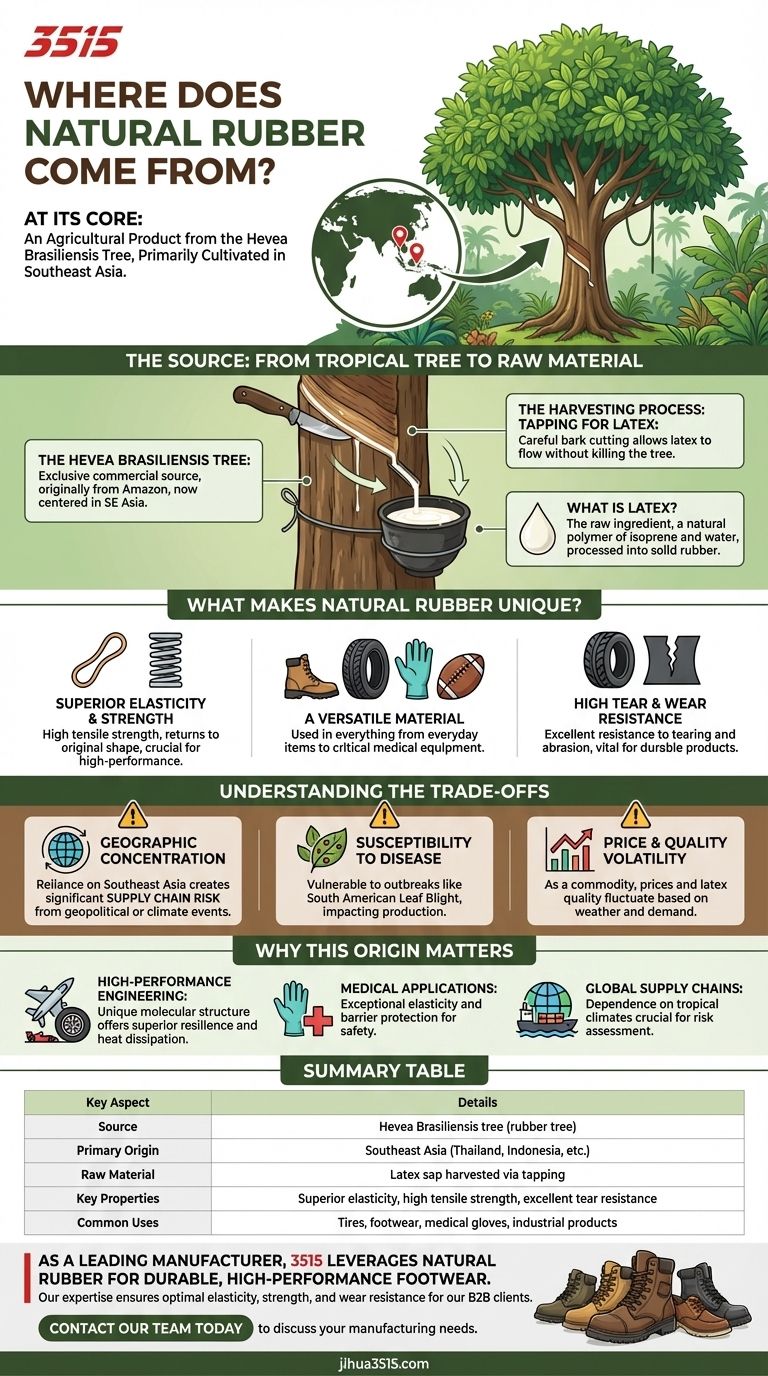
The exclusive source of commercial natural rubber is the Hevea Brasiliensis tree, often simply called the rubber tree. While originally native to the Amazon rainforest in Brazil, the vast majority of today's supply is cultivated elsewhere.
Today, the industry's epicenter is in Southeast Asia, with countries like Thailand and Indonesia leading global production.
The Harvesting Process: Tapping for Latex
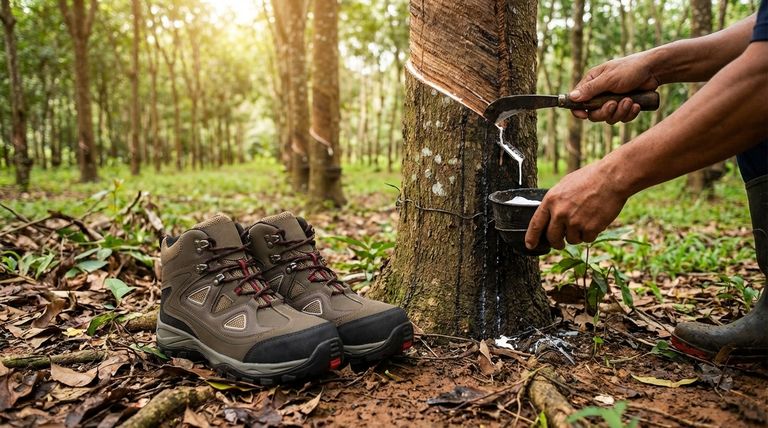
Rubber is harvested through a process known as tapping. This involves carefully cutting a thin strip of bark from the tree, which allows the milky white latex sap to flow out.
The sap drips down the cut and is collected in a cup. This process does not kill the tree, allowing a single tree to be tapped for many years.
What is Latex?
The collected latex is the raw ingredient for natural rubber. It is a natural polymer of isoprene, mixed with water and other minor organic compounds. This raw liquid is then processed to create the solid, elastic material we recognize as rubber.
What Makes Natural Rubber Unique?
The specific molecular structure created by the Hevea tree gives natural rubber a combination of properties that are difficult to replicate synthetically. This is why it remains indispensable for certain applications.
Superior Elasticity and Strength
Natural rubber is renowned for its high tensile strength and elasticity. It can be stretched to many times its original length and return to its original shape without damage, a property crucial for high-performance applications.
High Tear and Wear Resistance
Its molecular structure also provides excellent resistance to tearing and abrasion. This durability is why it is a critical component in products that endure significant stress, such as vehicle tires.
A Versatile Material
From everyday items like shoes and footballs to critical medical equipment like surgical gloves and condoms, the unique properties of natural rubber make it a highly versatile and widely used material.
Understanding the Trade-offs
Because natural rubber is an agricultural commodity sourced from a specific tree and climate, it comes with inherent vulnerabilities that purely synthetic materials do not face.
Geographic Concentration
The world's reliance on a single region—Southeast Asia—for the majority of its natural rubber supply creates significant supply chain risk. Geopolitical instability, labor issues, or regional climate events can impact the entire global market.
Susceptibility to Disease
Like any monoculture crop, rubber tree plantations are vulnerable to diseases. An outbreak, such as South American Leaf Blight, could devastate production and have far-reaching economic consequences.
Price and Quality Volatility
As a raw commodity, natural rubber prices can fluctuate based on weather, global demand, and speculation. The quality of the latex can also vary depending on the tree's health, age, and harvesting techniques.
Why This Origin Matters
Understanding that natural rubber is a harvested resource, not a manufactured chemical, is key to appreciating its value and its limitations.
- If your primary focus is high-performance engineering (like aircraft or race car tires): The natural origin provides a unique molecular structure offering resilience and heat-dissipation properties that are still superior to synthetic alternatives.
- If your primary focus is medical applications (like surgical gloves): The material's exceptional elasticity and barrier protection, derived from the natural latex, make it an ideal choice for safety and dexterity.
- If your primary focus is global supply chains: Recognizing its dependence on specific tropical climates and agricultural stability is critical for risk assessment and strategic sourcing.
Ultimately, natural rubber serves as a powerful reminder of how a single plant species can fundamentally shape our modern industrial world.
Summary Table:
| Key Aspect | Details |
|---|---|
| Source | Hevea Brasiliensis tree (rubber tree) |
| Primary Origin | Southeast Asia (Thailand, Indonesia, etc.) |
| Raw Material | Latex sap harvested via tapping |
| Key Properties | Superior elasticity, high tensile strength, excellent tear resistance |
| Common Uses | Tires, footwear, medical gloves, industrial products |
As a leading large-scale manufacturer, 3515 leverages the superior properties of natural rubber to produce a comprehensive range of durable and high-performance footwear.
Our expertise ensures that every pair of shoes or boots for our distributors, brand owners, and bulk clients benefits from the optimal balance of elasticity, strength, and wear resistance that only natural rubber can provide.
Ready to enhance your product line with footwear built on a foundation of quality raw materials? Contact our team today to discuss your manufacturing needs.
Visual Guide
Related Products
- Durable Rubber-Soled Utility Shoes for Wholesale & Custom Brand Manufacturing
- Durable Rubber Sole Outdoor Shoes Wholesale & Custom Manufacturing
- Wholesale Durable Camouflage Canvas Shoes with High-Traction Cleated Rubber Sole
- Durable Canvas Work Shoes with Rubber Lug Sole | Wholesale Manufacturer
- Durable High-Traction Canvas Sneakers Wholesale & Custom Manufacturing
People Also Ask
- Why are rubber-soled shoes considered multi-weather footwear? Unlock All-Season Traction & Protection
- Why should we wear rubber soled shoes? Unlock Superior Safety and Durability
- How do rubber soles affect a shoe's appearance? Defining Your Shoe's Style and Formality
- What are the types of rubber sole shoes available? Choose the Right Sole for Durability & Comfort
- When were rubber sole shoes invented? From 1800s Concept to Modern Mainstay