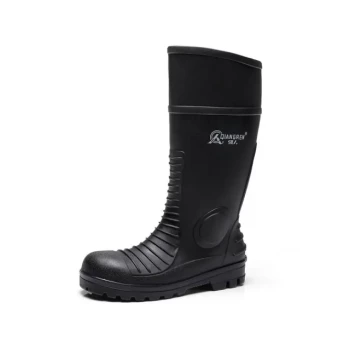
Industrial-grade safety shoes serve as a fundamental physical barrier between a technician's feet and the kinetic dangers of a repair shop. They protect personnel primarily through a robust structural design capable of absorbing the impact of falling tools or heavy automotive components, while simultaneously utilizing specialized outsole patterns to secure traction on floors compromised by oil or fluid spills.
The core function of these shoes is to convert the foot into a protected zone, significantly mitigating the risk of crushing injuries from dropped equipment and preventing debilitating falls caused by loss of friction on slick surfaces.
Structural Defense Against Impact and Compression
To understand how safety shoes function, one must look at the specific mechanical forces present in a shop environment, specifically impact and compression.
The Role of Impact Resistance
Repair environments involve the constant movement of heavy parts. Industrial safety shoes integrate high-strength protective toe caps, often made of steel or composite materials. These caps are engineered to absorb and disperse the energy from falling objects, such as wrenches or engine parts, preventing crushing injuries to the toes.
Resisting Compression Forces
Beyond sudden impacts, technicians face risks from heavy equipment resting on or rolling over the foot. The reinforced structure of these shoes provides necessary rigidity. This prevents the shoe from collapsing under the weight of stacked materials or heavy machinery components.
Traction and Stability Control
Mechanical hazards are not limited to objects hitting the worker; they also include the worker hitting the floor.
Navigating Contaminated Surfaces
Repair shop floors are frequently contaminated with lubricants, hydraulic fluids, and oils. Standard footwear creates a hydroplaning effect on these substances. Industrial safety shoes feature specialized outsole patterns designed to channel fluids away, allowing the sole to make solid contact with the floor.
Preventing Slip-and-Fall Accidents
This traction is vital for mechanical leverage. When a technician applies torque to a bolt or lifts a heavy battery, foot stability is critical. By reducing the risk of slipping, these shoes prevent the secondary mechanical injuries that occur when a worker falls into machinery or onto hard concrete.
Barrier Protection Against Penetration
In shops utilizing lathes, mills, or grinding equipment, the floor often becomes a hazard in itself.
Shielding Against Sharp Debris
Metal scraps, swarf, and sharp fragments are common byproducts of machining. Industrial footwear incorporates puncture-resistant midsoles. These act as an impenetrable shield, preventing sharp metal scraps or nails from piercing the sole and injuring the foot.
Protection on Uneven Terrains
The rigorous construction of the sole also provides stability on uneven surfaces. This ensures efficient movement and protects the foot from twisting or straining when navigating cluttered shop floors.
Understanding the Trade-offs
While industrial safety shoes are essential, they are not a universal cure-all. It is important to recognize their limitations to ensure full safety.
Weight and Fatigue
The inclusion of steel toes and puncture-resistant plates increases the weight of the footwear. Over a long shift, this can lead to leg fatigue, which ironically may slightly increase the risk of stumbling if the technician is not accustomed to the weight.
Specificity of Protection
A shoe designed strictly for mechanical impact may not offer sufficient protection against other shop hazards. For example, unless specified, a mechanical safety shoe may not resist corrosion from battery acid or provide insulation against electrical currents. You must verify that the shoe's rating matches the specific environmental mix of your shop.
Selecting the Right Protection for Your Shop
Choosing the correct footwear depends on the specific mechanical risks most prevalent in your daily operations.
- If your primary focus is heavy lifting and component handling: Prioritize shoes with steel or composite toe caps to maximize impact and compression resistance.
- If your primary focus is fluid maintenance and oil changes: Prioritize shoes with advanced, oil-resistant outsole treads to ensure maximum traction and stability.
- If your primary focus is machining and metal fabrication: Prioritize footwear with puncture-resistant midsoles to shield against sharp floor debris.
Ultimately, the right safety shoe acts as an essential engineering control, allowing technicians to work with confidence and stability in a high-risk mechanical environment.
Summary Table:
| Hazard Category | Protective Feature | Key Benefit |
|---|---|---|
| Impact & Compression | Steel/Composite Toe Caps | Prevents crushing injuries from heavy tools or parts |
| Slippery Surfaces | Oil-Resistant Outsoles | Ensures traction on floors with oil or hydraulic fluids |
| Sharp Objects | Puncture-Resistant Midsoles | Shields feet from metal scraps, swarf, and nails |
| Structural Instability | Rigid Sole Construction | Provides stability on uneven terrains and cluttered floors |
Secure Your Workforce with Premium Protective Footwear
As a large-scale manufacturer serving distributors and brand owners, 3515 offers comprehensive production capabilities for all footwear types, anchored by our flagship Safety Shoes series.
Our extensive portfolio covers work and tactical boots, outdoor shoes, training shoes, and sneakers, as well as Dress & Formal shoes to meet your diverse bulk requirements. Partner with us to provide your clients with unmatched durability and safety.
Contact 3515 Today for Bulk Orders and Custom Solutions
References
- Bindesh Patel, Ayushi Parmar. Prevalence of Work Related Musculoskeletal Pain among Garage Workers of Bharuch District: A Cross Sectional Survey. DOI: 10.52403/ijhsr.20230735
This article is also based on technical information from 3515 Knowledge Base .
Related Products
- Wholesale Mesh Steel Toe Safety Shoes with Dial Closure Factory Production
- Wholesale Anti-Smash & Puncture-Proof Safety Shoes Custom Manufacturing for Brands
- Premium Wheat Nubuck Safety Shoes for Bulk Distribution
- Durable Steel Toe Safety Boots Wholesale & Custom Manufacturing
- Premium Waterproof High-Cut Industrial Safety Boots for Wholesale and Bulk Orders
People Also Ask
- What type of safety shoe is recommended for workers exposed to heavy machinery? Steel Toe Boots for Ultimate Protection
- Why is it mandatory to wear safety shoes with steel toe protection during metal loading? Prevent Crushing Injuries
- What are the main materials used in steel toe safety shoes? A Guide to Protective Footwear Construction
- Is the myth about steel toe shoes cutting off toes true? Debunking the Safety Footwear Myth
- What are the recommended uses for steel toe safety shoes? Essential Protection for High-Risk Industries