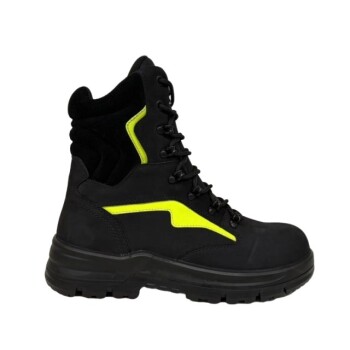
To understand composite toe boots, you must look beyond metal. They provide certified protection by using a combination of strong, non-metallic materials like carbon fiber, Kevlar, fiberglass, and advanced plastics. These materials are engineered to be durable enough to meet official safety standards for impact and compression while being significantly lighter than their steel counterparts.
Composite toe technology achieves protection by leveraging advanced materials that absorb and distribute impact without the significant weight penalty of steel. This makes them a superior choice for all-day comfort and electrical safety, though steel still holds an edge in raw, maximum impact resistance.
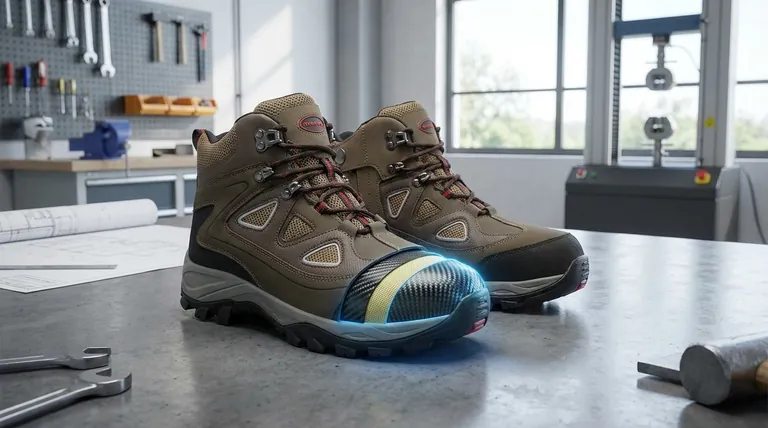
The Engineering Behind Composite Safety Toes
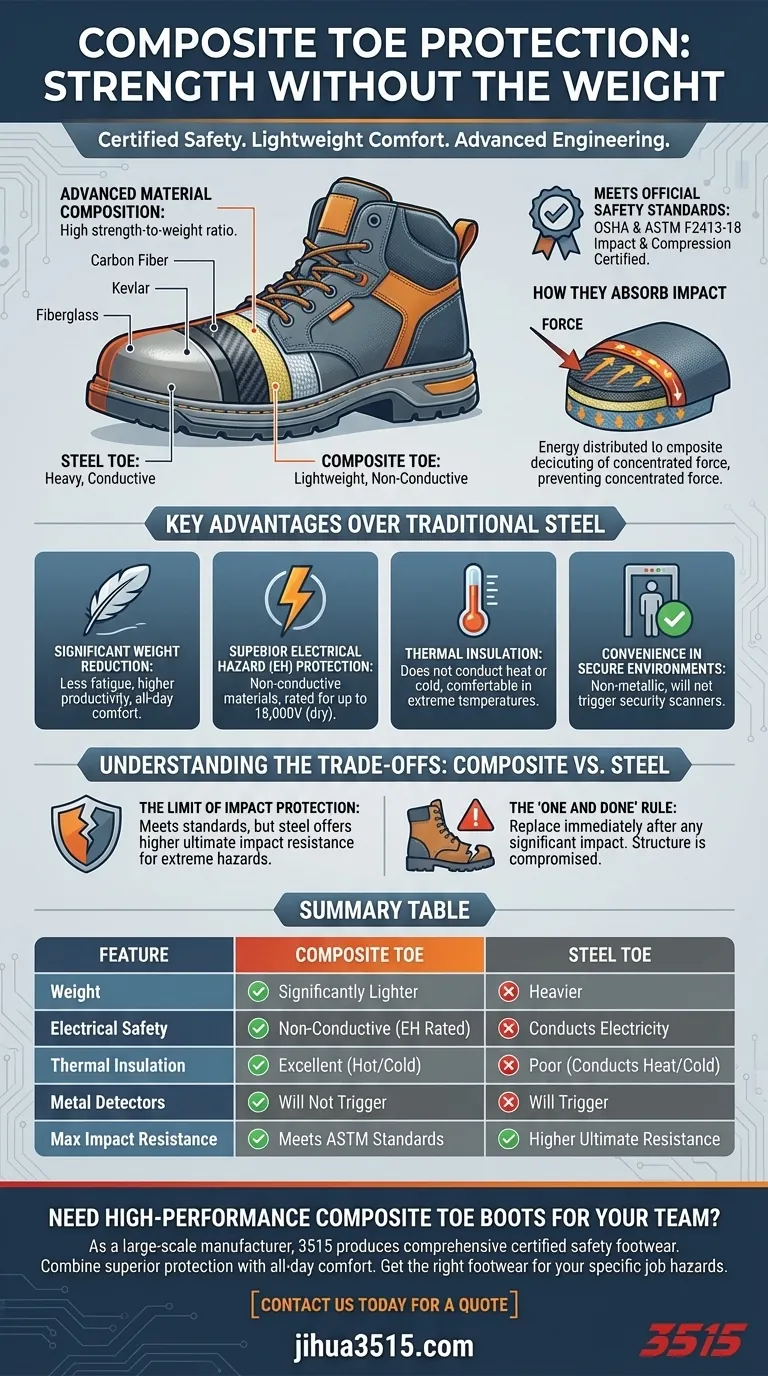
Advanced Material Composition
The term "composite" refers to the blend of materials used to create the protective toe cap. These are not simple plastics.
They are high-tech, non-metallic fibers like carbon fiber, Kevlar, and fiberglass, which are known for their high strength-to-weight ratios. This combination creates a cap that is resilient and strong.
Meeting Official Safety Standards
A critical point is that composite toe boots are not an unregulated alternative to steel. They are designed and tested to meet the same strict OSHA and ASTM F2413-18 standards for impact and compression that steel toe boots must pass.
This certification ensures they provide a proven, reliable level of protection for the workplace.
How They Absorb Impact
The strength of a composite toe comes from its layered, fibrous structure. When an object strikes the toe cap, the force is distributed across the entire composite structure.
This prevents the force from being concentrated in one spot, effectively absorbing the impact and protecting the wearer's foot from injury.
Key Advantages Over Traditional Steel Toes
Significant Weight Reduction
The most immediate benefit is a noticeable reduction in weight. Lighter boots lead to less foot fatigue over the course of a long shift.
This increased comfort can directly contribute to higher productivity and reduced strain on the wearer.
Superior Electrical Hazard (EH) Protection
Because composite materials are non-metallic, they do not conduct electricity. This makes them the default choice for electricians and anyone working in environments where they may encounter live circuits.
Many models carry an EH rating, certified to protect against circuits up to 18,000 volts in dry conditions.
Thermal Insulation
Steel is a highly efficient thermal conductor, meaning it gets very cold in the winter and hot in the summer.
Composite materials do not conduct heat or cold, providing far better insulation. This keeps your feet more comfortable in extreme temperature environments.
Convenience in Secure Environments
For workers who must frequently pass through metal detectors, composite toe boots offer a significant convenience. Their non-metallic construction means they won't trigger security screening devices.
Understanding the Trade-offs: Composite vs. Steel
The Limit of Impact Protection
This is the most critical trade-off to understand. While composite toes meet the required safety standards, steel offers a higher level of ultimate impact resistance.
For jobs with a very high risk of extremely heavy falling objects, steel provides a greater margin of safety against catastrophic impact.
The "One and Done" Rule
It is essential to know that after any safety toe boot—whether steel or composite—has sustained a significant impact, its protective structure is compromised.
The boot has done its job but must be replaced immediately to ensure future protection.
Making the Right Choice for Your Work Environment
Choosing between composite and steel is a matter of aligning the boot's features with your specific job hazards and daily tasks.
- If your primary focus is maximum impact protection: Steel toe remains the gold standard for jobs in heavy manufacturing or where the risk of severe crushing impact is highest.
- If your primary focus is electrical hazard safety: Composite toe is the non-negotiable choice due to its essential non-conductive properties.
- If your primary focus is all-day comfort and mobility: The lighter weight of composite toes offers a clear advantage for reducing fatigue during long shifts or jobs requiring constant walking.
- If your primary focus is working in extreme temperatures: Composite's superior thermal insulation provides a significant comfort benefit in very hot or cold conditions.
Ultimately, choosing the right safety toe is about matching the material's specific strengths to the unique demands of your work.
Summary Table:
| Feature | Composite Toe | Steel Toe |
|---|---|---|
| Weight | Significantly Lighter | Heavier |
| Electrical Safety | Non-Conductive (EH Rated) | Conducts Electricity |
| Thermal Insulation | Excellent (Hot/Cold) | Poor (Conducts Heat/Cold) |
| Metal Detectors | Will Not Trigger | Will Trigger |
| Max Impact Resistance | Meets ASTM Standards | Higher Ultimate Resistance |
Need High-Performance Composite Toe Boots for Your Team?
As a large-scale manufacturer, 3515 produces a comprehensive range of certified safety footwear for distributors, brand owners, and bulk clients. We offer composite toe boots that combine superior protection with all-day comfort, meeting the highest safety standards without the weight penalty.
Our production capabilities encompass all types of work boots, ensuring you get the right footwear for your specific job hazards and workforce needs.
Contact us today to discuss your requirements and get a quote for durable, lightweight safety boots!
Visual Guide
Related Products
- Wholesale Durable Safety Boots Manufacturer Customizable Steel Toe Work Boots
- Durable Leather Moc Toe Work Boots for Wholesale & Custom Manufacturing
- Durable Moc-Toe Wedge Work Boots | Wholesale Manufacturing for Brands
- Durable Moc Toe Wedge Sole Work Boots for Wholesale and Private Label
- Wholesale Customizable Safety Boots Durable & Protective Footwear Manufacturing
People Also Ask
- What are the pros and cons of steel toe work boots? A Guide to Maximum Protection vs. Comfort
- What are the different types of steel toe work boots? Choose the Right Boot for Your Job
- What is the history of steel toe work boots? From German Invention to Modern Safety Standard
- How much weight can steel toe work boots withstand? Unpacking the 3,372 lb. Safety Standard
- What are some common myths about steel toe work boots? Debunked for Modern Workers