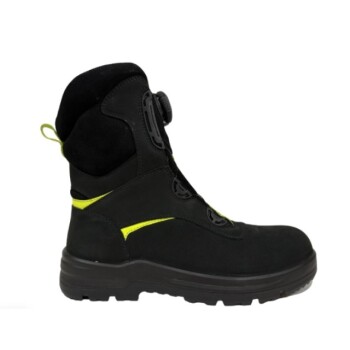
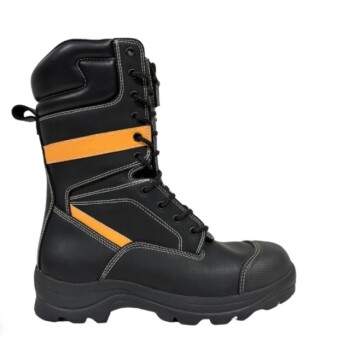
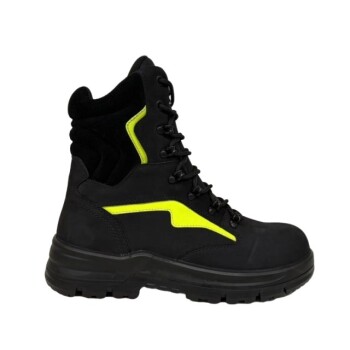
Chemical-resistant safety boots act as a specialized impermeable shield, utilizing anti-permeation and corrosion-resistant materials to physically block toxic substances from contacting the foot. By maintaining a sealed barrier, these boots prevent Volatile Organic Compounds (VOCs) and solvents from eroding the skin or passing through the dermal layer, effectively stopping these toxins from entering the bloodstream.
The skin is a permeable membrane, not an impenetrable wall. Chemical-resistant footwear solves the critical problem of dermal absorption, preventing liquid solvents like benzene from bypassing the skin barrier to cause internal organ dysfunction or hematopoietic system damage.
The Physiology of Chemical Risk
The Danger of Dermal Absorption
Many industrial workers underestimate the skin's vulnerability. Solvents and VOCs, such as benzene and carbon tetrachloride, possess chemical properties that allow them to penetrate human skin with alarming ease.
Once these chemicals bypass the skin's surface, they enter the bloodstream. This transforms a local exposure event into a systemic health crisis.
Systemic and Hematopoietic Impact
The primary reference highlights that the danger extends far beyond surface-level chemical burns. When solvents are absorbed into the blood, they can target the hematopoietic system (the body's blood-forming organs).
Long-term exposure via this pathway can lead to severe organ dysfunction. The boots serve as the primary defense against this "silent" accumulation of toxins in the body.
How the Equipment Provides Protection
Specialized Anti-Permeation Construction
Standard leather or fabric footwear acts like a sponge for solvents. In contrast, chemical-resistant boots are engineered with anti-permeation materials.
These materials create a sealed barrier that solvents cannot easily traverse. This prevents the liquid from eroding the skin of the foot and stops the migration of toxic molecules into the tissue.
Material Engineering
To achieve this resistance, manufacturers utilize specific compounds known for their chemical inertness. Common constructions include:
- Nitrile Rubber Outsoles: These provide a robust defense against breakdown from oil and fuel-based substances.
- Polyurethane Midsoles: These are often used in conjunction with rubber to prevent degradation.
- Caustic-Resistant Leather: Some advanced models feature specialized treatments, such as TECtuff® leather, which are tested against corrosive agents like Sodium Hydroxide and Sulphuric Acid.
Understanding the Trade-offs
Resistance is Not Immunity
It is vital to understand that "resistant" does not mean "proof." The supplementary data notes that many boots are designed primarily for mild chemical splashes.
Prolonged submersion in high-concentration solvents will eventually degrade even the best materials. Workers must not assume a pair of boots provides infinite protection against all exposure durations.
Specificity of Protection
A boot designed to resist acids (like Sulphuric Acid) may not offer the same permeation resistance against volatile solvents (like Carbon Tetrachloride).
Relying on a general "chemical resistant" rating without verifying the specific chemical compatibility can lead to a false sense of security.
Making the Right Choice for Your Safety
To ensure you are adequately protected against the specific risks of VOCs and solvents, evaluate your gear against your specific work environment.
- If your primary focus is High-Risk Solvent Exposure (Benzene/VOCs): Prioritize boots with certified anti-permeation ratings specifically for organic solvents to prevent bloodstream absorption and hematopoietic damage.
- If your primary focus is General Industrial Splashes: Look for footwear featuring Nitrile outsoles and treated leathers (like TECtuff®) to handle incidental contact with acids and mild chemicals.
True safety comes from matching the material properties of your footwear to the specific chemical profile of your workspace.
Summary Table:
| Protection Feature | Defensive Mechanism | Key Materials Used |
|---|---|---|
| Anti-Permeation | Blocks solvents from passing through the boot wall | Nitrile Rubber, Specialized Polymers |
| Dermal Barrier | Prevents liquid toxins from contacting the skin | Seam-sealed construction, Impermeable layers |
| Chemical Inertness | Resists material degradation from corrosive agents | TECtuff® leather, Polyurethane (PU) |
| Systemic Defense | Stops hematopoietic (blood) system poisoning | Certified solvent-resistant membranes |
Secure Your Workforce with Professional-Grade Chemical Protection
As a large-scale manufacturer serving distributors and brand owners, 3515 offers comprehensive production capabilities for all footwear types, anchored by our flagship Safety Shoes series. We understand that in high-risk environments, standard footwear isn't enough. Our chemical-resistant boots are engineered to prevent dermal absorption of VOCs and solvents, protecting the long-term health of your team.
From tactical and work boots to specialized industrial safety footwear, we provide the bulk manufacturing expertise and certified quality your brand requires. Partner with 3515 today to enhance your product portfolio with footwear that meets rigorous safety standards.
→ Contact our experts for bulk orders and technical specifications
References
- Suresh R. Naik, Amisha Mahesh Bhopatrao. Chemical health hazards and toxicity of environmental pollutants on humans, animals and others: An overview. DOI: 10.59400/jts.v2i1.1135
This article is also based on technical information from 3515 Knowledge Base .
Related Products
- Puncture-Resistant Velcro Safety Boots for Wholesale & Custom Manufacturing
- Wholesale Durable Safety Boots | Custom Steel Toe & Puncture-Resistant Manufacturing
- Premium Oil Wax Leather Safety Boots for Bulk Purchase
- Premium High-Cut Waterproof Safety Boots Manufacturing & Wholesale Solutions
- Wholesale Durable Breathable Safety Boots Custom OEM Manufacturer
People Also Ask
- Why are industrial safety boots with steel toes necessary for machine operators? Essential Foot Protection for Safety
- What are the characteristics of steel toe safety boots? Maximum Protection, Key Trade-offs
- Is it true that steel toes can cause toes to get cut off? Debunking the Dangerous Myth
- What are the primary safety functions of safety boots with steel-toe designs? Essential Protection for Industry
- What do the symbols M, F, I, and C represent on safety toe boots? Decode ASTM F2413 for Maximum Protection