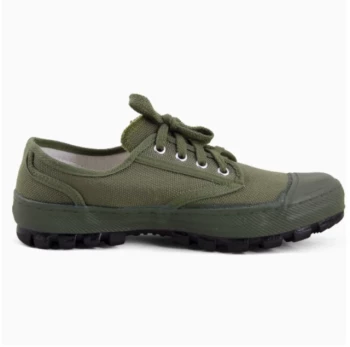
Reliable footwear performance data depends on the mechanical stability of the interface between the outsole and the testing surface. Anti-slip outsoles and high-traction materials ensure data quality by eliminating uncontrolled variables caused by slippage, which would otherwise "pollute" the measurements. By providing a consistent grip, these materials allow researchers to accurately convert physical force into repeatable metrics for stability, horizontal displacement, and muscular efficiency.
High-traction materials act as a mechanical filter that removes "noise" from performance assessments. By preventing energy loss through slippage, they ensure that every movement is captured as clean, quantifiable data regarding the user's safety and efficiency.
Stabilizing the Testing Environment
Eliminating Kinetic Energy Loss
Slippage represents energy that is dissipated rather than directed into measurable movement. Anti-slip outsoles ensure that the force exerted by the wearer is fully captured by sensors, providing a true reflection of the footwear’s mechanical advantage.
Ensuring Trial Repeatability
High-traction materials provide a consistent coefficient of friction across multiple test cycles. This consistency is essential for verifying that variations in data are caused by the footwear's design features rather than unpredictable interactions with the floor.
Translating Physical Force into Data
Quantifying Horizontal Displacement
When a shoe maintains a firm grip, researchers can measure precise horizontal displacement to determine how the footwear manages lateral forces. Without high-traction materials, this displacement data becomes chaotic and loses its value as a performance metric.
Validating Muscle Efficiency Claims
Stable footing allows for the direct assessment of the metabolic or muscular cost of a movement. By removing the need for the body to constantly compensate for micro-slips, these materials provide a "baseline" of stability necessary to prove a shoe reduces wearer fatigue.
Understanding the Trade-offs
Material Softness vs. Durability
Many high-traction materials achieve superior grip through softer chemical compositions that increase the contact area. While this improves immediate data quality, these materials may degrade quickly, meaning the data captured at the start of a test may differ from the data captured at the end.
Environmental Specificity
A material engineered for high traction on dry industrial concrete may perform poorly on wet or oily surfaces. If the outsole material is not perfectly matched to the testing environment, the resulting data may inaccurately represent the shoe's overall safety profile.
How to Apply This to Your Assessment
To ensure your performance data is both accurate and actionable, consider the specific goals of your footwear evaluation.
- If your primary focus is safety validation: Use anti-slip outsoles that are specifically rated for the most common contaminants in your target environment to ensure stability data remains relevant.
- If your primary focus is biomechanical efficiency: Prioritize high-traction materials to isolate the footwear’s impact on the musculoskeletal system by removing the "noise" of corrective balance movements.
By securing the physical connection to the ground, you secure the integrity of the data that drives footwear innovation.
Summary Table:
| Feature | Impact on Data Quality | Primary Benefit |
|---|---|---|
| Anti-Slip Grip | Eliminates kinetic energy loss | Captures true mechanical advantage |
| Consistent Friction | Ensures trial repeatability | Validates design-driven data variations |
| Horizontal Stability | Enables precise displacement measurement | Accurate mapping of lateral forces |
| Micro-slip Removal | Isolates muscular effort | Validates fatigue reduction claims |
Elevate Your Product Line with Precision-Engineered Performance
At 3515, we understand that the integrity of your brand depends on the proven safety and efficiency of your footwear. As a large-scale manufacturer serving global distributors and brand owners, we offer comprehensive production capabilities across all footwear categories. From our flagship Safety Shoes series to tactical boots, outdoor gear, and sneakers, we integrate advanced anti-slip technology to ensure your products meet the highest performance standards.
Partner with 3515 to access bulk manufacturing expertise that prioritizes data-driven quality and wearer safety. Contact us today to discuss your production needs and see how our footwear solutions can strengthen your market presence.
References
- Joanna Baj–Korpak, Marek Wochna. Sports activity and changes in physical fitness of Polish children and adolescents: OSF study. DOI: 10.3389/fped.2022.976943
This article is also based on technical information from 3515 Knowledge Base .
Related Products
- Advanced KPU Athletic Safety Shoe with Steel Toe Cap Anti-Slip Rotary Lacing System
- Durable Goodyear Welt Leather Work Boots for Wholesale & Private Label
- Premium Suede Sport Safety Shoes for Wholesale & Bulk Orders
- Durable Leather Moc Toe Work Boots for Wholesale & Custom Manufacturing
- Factory-Direct Wholesale Canvas Boots with High-Traction Rubber Soles
People Also Ask
- What are the key differences between steel toe and composite toe caps? Choose the Right Safety for Your Job
- What impact do steel toe caps have on toe skin health? Prevent Friction and Pressure in Your Safety Shoes
- What are the primary protective functions of safety shoes with steel toes in the automotive repair industry?
- What type of safety shoe is recommended for workers exposed to heavy machinery? Steel Toe Boots for Ultimate Protection
- How does defining specific friction interface models in FEA assist in predicting safety shoe toe cap failure modes?