
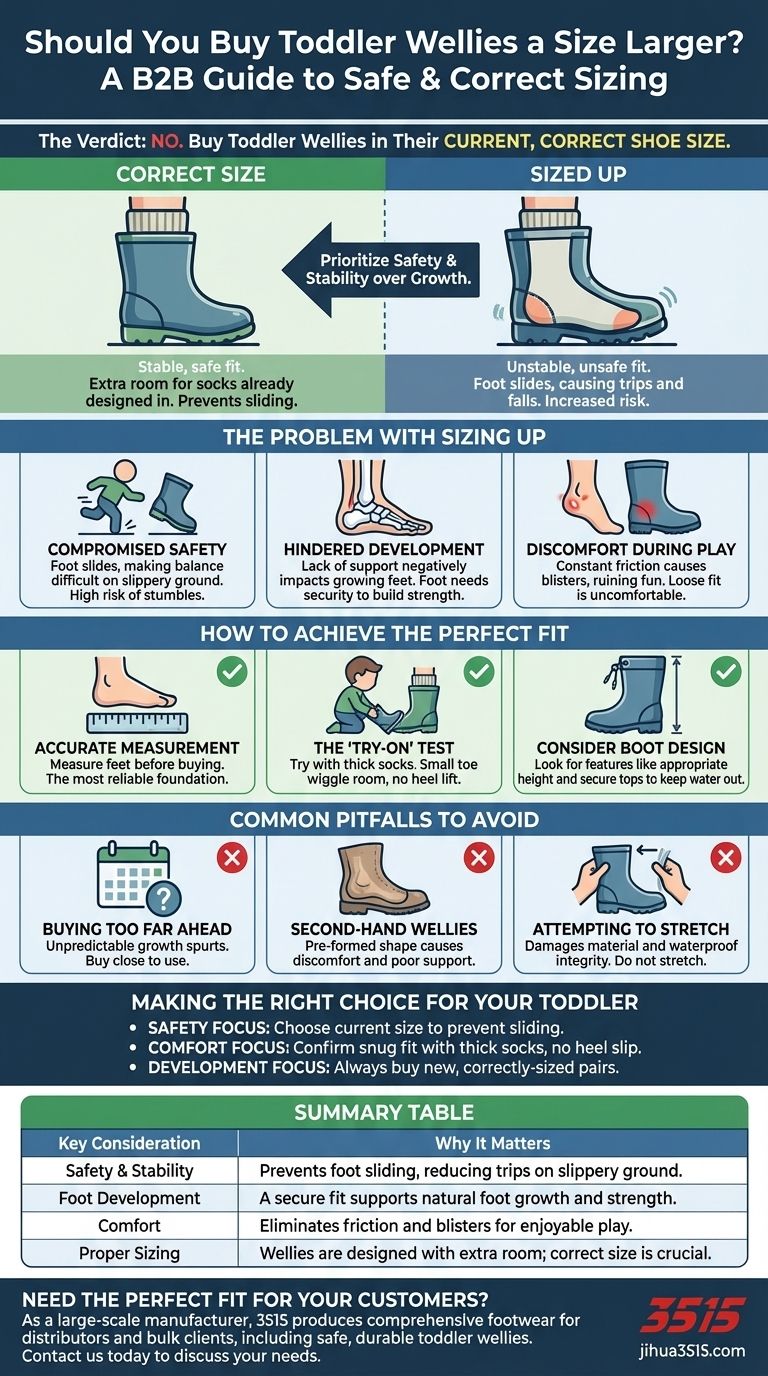
On the contrary, you should buy toddler wellies in their current, correct shoe size. While it seems logical to size up to accommodate thick socks or growth spurts, doing so can create an unstable and unsafe fit for your child's developing feet.
The core principle is that a well-fitting welly is essential for a toddler's safety and stability. Wellies are already designed with extra room for thicker socks, so buying their standard size prevents their foot from sliding inside the boot, which is a primary cause of trips and falls.
The Problem with Sizing Up
Purchasing boots that are too large introduces several risks that outweigh the perceived benefit of a longer wear time. A proper fit is non-negotiable for active toddlers.
Compromised Safety and Stability
A boot that is too big allows the foot to slide forward and side-to-side with every step. This lack of stability makes it much harder for a toddler to maintain their balance on uneven or slippery ground, significantly increasing the risk of stumbles and falls.
Hindered Foot Development
A toddler's feet are still growing and forming. A consistently poor-fitting shoe that offers no support can negatively impact proper development. The foot needs to be secure to move naturally and build strength.
Discomfort During Play
A loose boot is simply uncomfortable. The constant movement can cause friction, leading to blisters and sore spots that can quickly ruin a fun day of puddle-jumping.
How to Achieve the Perfect Fit
Ensuring your toddler has the right size welly is a straightforward process that prioritizes accurate measurement over guesswork.
Start with Accurate Measurement
A surprising number of children wear the wrong size shoe. Before you buy, measure your child's feet. It's the most reliable way to know their true size and provide a foundation for a safe and comfortable fit.
The "Try-On" Test is Crucial
Have your toddler try on the wellies while wearing the thickest socks they would typically use. There should be a small amount of wiggle room for their toes, but their heel should not lift out of the boot when they walk.
Consider the Boot's Design
Pay attention to features beyond just the foot size. The height of the welly should be appropriate for your child, and features like drawstrings at the top can help secure the boot and keep water out.
Common Pitfalls to Avoid
Well-intentioned mistakes can lead to an improper fit. Avoiding these common traps is just as important as getting the initial size right.
Buying Too Far in Advance
It's tempting to buy wellies at the end of a season for the next year, but a toddler's growth spurt is unpredictable. To ensure the best fit, buy footwear close to the time it will be used.
The Temptation of Second-Hand Wellies
Avoid using second-hand wellies. The interior of a boot molds to the shape of the original wearer's foot. This pre-formed shape can cause discomfort and provide inadequate support for your child.
Attempting to Stretch the Boots
Never try to manually stretch a welly that is too small. This can damage the rubber or synthetic material, compromising its structural integrity and waterproof capabilities. A damaged boot offers less protection and support.
Making the Right Choice for Your Toddler
Your goal is to provide a boot that enables safe and joyful play. Use these principles to guide your decision.
- If your primary focus is safety: Choose their current, measured size to prevent the foot from sliding and ensure maximum stability on wet surfaces.
- If your primary focus is comfort: Have your child try on the wellies with thick socks to confirm a snug, but not tight, fit that prevents heel slippage and blisters.
- If your primary focus is healthy foot development: Always buy new, correctly-sized wellies and avoid second-hand pairs that have molded to another child's foot.
Ultimately, a proper fit gives your child the secure footing they need to explore their world with confidence.
Summary Table:
| Key Consideration | Why It Matters |
|---|---|
| Safety & Stability | Prevents foot sliding, reducing trips and falls on slippery ground. |
| Foot Development | A secure fit supports natural foot growth and strength building. |
| Comfort | Eliminates friction and blisters for a more enjoyable play experience. |
| Proper Sizing | Wellies are designed with extra room; buying the correct size is crucial. |
Need the Perfect Fit for Your Customers?
As a large-scale manufacturer, 3515 produces a comprehensive range of footwear for distributors, brand owners, and bulk clients. Our production capabilities encompass all types of shoes and boots, including toddler wellies designed for safety, comfort, and durability.
We can help you source or develop high-quality, perfectly sized footwear that meets your market's demands. Contact us today to discuss your needs and how we can add value to your product line.
Visual Guide
Related Products
People Also Ask
- What are the main materials for waterproof rain boots? Choose the Right Material for Durability & Comfort
- What is the overall recommendation for choosing rain boot materials? A Guide to Rubber vs. PVC
- How does boot height affect waterproofing? Choose the Right Height for Ultimate Protection
- Why are rain boots more flexible and comfortable than snow boots? The Key Differences Explained
- What are the best types of shoes for different gardening conditions? Find Your Perfect Match.
