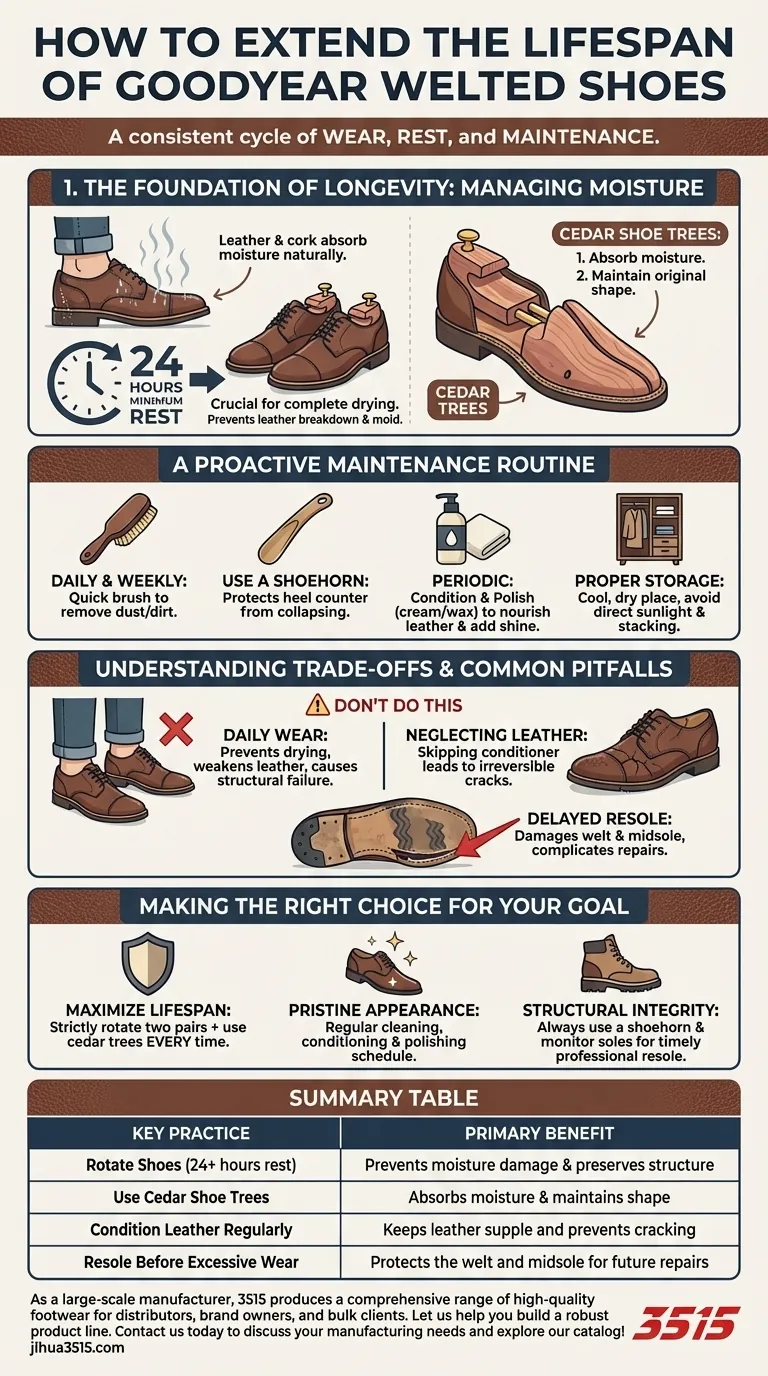
To significantly extend the lifespan of your Goodyear welted shoes, you must adopt a consistent cycle of wear, rest, and maintenance. The single most critical practice is rotating your shoes, allowing each pair at least 24 hours to dry out completely with the aid of cedar shoe trees. This prevents moisture from degrading the leather and preserves the shoe's structural integrity, which is the foundation for a multi-decade lifespan.
Goodyear welted shoes are an investment, but their potential longevity is not automatic. The secret to making them last for decades lies in actively managing moisture and maintaining the leather's health through a disciplined routine, not just occasional care.
The Foundation of Longevity: Managing Moisture
The materials used in Goodyear welted shoes, primarily leather and cork, are susceptible to moisture damage. Controlling this factor is the most important step you can take.
Why Rotation is Non-Negotiable
Your feet release moisture throughout the day, which the leather and the cork footbed absorb. This is a natural process.
However, leather requires a full 24 hours to release this trapped moisture and dry out completely. Wearing the same pair every day prevents this, leading to premature breakdown of the leather fibers and potential mold growth.
The Critical Role of Shoe Trees
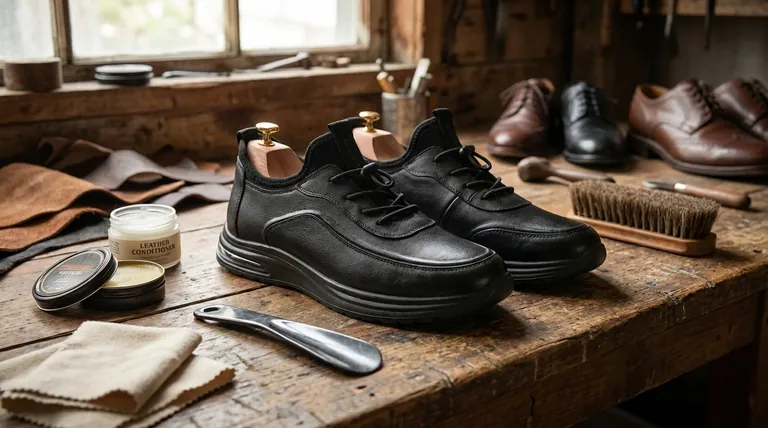
A pair of cedar shoe trees is an essential tool, not an accessory. They perform two critical functions immediately after you take your shoes off.
First, the unvarnished cedar absorbs any residual moisture, accelerating the drying process. Second, they maintain the shoe's original shape, preventing the leather from curling and developing deep, damaging creases as it dries.
A Proactive Maintenance Routine
Beyond managing moisture, a regular care schedule protects the shoe's upper and ensures it remains supple and resilient.
Daily and Weekly Care
After each wear, give your shoes a quick brush to remove surface dust and dirt before it can settle into the leather.
Always use a shoehorn when putting on your shoes. This simple act protects the heel counter, the rigid structural component at the back of the shoe, preventing it from collapsing over time.
Periodic Conditioning and Polishing
Leather is a skin and requires nourishment to avoid drying out and cracking. Use a leather conditioner or cream polish every few weeks to restore its natural oils.
A wax polish can be applied after conditioning. This adds a layer of protection against light moisture and scuffs while also providing shine.
Proper Storage Principles
Store your shoes in a cool, dry place away from direct sunlight, which can fade and dry out the leather.
Ensure there is enough space for air to circulate around them. Avoid stacking shoes, as this can deform their shape.
Understanding the Trade-offs and Common Pitfalls
Even the best-made shoes can be ruined by neglect. Avoiding these common mistakes is as important as performing the right maintenance.
The Mistake of Daily Wear
The most common reason high-quality shoes fail prematurely is being worn every single day. Without the chance to dry, the leather weakens, the stitching can rot, and the entire structure is compromised.
Neglecting the Leather's Health
Skipping conditioning is a significant error. Dry, brittle leather is prone to cracking, especially at flex points. Once deep cracks form, they are impossible to repair and drastically shorten the shoe's life.
The Impact of the Resole
The Goodyear welt construction is famous for its resoling capability. This means a cobbler can replace the entire sole without affecting the shoe's upper. While this is the key to longevity, waiting too long to resole can damage the welt or midsole, making the repair more complex and expensive. Monitor your soles for significant wear or soft spots.
Making the Right Choice for Your Goal
Your approach to care can be tailored to your primary objective for owning these shoes.
- If your primary focus is maximizing lifespan above all: Strictly rotate at least two pairs and insert cedar shoe trees immediately after every single wear.
- If your primary focus is maintaining a pristine appearance: Implement a regular schedule for cleaning, conditioning, and polishing to protect the leather from environmental damage.
- If your primary focus is preserving structural integrity: Always use a shoehorn and monitor your soles for wear so you can seek a professional resole before more serious damage occurs.
A consistent care routine transforms your Goodyear welted shoes from a simple purchase into a lasting asset.
Summary Table:
| Key Practice | Primary Benefit |
|---|---|
| Rotate Shoes (24+ hours rest) | Prevents moisture damage & preserves structure |
| Use Cedar Shoe Trees | Absorbs moisture & maintains shape |
| Condition Leather Regularly | Keeps leather supple and prevents cracking |
| Resole Before Excessive Wear | Protects the welt and midsole for future repairs |
As a large-scale manufacturer, 3515 produces a comprehensive range of high-quality footwear for distributors, brand owners, and bulk clients. Our production capabilities encompass all types of durable shoes and boots built to last. Let us help you build a robust product line that your customers will rely on for years.
Contact us today to discuss your manufacturing needs and explore our catalog!
Visual Guide
Related Products
- Durable Goodyear Welt Leather Work Boots for Wholesale & Private Label
- Wholesale Durable Leather Work Boots | 8-Inch Goodyear Welt Manufacturer
- Wholesale Durable & Breathable Training Shoes for Custom Brands
- Wholesale Breathable Training Shoes Custom Athletic Footwear Manufacturer
- Custom OEM Training Shoes Wholesale Manufacturer Durable & Breathable
People Also Ask
- What is the difference between full-grain and top-grain leather? Premium Material Guide for Boot Manufacturers
- What are the advantages of leather as an upper material for work boots? Unmatched Durability & Custom Comfort
- Why is it important to waterproof leather work boots? Protect Your Investment and Performance
- How should new leather work boots be broken in? A Guide to Comfort and Durability
- What are the advantages of leather uppers in work boots? Unmatched Durability & Protection