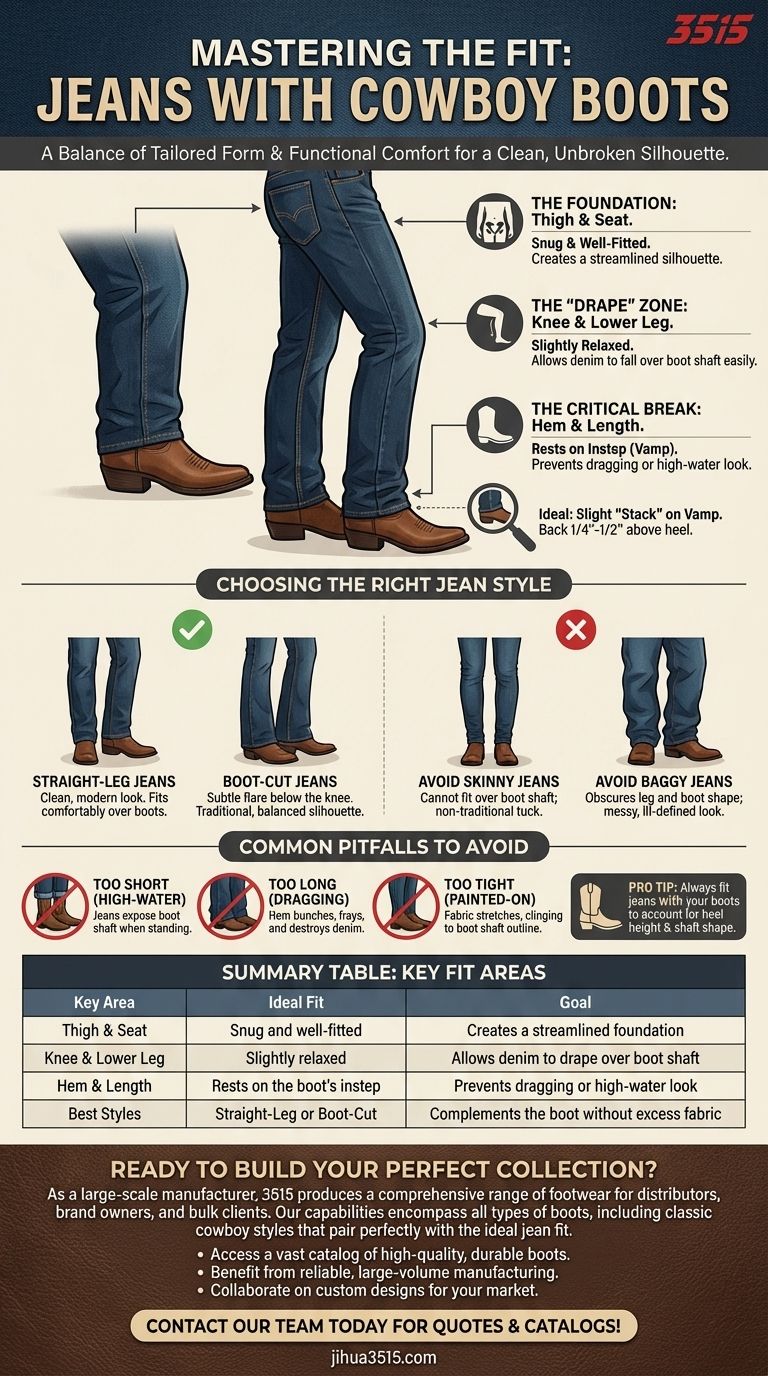
The ideal fit for jeans with cowboy boots is a balance of tailored form and functional comfort. The jeans should be fitted through the seat and thigh to create a clean silhouette, but relax slightly from the knee down. This allows the denim to drape naturally over the boot shaft without bunching up or being too tight, ensuring a look that is both intentional and effortless.
The core principle is to create a clean, unbroken line from your waist to the floor. The jeans should complement the boot by draping over it correctly, rather than fighting against it or hiding it under excess fabric.
The Anatomy of the Perfect Fit
Achieving the right look depends on getting three key areas of the jean's fit correct. Each plays a distinct role in how the jeans interact with your boots.
The Thigh and Seat: A Foundation of Form
The fit in the upper part of the jean is your foundation. It should be snug and well-fitted, similar to how you would wear a good pair of trousers.
This tailored fit prevents a bulky or sloppy appearance, creating a streamlined silhouette that flows smoothly into the boot.
The Knee and Lower Leg: The "Drape" Zone
From the knee down, the fit must change. The leg opening needs to be wide enough to fall easily over the boot shaft without stretching or constricting.
A slightly relaxed fit here is crucial. It allows the boot's details to be subtly revealed when you walk or sit, but keeps the shaft covered when you stand.
The Hem and Length: The Critical Break
The length of your jeans is the most critical detail. The hem should be long enough to cover the majority of the boot shaft.
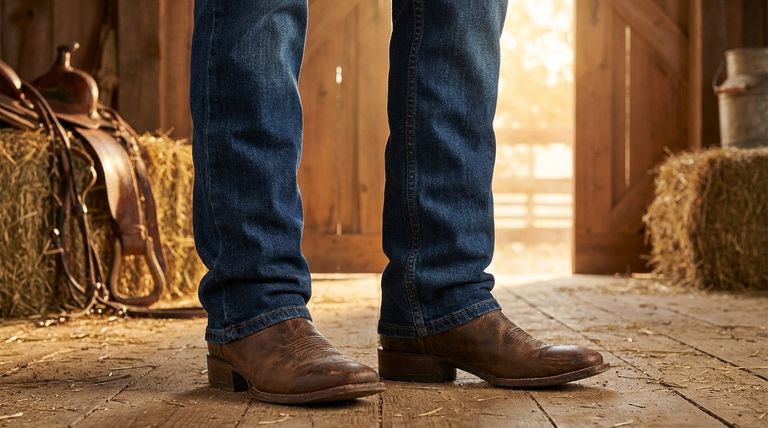
A perfect length has the front of the hem resting on the top of the boot's instep (the vamp), often creating a slight "stack" or single fold in the fabric. The back of the hem should fall about a quarter to a half-inch above the heel, ensuring it never drags on the ground.
Choosing the Right Jean Style
While "boot-cut" jeans are the obvious choice, they aren't the only option. The cut determines how the denim drapes over the boot.
Straight-Leg Jeans
This style offers a clean, modern look. A good straight-leg jean provides enough room in the lower leg to fit comfortably over most cowboy boots without appearing flared.
Boot-Cut Jeans
As the name implies, this style is designed specifically for this purpose. A boot-cut jean has a subtle flare below the knee that easily accommodates the boot shaft, creating a traditional and balanced silhouette.
What to Avoid
For a classic look, avoid skinny jeans and baggy jeans. Skinny jeans cannot fit over the boot shaft, and tucking them in creates a very different, non-traditional style. Baggy jeans obscure the shape of both your leg and the boot, resulting in a messy, ill-defined look.
Understanding the Common Pitfalls
Small mistakes in fit can undermine the entire look. Being aware of these common errors is key to getting it right.
Too Short: The "High-Water" Look
Jeans that are too short will expose the boot shaft while you're standing. This visually breaks the leg line and makes the outfit look poorly proportioned.
Too Long: The Dragging Hem
If your jeans are too long, the back of the hem will bunch up around your heel and drag on the ground. This not only looks untidy but will quickly fray and destroy your denim.
Too Tight in the Leg: The "Painted-On" Problem
When the lower leg is too tight, the fabric will stretch and cling to the boot shaft. This creates an awkward, unflattering outline of the entire boot under your jeans.
Forgetting the Boots
Always bring your cowboy boots with you when buying or tailoring jeans. The final length is entirely dependent on the specific heel height and shaft shape of the boots you plan to wear.
Making the Right Choice for Your Goal
Select your fit based on the final aesthetic you want to achieve.
- If your primary focus is a traditional, authentic look: Opt for classic boot-cut jeans and ensure the length creates a slight "stack" of fabric over the instep.
- If your primary focus is a modern, streamlined style: Choose a well-fitted straight-leg jean and have it tailored so the hem falls cleanly on the vamp without excess bunching.
- If your primary focus is showcasing unique boot details: A hem that rests just above the instep will allow the boot's tooling or exotic leather to be more visible as you move.
Ultimately, the right fit creates a seamless silhouette that feels both confident and natural.
Summary Table:
| Key Area | Ideal Fit | Goal |
|---|---|---|
| Thigh & Seat | Snug and well-fitted | Creates a streamlined foundation |
| Knee & Lower Leg | Slightly relaxed | Allows denim to drape over boot shaft |
| Hem & Length | Rests on the boot's instep | Prevents dragging or high-water look |
| Best Styles | Straight-Leg or Boot-Cut | Complements the boot without excess fabric |
Ready to Build Your Perfect Collection?
As a large-scale manufacturer, 3515 produces a comprehensive range of footwear for distributors, brand owners, and bulk clients. Our production capabilities encompass all types of boots, including the classic cowboy styles that pair perfectly with the ideal jean fit.
Partner with us to:
- Access a vast catalog of high-quality, durable boots.
- Benefit from reliable, large-volume manufacturing to meet your inventory needs.
- Collaborate on custom designs to create unique products for your market.
Let's discuss how we can support your business. Contact our team today for quotes and catalogs!
Visual Guide