
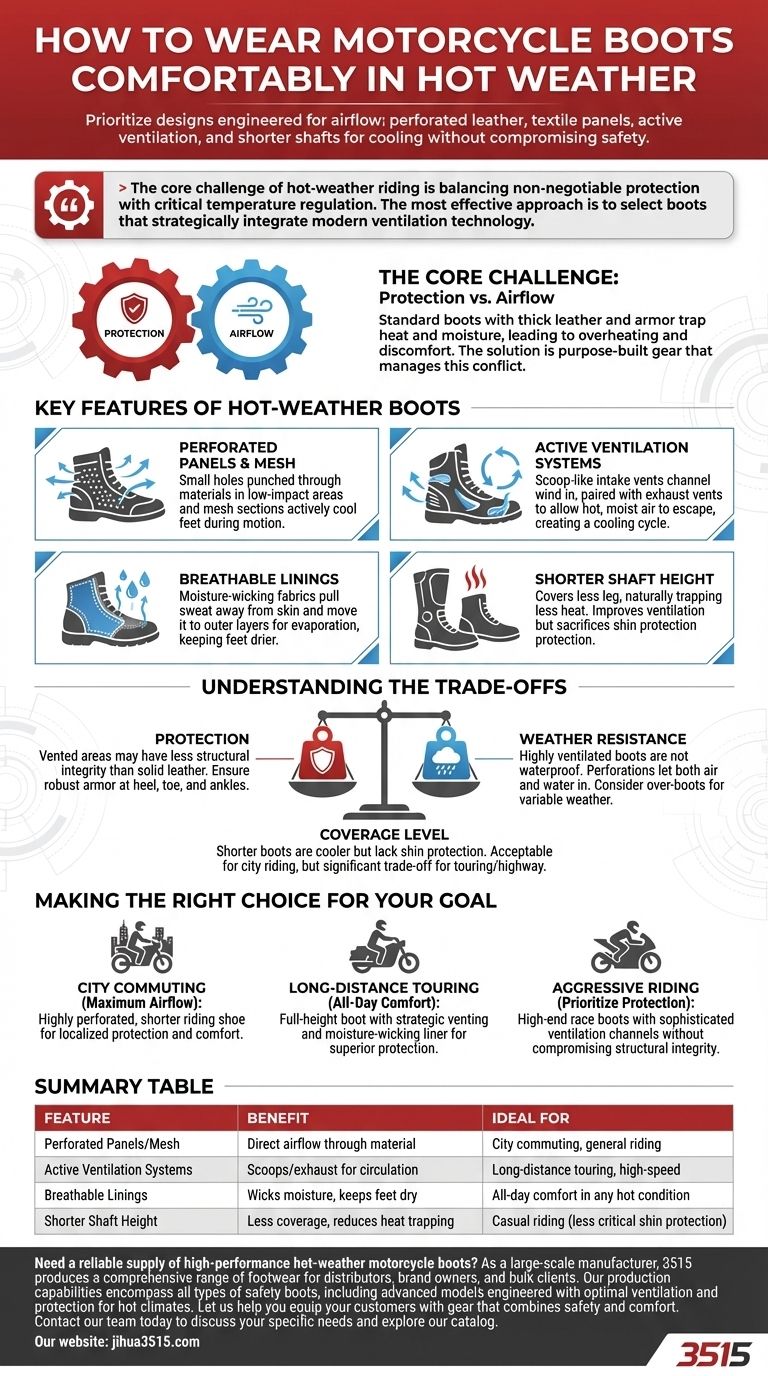
To wear motorcycle boots comfortably in hot weather, you must prioritize designs engineered for airflow. The solution lies in choosing boots that incorporate features like perforated leather or textile panels, active ventilation systems, and shorter shafts to promote cooling without compromising essential safety.
The core challenge of hot-weather riding is balancing non-negotiable protection with critical temperature regulation. The most effective approach is not to abandon proper gear, but to select boots that strategically integrate modern ventilation technology into their protective structure.
The Core Challenge: Protection vs. Airflow
Standard motorcycle boots are built with thick leather and robust armor. Their primary function is to protect you from impact and abrasion, which often means using materials that trap heat and moisture.
This creates a significant comfort and safety issue in hot climates. Overheated feet can lead to swelling, discomfort, and distraction, which is the last thing a rider needs.
The key is to find boots that are purpose-built to manage this conflict.
Key Features of Hot-Weather Boots
Modern engineering allows for boots that are both protective and breathable. When evaluating options, focus on these specific design elements.
Perforated Panels and Mesh
Many summer-specific boots feature extensive perforation—small holes punched through the outer material, typically in areas less prone to high-impact abrasion.
These panels allow air to flow directly through the boot while you are in motion, actively cooling your feet. Mesh fabric sections serve a similar purpose and are often found on textile-based riding shoes.
Active Ventilation Systems
Some advanced boots go beyond simple perforation. They may include small, scoop-like vents designed to catch the wind and channel it into the boot's interior.
These systems are often paired with exhaust vents, typically near the back of the boot, to allow hot, moist air to escape, creating a constant cycle of airflow.
Breathable Linings
The material on the inside of the boot is just as important as the outside. Look for boots with moisture-wicking or highly breathable liners.
These fabrics are designed to pull sweat away from your skin and move it to the outer layers of the boot where it can evaporate more easily, keeping your feet drier and cooler.
Shorter Shaft Height
Shorter, "riding shoe" style boots naturally offer better ventilation around the ankle and lower leg. By covering less of your body, they trap less heat.
While comfortable, it's crucial to understand the safety implications of this choice, as it exposes your shin to potential impact.
Understanding the Trade-offs
Choosing a vented boot always involves balancing competing priorities. Being aware of these compromises is essential for making an informed decision.
Protection vs. Ventilation
The most heavily ventilated areas are, by nature, structurally different from solid leather. Manufacturers place perforations and mesh in low-risk zones, but any opening can theoretically be a point of weakness in a severe slide.
Always ensure the boot still features robust armor at the heel, toe, and ankles.
Weather Resistance
A highly ventilated boot is not a waterproof boot. Perforations and mesh that let air in will also let water in immediately during a rain shower.
If you are a long-distance tourer who might encounter variable weather, you may need to carry waterproof over-boots or choose a more versatile, all-weather option.
Coverage Level
Shorter boots are undeniably cooler, but they offer zero protection for your shin. This is a critical trade-off. For casual city riding, it might be acceptable, but for highway speeds or touring, the added protection of a full-height boot is significant.
Making the Right Choice for Your Goal
Select your hot-weather footwear based on your most common type of riding.
- If your primary focus is maximum airflow for city commuting: A highly perforated, shorter riding shoe often provides the best balance of localized protection and cooling comfort.
- If your primary focus is long-distance touring in the heat: Look for a full-height boot that combines strategic vented panels with a high-quality, moisture-wicking liner for all-day comfort and superior protection.
- If your primary focus is aggressive canyon or track riding: Prioritize protection above all. Seek out high-end race boots that integrate sophisticated ventilation channels without compromising an ounce of structural integrity.
By understanding these features and their trade-offs, you can confidently select the right boot to keep you both safe and comfortable on the hottest rides.
Summary Table:
| Feature | Benefit | Ideal For |
|---|---|---|
| Perforated Panels/Mesh | Direct airflow through the boot material | City commuting, general riding |
| Active Ventilation Systems | Scoops and exhaust vents for air circulation | Long-distance touring, high-speed riding |
| Breathable Linings | Wicks moisture away to keep feet dry | All-day comfort in any hot condition |
| Shorter Shaft Height | Less coverage reduces heat trapping | Casual riding where maximum shin protection is less critical |
Need a reliable supply of high-performance hot-weather motorcycle boots?
As a large-scale manufacturer, 3515 produces a comprehensive range of footwear for distributors, brand owners, and bulk clients. Our production capabilities encompass all types of safety boots, including advanced models engineered with optimal ventilation and protection for hot climates.
Let us help you equip your customers with gear that combines safety and comfort. Contact our team today to discuss your specific needs and explore our catalog.
Visual Guide
Related Products
- Wholesale Tactical Boots High-Traction & Reflective for Bulk & Brand Orders
- High Performance Fire-Retardant Waterproof Safety Boots
- Durable Goodyear Welt Leather Work Boots for Wholesale & Private Label
- Wholesale High-Traction Camo Boots - Custom Manufacturer for Brands
- Wholesale Waterproof Tactical Boots Custom Suede & High-Traction Soles
People Also Ask
- How do tactical boots protect against injuries? Discover the Integrated Safety System
- Why are tactical work boots ideal for law enforcement? Boost Performance & Safety
- What features should law enforcement officers look for in tactical boots? Essential Guide for Safety & Performance
- What role does repairable design play in tactical boots? Extend Lifespan & Cut Total Ownership Costs
- How is the compatibility of polymer materials demonstrated in smart footwear? Enhancing Tactical & Training Performance



















