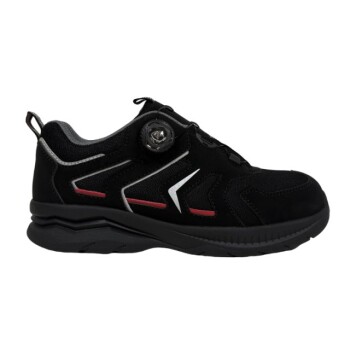
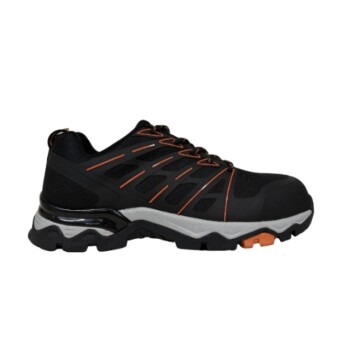
Indoors, the right footwear acts as a crucial safety tool, not just an accessory. Shoes prevent common household injuries by providing a physical barrier against impacts and sharp objects, offering superior traction on slick floors, and delivering essential biomechanical support that modern, hard surfaces fail to provide on their own.
The core function of indoor footwear extends beyond preventing stubs and cuts. It is about mitigating the cumulative, daily stress that hard, flat floors place on your body's foundation, effectively acting as the supportive interface your feet, joints, and back require.
The Three Pillars of Indoor Foot Protection
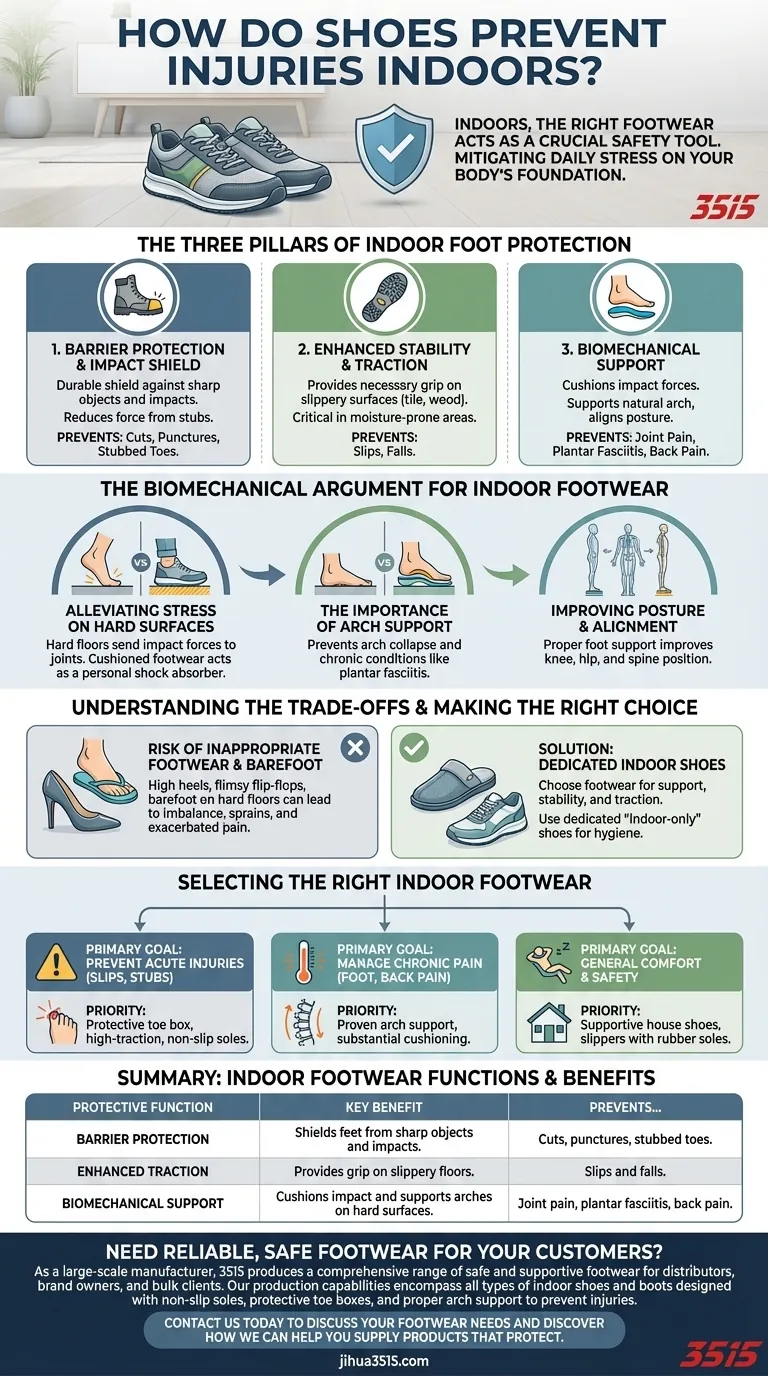
To understand how shoes prevent injuries, we can break down their function into three distinct protective roles. Each addresses a different category of common household risk.
Barrier Against Puncture and Impact
The most obvious benefit of wearing shoes is the creation of a durable shield for your feet. A solid sole protects against stepping on sharp or hard objects, such as a child's toy or a dropped kitchen utensil.
Furthermore, a structured shoe with a toe box significantly reduces the force of impact from stubbing your toes against furniture legs or door frames, turning a potentially severe injury into a minor incident.
Enhanced Stability and Traction
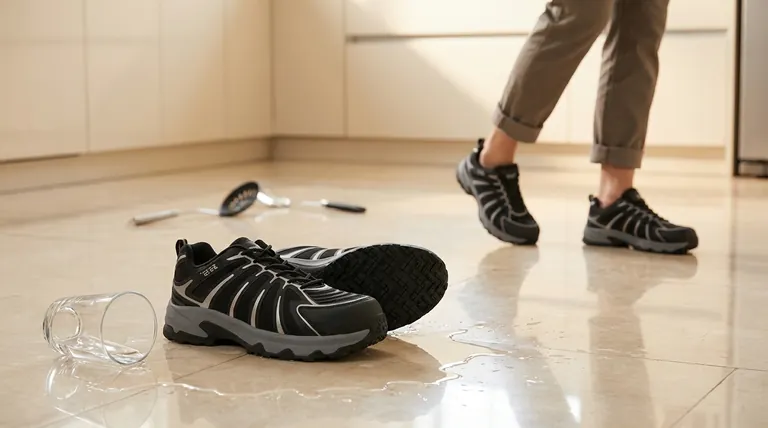
Modern homes are filled with smooth surfaces like tile, wood, and laminate, which can become incredibly slippery. Shoes with non-slip soles provide the necessary grip to prevent falls, which are a leading cause of domestic injuries.
This is especially critical in areas prone to moisture, such as kitchens and bathrooms, where traction can mean the difference between staying upright and sustaining a serious injury.
The Biomechanical Argument for Indoor Footwear
Beyond protecting from immediate accidents, the right shoes address the chronic stress that indoor environments place on the human body. This is a subtle but more significant long-term benefit.
Alleviating Stress on Hard Surfaces
Our feet evolved to walk on soft, uneven terrain like earth and grass. Hard, unyielding floors offer zero shock absorption, sending impact forces directly up through your ankles, knees, hips, and lower back.
Cushioned footwear acts as a personal shock absorption system, dissipating these forces before they can contribute to joint pain and long-term wear and tear.
The Importance of Arch Support
Flat, hard floors provide no support for the natural arch of the foot. Over time, this can lead to the collapse of the arch, causing conditions like plantar fasciitis—a common source of intense heel pain.
Shoes with built-in arch support properly align the foot's structure, distributing weight evenly and preventing the strain that leads to chronic pain and inflammation.
Improving Posture and Alignment
The foot is the foundation of your entire skeletal structure. When your feet are properly supported, this alignment travels up the kinetic chain, improving the position of your knees, hips, and spine.
This foundational support is key to maintaining good posture and can significantly reduce or prevent chronic back pain that originates from poor foot mechanics.
Understanding the Trade-offs
While beneficial, the decision to wear shoes indoors requires consideration of the type of footwear and individual circumstances. Not all shoes are created equal.
The Risk of Inappropriate Footwear
The wrong shoes can cause more harm than good. Wearing high heels, flimsy flip-flops, or shoes with poor support for extended periods indoors can lead to imbalance, ankle sprains, and exacerbate the very foot and leg pain you seek to avoid.
The key is choosing footwear designed for support and stability, not for specific outdoor activities or fashion.
The "Barefoot" Counterargument
Some experts argue that going barefoot helps strengthen the intrinsic muscles of the feet. While this has merit on soft, natural surfaces, the argument is less compelling on consistently hard, flat floors where the risks of impact and lack of support often outweigh the benefits.
Hygiene and Practicality
A common objection is tracking outdoor dirt and germs into the home. The most effective solution is to have a dedicated pair of "indoor-only" shoes or supportive slippers that are never worn outside.
Making the Right Choice for Your Home
Selecting the right indoor footwear depends on your primary goal.
- If your primary focus is preventing acute injuries (slips, stubs): Prioritize footwear with a protective toe box and high-traction, non-slip soles.
- If your primary focus is managing chronic pain (foot, back pain): Choose a shoe with proven arch support and substantial cushioning designed for hard surfaces.
- If your primary focus is general comfort and safety: A dedicated pair of supportive house shoes, slippers with rubber soles, or clean athletic shoes offers a balanced solution.
Ultimately, choosing to wear shoes indoors is a strategic decision to protect your body from both immediate hazards and long-term strain.
Summary Table:
| Protective Function | Key Benefit | Prevents... |
|---|---|---|
| Barrier Protection | Shields feet from sharp objects and impacts. | Cuts, punctures, stubbed toes. |
| Enhanced Traction | Provides grip on slippery floors. | Slips and falls. |
| Biomechanical Support | Cushions impact and supports arches on hard surfaces. | Joint pain, plantar fasciitis, back pain. |
Need reliable, safe footwear for your customers?
As a large-scale manufacturer, 3515 produces a comprehensive range of safe and supportive footwear for distributors, brand owners, and bulk clients. Our production capabilities encompass all types of indoor shoes and boots designed with non-slip soles, protective toe boxes, and proper arch support to prevent injuries.
Contact us today to discuss your footwear needs and discover how we can help you supply products that protect.
Visual Guide
Related Products
- Premium Wheat Nubuck Safety Shoes for Bulk Distribution
- Premium Lightweight Safety Shoes for Wholesale & Bulk Orders
- Premium Safety Shoes with Rotating Buckle Safety Sneakers
- Premium Suede Sport Safety Shoes for Wholesale & Bulk Orders
- Premium KPU Injection Athletic Style Safety Shoes
People Also Ask
- What are the primary protective functions of safety shoes with steel toes in the automotive repair industry?
- What type of safety shoe is recommended for workers exposed to heavy machinery? Steel Toe Boots for Ultimate Protection
- What are the main materials used in steel toe safety shoes? A Guide to Protective Footwear Construction
- Why is it mandatory to wear safety shoes with steel toe protection during metal loading? Prevent Crushing Injuries
- What role do steel-toe safety shoes play in high-rise construction? Essential PPE for Vertical Build Security