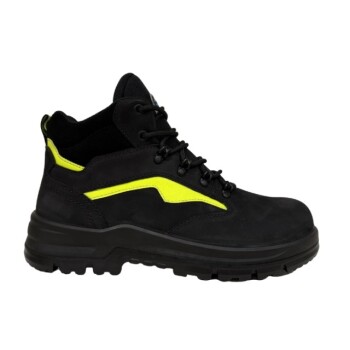
At their core, work boots reduce fatigue by acting as a shock absorption and support system for your entire body. By cushioning the impact of each step and properly aligning your feet, they prevent the constant, energy-draining strain that travels up your legs, back, and joints over a long workday.
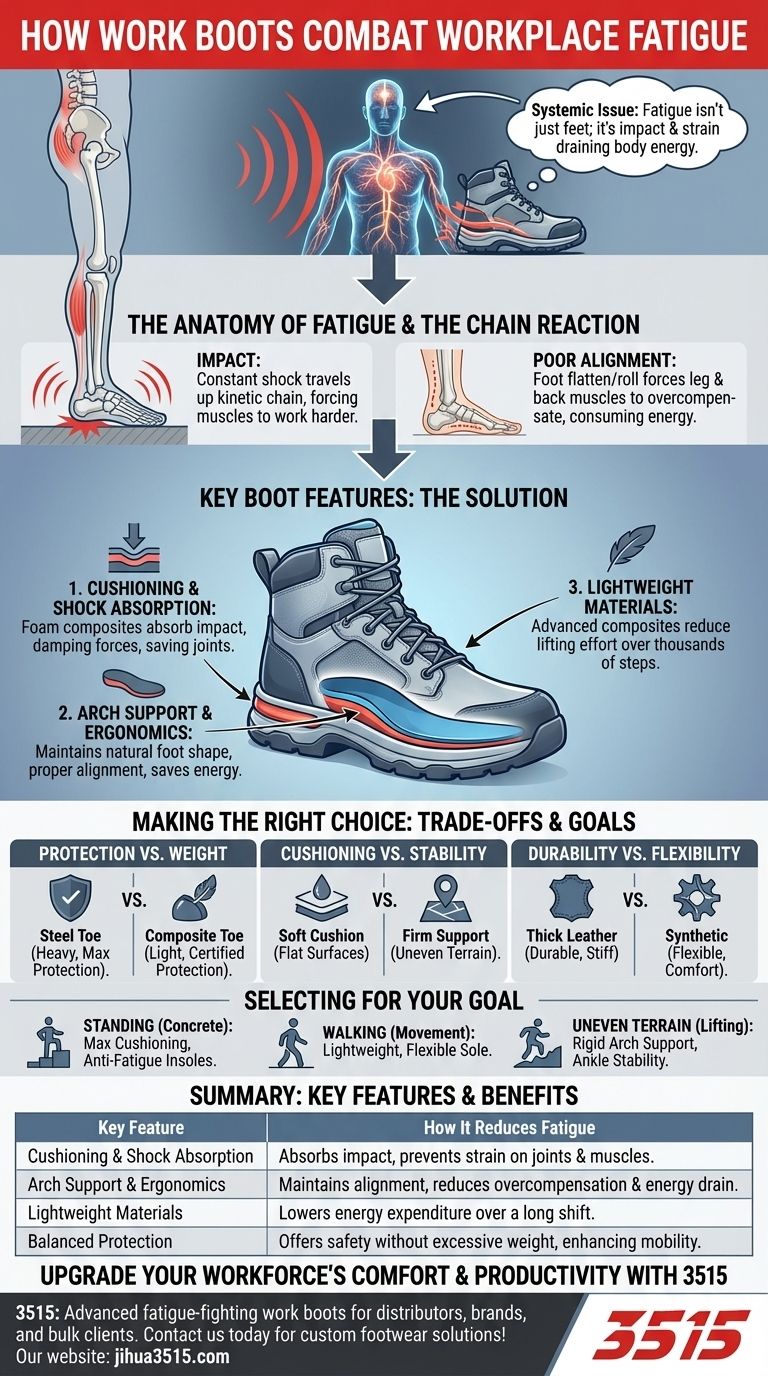
The fatigue you feel after a long shift isn't just in your feet; it's a systemic issue. Quality work boots are engineered to interrupt the chain reaction of impact and muscle strain that begins with your feet and drains your body's energy reserves.
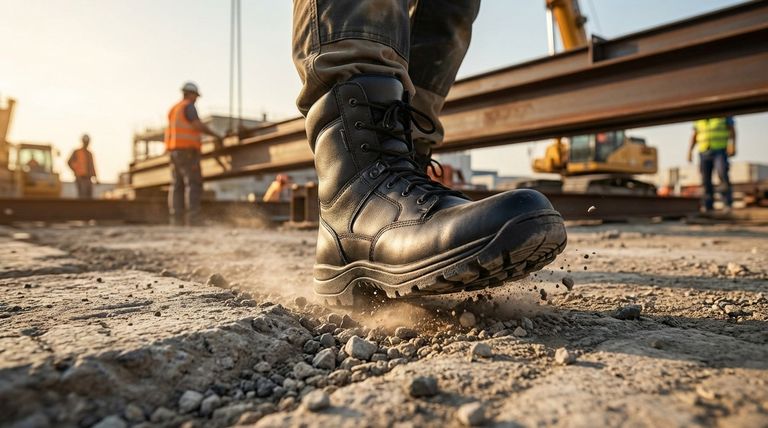
The Anatomy of Workplace Fatigue
Workplace fatigue extends far beyond simple foot soreness. It’s a cumulative effect that begins with the constant battle between your body and hard, unforgiving surfaces.
The Chain Reaction of Impact
Every step you take on concrete or steel generates impact forces. Without proper absorption, this shock travels up your kinetic chain—from your feet to your ankles, knees, hips, and lower back.
This constant, low-grade impact forces the muscles and ligaments in these areas to work harder just to remain stable, draining your energy throughout the day.
The Cost of Poor Alignment
When a boot lacks proper support, your foot can flatten or roll unnaturally. This misalignment forces muscles in your legs and back to overcompensate to keep you balanced.
This constant, inefficient muscle activity is a significant source of energy consumption, leading directly to physical exhaustion, reduced focus, and a higher risk of mistakes.
Key Boot Features That Combat Fatigue
The design of a quality work boot is a deliberate effort to manage energy and prevent strain. Several key features work together to achieve this.
Cushioning and Shock Absorption
Modern work boots use materials like foam composites in the midsole and footbed. These materials are designed to compress and absorb the shock of each step.
This technology effectively dampens the impact forces that would otherwise travel up your body, relieving pressure on foot muscles and reducing overall wear and tear on your joints.
Arch Support and Ergonomics
Proper arch support is critical. It helps maintain the natural shape of your foot, ensuring your weight is distributed evenly and preventing the strain that leads to conditions like plantar fasciitis.
An ergonomic design supports proper alignment, which means your muscles don't have to work overtime to correct your posture, saving valuable energy with every step.
Lightweight Materials
The weight of your boot matters immensely over thousands of steps. A boot that is even 100 grams lighter can save a significant amount of cumulative energy over an eight-hour shift.
Manufacturers now use advanced, lightweight composites for both cushioning and safety features, reducing the effort required to lift your feet all day long.
Understanding the Trade-offs
No single boot is perfect for every job. Choosing the right one involves balancing competing features to match your specific work environment.
Protection vs. Weight
Features like steel safety toes offer maximum protection but add considerable weight, which can increase fatigue. Composite toes provide certified protection at a much lower weight, offering a better balance for jobs requiring constant movement.
Cushioning vs. Stability
Extremely soft, deep cushioning can feel comfortable on flat surfaces but may reduce stability on uneven terrain. A well-designed boot balances soft cushioning with a firm, supportive structure to provide both comfort and control.
Durability vs. Flexibility
Heavy-duty materials like thick leather are extremely durable but can be stiff and heavy. More flexible, modern synthetic materials might offer better immediate comfort and less weight but may not last as long under severe conditions.
Making the Right Choice for Your Goal
Selecting the right boot requires identifying the primary physical demand of your job.
- If your primary focus is standing on concrete all day: Prioritize boots with maximum cushioning and dedicated anti-fatigue insoles to absorb constant shock.
- If your primary focus is constant walking and movement: Look for lightweight materials and a flexible sole to minimize the energy required for each step.
- If your primary focus is uneven terrain or heavy lifting: Emphasize rigid arch support and excellent ankle stability to prevent muscle strain from overcompensation.
Investing in the right work boot is a direct investment in your daily energy, long-term health, and ability to perform at your best.
Summary Table:
| Key Feature | How It Reduces Fatigue |
|---|---|
| Cushioning & Shock Absorption | Absorbs impact from hard surfaces, preventing strain on joints and muscles. |
| Arch Support & Ergonomics | Maintains proper foot alignment, reducing muscle overcompensation and energy drain. |
| Lightweight Materials | Lowers energy expenditure over thousands of steps during a long shift. |
| Balanced Protection | Offers safety (e.g., composite toes) without excessive weight, enhancing mobility. |
Upgrade Your Workforce's Comfort and Productivity with 3515
As a large-scale manufacturer, 3515 produces a comprehensive range of work boots designed to combat fatigue for distributors, brand owners, and bulk clients. Our boots feature advanced cushioning, ergonomic support, and lightweight materials to keep workers energized and focused. Whether you need boots for standing, walking, or rugged terrain, we deliver durable, fatigue-fighting solutions tailored to your needs.
Ready to enhance performance and reduce fatigue? Contact us today to discuss custom footwear solutions!
Visual Guide
Related Products
- Durable Leather Work Boots for Wholesale & Custom Manufacturing
- Durable Leather Work Boots for Wholesale & Custom OEM Manufacturing
- Durable Leather Work Boots Wholesale Manufacturer & Custom Factory
- Durable Leather Moc Toe Work Boots for Wholesale & Custom Manufacturing
- Wholesale Leather Work Boots with Customizable Wedge Sole for Brands
People Also Ask
- What is the difference between full-grain and top-grain leather? Premium Material Guide for Boot Manufacturers
- What are the common workplace hazards that can be mitigated with the right work boots? Protect Your Workforce
- What are the common foot issues workers face due to uncomfortable work boots? Prevent Pain & Deformities
- What are the advantages of leather versus synthetic work boots? A Guide to Choosing the Right Material
- What are the key components of modern work boots? Engineered for Ultimate Durability and Comfort