
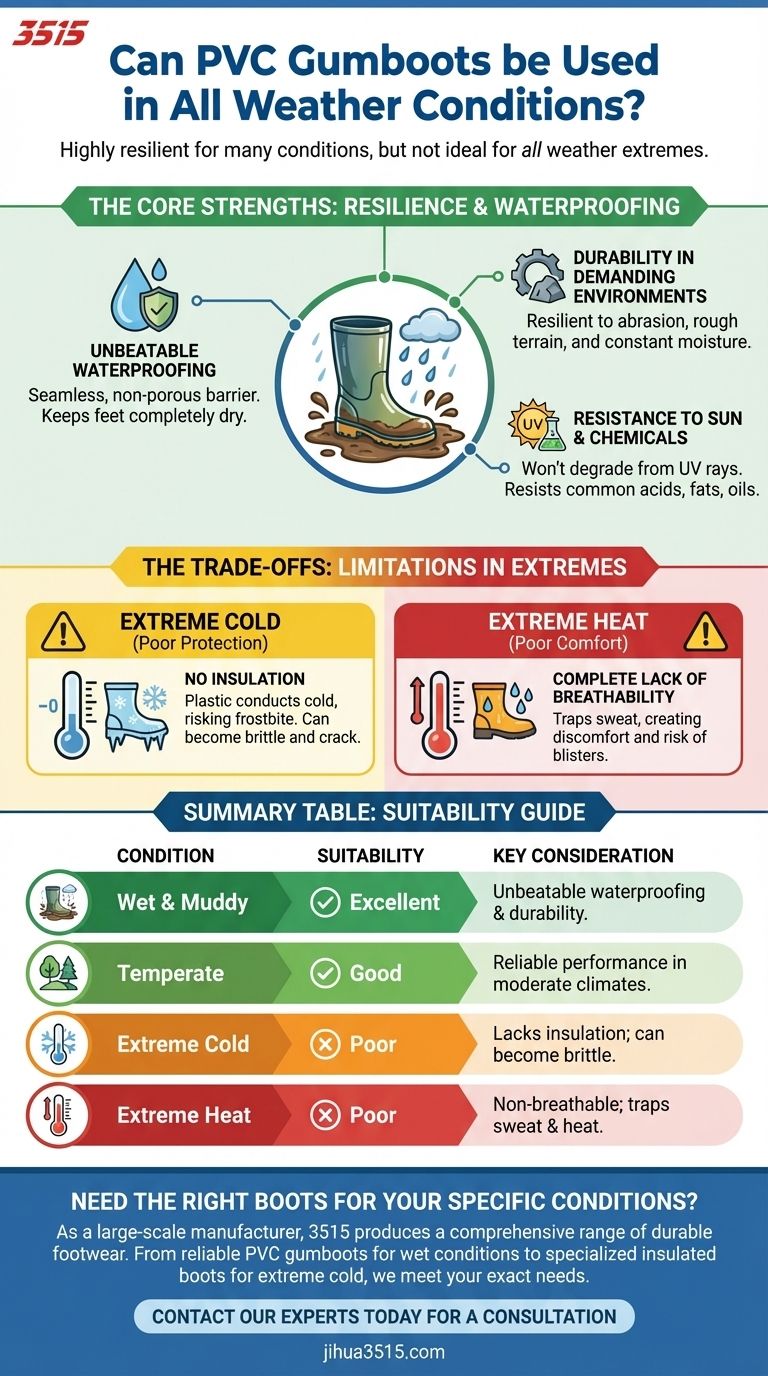
To be clear, while PVC gumboots are highly resilient for many conditions, they are not ideal for all weather extremes. Their core strength is providing an impermeable barrier against water, mud, and sun, making them exceptionally versatile for general-purpose use. However, their material properties introduce significant comfort and safety trade-offs in severe heat and cold.
PVC gumboots are a reliable choice for wet, muddy, and temperate conditions. Their primary limitation is a lack of both insulation for extreme cold and breathability for prolonged wear in extreme heat.
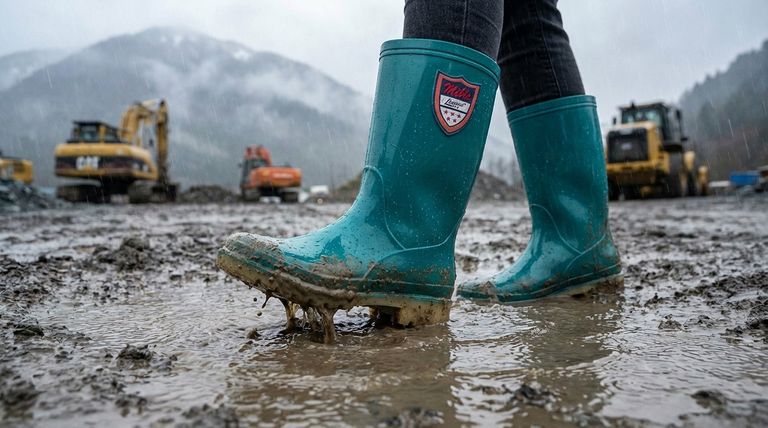
The Core Strengths of PVC Gumboots
Polyvinyl chloride (PVC) is a synthetic plastic polymer valued for its durability and water resistance. These inherent properties define the gumboot's primary advantages.
Unbeatable Waterproofing
The fundamental purpose of a gumboot is to keep your feet dry. PVC is a non-porous material, creating a seamless, waterproof shield against rain, puddles, and mud.
Unlike boots made from leather or textiles that rely on membranes or coatings, a PVC boot's entire structure is the waterproof barrier.
Durability in Demanding Environments
PVC is exceptionally resilient against abrasion and general wear and tear. It stands up well to rough terrain, muddy fields, and frequent use in wet conditions without degrading quickly.
This makes it a reliable material for agricultural, construction, and general outdoor work where exposure to moisture is constant.
Resistance to Sun and Chemicals
PVC is also resistant to degradation from UV rays, meaning it won't easily crack or weaken from sun exposure. This contributes to its reputation as a durable, year-round boot for many climates.
Furthermore, it offers good resistance to many common acids, fats, and oils, adding to its versatility in different work environments.
Understanding the Trade-offs: PVC's Limitations
The same properties that make PVC excellent for waterproofing also create its most significant drawbacks in extreme weather. Its non-porous, non-insulating nature becomes a liability when temperatures swing too far.
The Problem with Extreme Cold
Standard PVC gumboots offer virtually no insulation. In cold or icy conditions, the plastic will rapidly conduct cold to your feet, offering poor protection and increasing the risk of discomfort or frostbite.
Furthermore, PVC can become stiff and brittle in freezing temperatures, which can lead to cracking and compromise its waterproof integrity. This stands in contrast to specialized tactical or winter boots that incorporate dedicated insulation layers.
The Disadvantage in Extreme Heat
The biggest issue in hot weather is a complete lack of breathability. Because PVC is a solid plastic barrier, it traps all sweat and moisture inside the boot.
This creates a warm, damp internal environment that is not only uncomfortable but can also lead to blisters and fungal infections. Specialized boots, like those designed for police or tactical use, often feature breathable membranes that allow moisture vapor to escape while blocking liquid water from entering.
How to Make the Right Choice
Choosing the right boot depends entirely on the conditions you face most often. PVC gumboots are an excellent tool, but they are not a one-size-fits-all solution for every environment.
- If your primary focus is wet, muddy, and temperate conditions: PVC gumboots are an outstanding, cost-effective, and durable choice for keeping your feet dry.
- If your primary focus is working in extreme cold or snow: You need insulated, cold-weather-rated boots designed specifically to retain heat and maintain flexibility in freezing temperatures.
- If your primary focus is all-day wear in hot, humid weather: Prioritize boots made with breathable materials or featuring waterproof membranes to allow sweat to escape and keep your feet dry from the inside out.
Ultimately, understanding the material's inherent strengths and weaknesses empowers you to select the right footwear for your specific task and climate.
Summary Table:
| Condition | PVC Gumboot Suitability | Key Consideration |
|---|---|---|
| Wet & Muddy | Excellent | Unbeatable waterproofing and durability. |
| Temperate | Good | Reliable performance in moderate climates. |
| Extreme Cold | Poor | Lacks insulation; can become brittle. |
| Extreme Heat | Poor | Non-breathable; traps sweat and heat. |
Need the Right Boots for Your Specific Conditions?
As a large-scale manufacturer, 3515 produces a comprehensive range of durable footwear for distributors, brand owners, and bulk clients. Whether you need reliable PVC gumboots for wet conditions or specialized insulated boots for extreme cold, our production capabilities encompass all types of shoes and boots to meet your exact needs.
Let us help you equip your team with the perfect footwear solution.
Contact our experts today for a consultation!
Visual Guide
Related Products
- Premium Wholesale Waterproof Safety Boots High Performance Protection for Industrial Markets
- High-Traction Suede Tactical Boots Wholesale & Custom Manufacturing
- Heavy-Duty Waterproof Nubuck Safety Boots Safety Shoes for Bulk Supply
- High Performance Fire-Retardant Waterproof Safety Boots
- Lightweight Breathable Training Shoes for Wholesale & Custom OEM Manufacturing
People Also Ask
- What weather and chemical protections do premium boots offer? Your Complete Guide to Safety & Performance
- Why are waterproof safety boots recommended for certain work environments? Essential Protection for Wet & Hazardous Jobs
- What are the primary protective functions of industrial safety boots in oil palm plantations? Master Rough Terrain Safety
- Why are oil-resistant and anti-slip properties critical for industrial safety boots? Expert Outsole Engineering Guide
- What are the best types of shoes for different gardening conditions? Find Your Perfect Match.













