
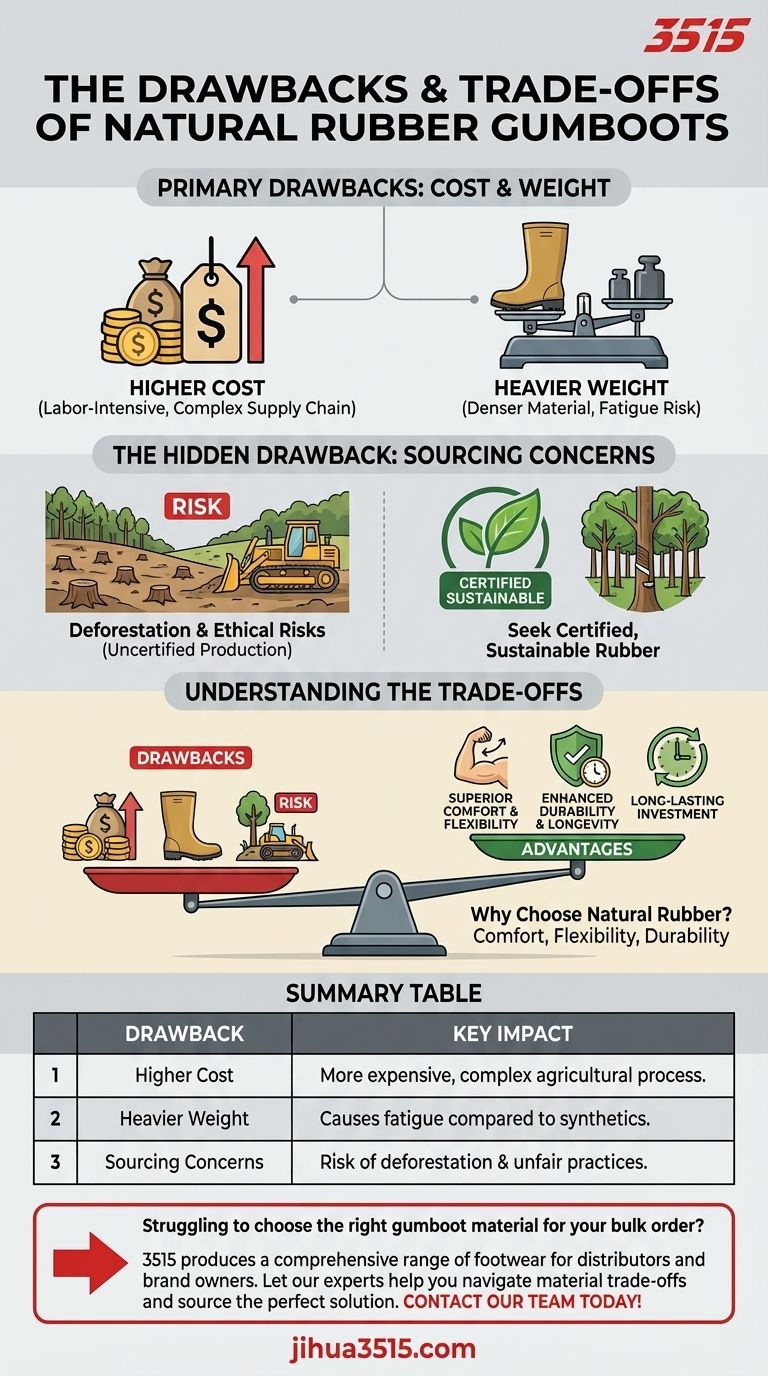
While highly valued for their comfort and durability, the primary drawbacks of natural rubber gumboots are their significantly higher cost and heavier weight compared to synthetic alternatives like PVC. There can also be serious environmental and ethical concerns associated with their production if the rubber is not sustainably sourced.
The core issue is one of trade-offs. The disadvantages of natural rubber—cost, weight, and potential sourcing issues—must be weighed against its superior flexibility, long-term durability, and overall comfort.

The Primary Drawbacks: Cost and Weight
The most immediate disadvantages you will notice when shopping for or wearing natural rubber gumboots are their price tag and their physical heft.
Why Natural Rubber Costs More
Natural rubber production is a labor-intensive agricultural process. It relies on manually tapping latex from rubber trees, which can only grow in specific tropical climates.
This complex and often lengthy supply chain stands in contrast to the mass industrial production of synthetic materials, making the final product inherently more expensive.
The Impact of Heavier Material
Natural rubber is a denser material than PVC, which results in a heavier boot. While this density contributes to durability, it can also lead to foot and leg fatigue during extended periods of wear.
For all-day use, the added weight is a practical consideration that synthetic boots often mitigate more effectively.
The Hidden Drawback: Sourcing Concerns
Beyond the practical issues of cost and weight lies a more significant potential drawback related to how the raw material is produced.
Environmental and Ethical Risks
The global demand for rubber can drive unsustainable practices. Uncertified natural rubber production has been linked to deforestation, where tropical forests are cleared to make way for rubber tree plantations.
Furthermore, there can be risks of human rights abuses and unfair trade conditions for the small-scale farmers who harvest the latex.
The Importance of Certification
To avoid contributing to these issues, it is crucial to seek out brands that use certified, sustainably sourced rubber. This ensures that the production methods are environmentally responsible and that workers are treated fairly.
Understanding the Trade-offs: Why Choose Natural Rubber?
Despite these clear drawbacks, natural rubber remains a premium material for a reason. Understanding its advantages provides the full context for making an informed decision.
Superior Comfort and Flexibility
Natural rubber possesses a natural elasticity that synthetic materials like PVC cannot replicate. This makes the boots significantly more comfortable, as they flex with your foot's movement.
This flexibility also allows for a better fit, especially for those with non-standard foot widths who may find rigid synthetic boots uncomfortable.
Enhanced Durability and Longevity
The higher initial cost of natural rubber boots can be offset by their superior durability. They are more resistant to cracking and corrosion over time.
While a cheaper PVC boot may need frequent repairs or replacement, a well-cared-for natural rubber boot can last for many years, making it a better long-term investment.
Making the Right Choice for Your Needs
Ultimately, the right material depends entirely on your priorities and intended use.
- If your primary focus is maximum comfort and long-term durability: Natural rubber is the superior choice, provided you accept the higher initial cost and weight.
- If your primary focus is budget and lightweight wear for occasional use: A synthetic PVC boot may be a more practical and economical option.
- If your primary focus is ethical and environmental impact: Choose natural rubber, but only from brands that can verify their use of certified, sustainably sourced materials.
Choosing the right gumboot is about aligning the material's inherent properties with your specific goals.
Summary Table:
| Drawback | Key Impact |
|---|---|
| Higher Cost | More expensive due to labor-intensive, agricultural production process. |
| Heavier Weight | Can cause foot and leg fatigue during extended wear compared to synthetics. |
| Sourcing Concerns | Risk of deforestation and unfair labor practices if not sustainably certified. |
Struggling to choose the right gumboot material for your bulk order? As a large-scale manufacturer, 3515 produces a comprehensive range of footwear for distributors, brand owners, and bulk clients. Our production capabilities encompass all types of shoes and boots, including durable and comfortable options tailored to your specific needs. Let our experts help you navigate material trade-offs and source the perfect footwear solution. Contact our team today for a consultation!
Visual Guide
Related Products
- Durable Rubber Sole Outdoor Shoes Wholesale & Custom Manufacturing
- Factory Direct Wholesale Rain Boots Durable Waterproof & Fully Customizable
- Wholesale Leather Ankle Boots with Lug Soles for Custom Brand Manufacturing
- Durable Leather Moc Toe Work Boots for Wholesale & Custom Manufacturing
- Durable Goodyear Welt Leather Work Boots for Wholesale & Private Label
People Also Ask
- What is the function of the sole in outdoor shoes? Find the Perfect Grip and Support
- What role do outdoor shoes and sneakers play in navigating external terrains? Engineered Stability for Every Surface
- How is AI utilized in the design of outdoor and safety footwear? Harnessing Big Data for Market-Driven Shoe Innovation
- Why is durability important when selecting outdoor shoes? A Guide to Safety & Long-Term Value
- What are the key components of outdoor shoes that affect comfort and sturdiness? A Guide to Durable, High-Performance Footwear




