
To properly clean rubber boots, you must adopt a multi-stage approach: remove loose debris with a dry brush, wash the exterior with a mild soap solution, and sanitize the interior to prevent bacterial growth. Always rinse with clean, cool water and allow the boots to air dry naturally, strictly avoiding direct heat sources that cause the rubber to become brittle.
Core Takeaway While rubber is inherently durable, it is chemically sensitive to temperature extremes and harsh solvents. The goal of cleaning is not merely aesthetic; it is to remove reactive soil and bacteria that degrade the rubber's flexibility and the lining's integrity over time.
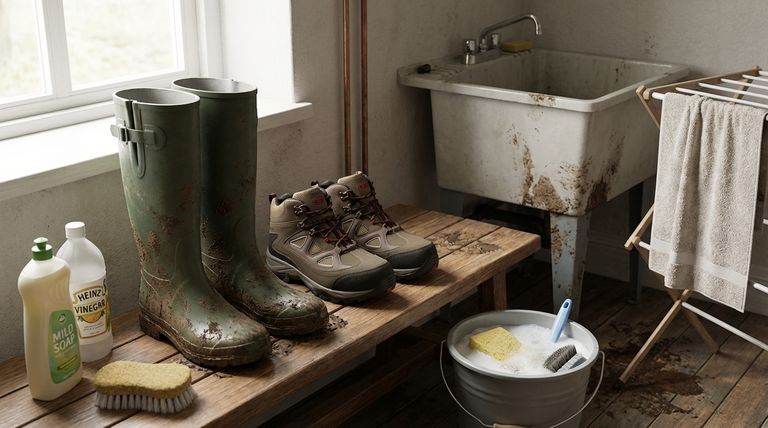
The Exterior Cleaning Process
Removing Surface Debris
Before applying water, use a medium-bristle brush or a dry cloth to knock off caked-on mud and dirt.
Removing these abrasive particles while dry prevents them from scratching the rubber surface during the wet wash.
The Wash Cycle
Mix mild dish soap or a specific rubber boot cleaner with lukewarm water. Do not use heavy-duty solvents.
For stubborn muck, you can soak the exterior of the boots in a bucket of this soapy solution for approximately 10 minutes to loosen the grime.
Use a soft cloth or sponge to wipe down the rubber, paying attention to the crevices in the tread where mud accumulates.
Internal Hygiene and Odor Control
Scrubbing the Lining
The interior requires a different chemical approach. Mix one teaspoon of heavy-duty laundry detergent with two cups of warm water.
Soak a clean cloth in this solution and vigorously wipe the inner lining to lift sweat and oils.
Neutralizing Bacteria
To address persistent odors, skip the soap and create a solution of white vinegar and water.
Spray or wipe this mixture inside the boot. The acidity of the vinegar neutralizes bacteria and fungi that thrive in the dark, damp environment of a rubber boot.
Rinse the lining by wiping it down with a second cloth soaked in plain warm water to remove any detergent residue.
Drying and Preservation
The Rinse
Thoroughly rinse the exterior with cool water to remove all traces of soap. Leftover soap residue can attract more dirt and degrade the rubber over time.
Air Drying
Wipe the boots with a dry towel to remove excess moisture. Place them in a well-ventilated area to air dry completely.
If the interior is wet, you may stuff the boots with newspaper to absorb moisture, changing the paper every hour until dry.
Common Pitfalls to Avoid
The Danger of Direct Heat
Never place rubber boots near a radiator, heater, or in direct sunlight to speed up the drying process.
Heat is the enemy of rubber. It causes the material to dry out, shrink, and eventually crack, destroying the boot's waterproof integrity.
Chemical Damage
Avoid aggressive solvents, bleach, or abrasive household cleaners.
These chemicals attack the molecular structure of the rubber, leading to discoloration and a loss of elasticity. Stick to mild soaps and water.
Making the Right Choice for Your Goal
To maintain the longevity of your gear, tailor your cleaning frequency to your usage.
- If your primary focus is Daily Maintenance: Use a boot brush to remove fresh mud after every wear to prevent debris from hardening.
- If your primary focus is Deep Cleaning and Storage: Perform the full soap-and-vinegar wash, ensure the boots are 100% dry, and apply a rubber conditioner before storing them in a cool, dark place.
Treat your rubber boots as precision equipment, and they will remain waterproof and comfortable for years.
Summary Table:
| Step | Key Action | Purpose |
|---|---|---|
| 1. Remove Debris | Use a dry, medium-bristle brush. | Prevents scratches during washing. |
| 2. Wash Exterior | Use mild soap and lukewarm water. | Removes grime without damaging rubber. |
| 3. Sanitize Interior | Use a vinegar solution or detergent. | Kills odor-causing bacteria and fungi. |
| 4. Dry Properly | Air dry in a ventilated area; avoid heat. | Preserves rubber flexibility and integrity. |
Need a reliable supply of durable rubber boots?
As a large-scale manufacturer, 3515 produces a comprehensive range of high-quality footwear for distributors, brand owners, and bulk clients. Our production capabilities encompass all types of durable shoes and boots, including robust rubber boots built to last. We ensure consistent quality and volume to meet your business needs.
Let's discuss your requirements → Contact 3515 Today
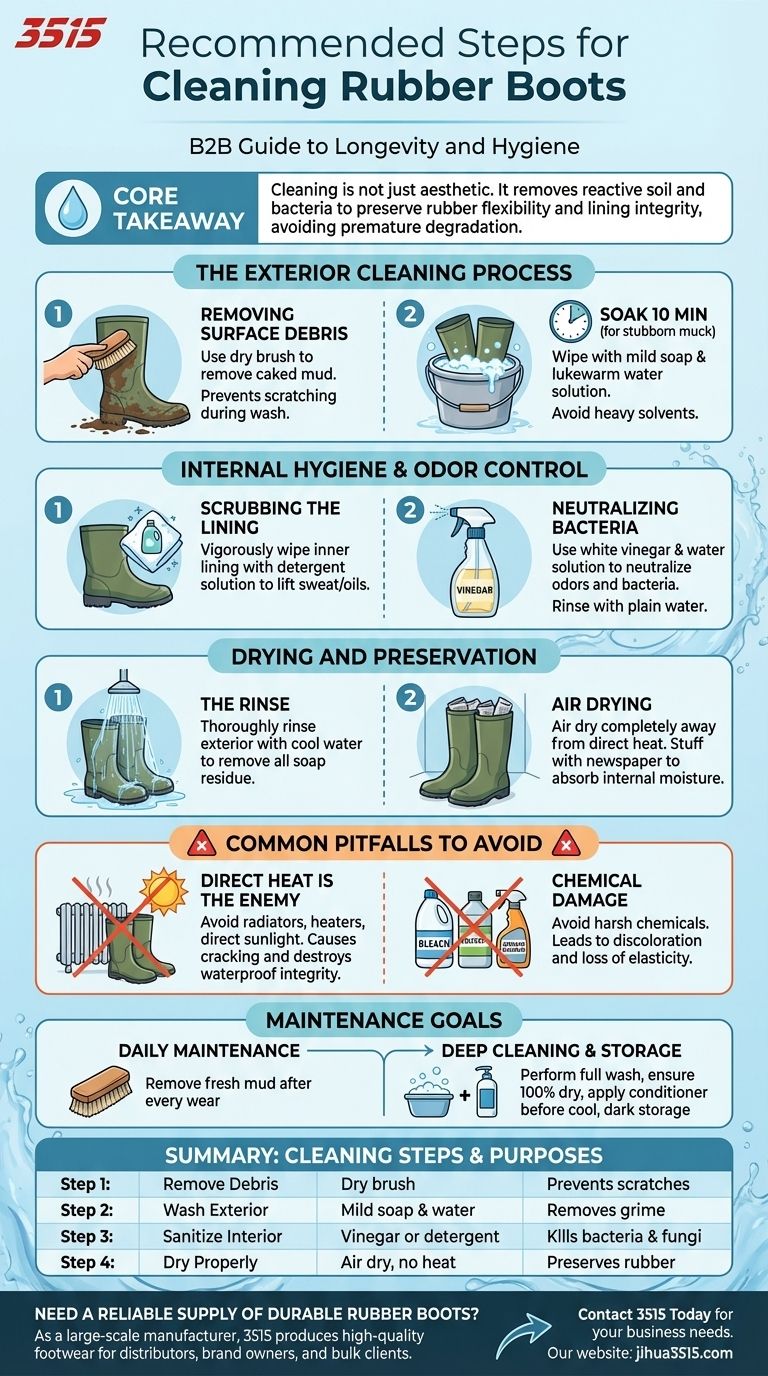
Visual Guide
Related Products
- Factory Direct Wholesale Rain Boots Durable Waterproof & Fully Customizable
- Durable Rubber Sole Outdoor Shoes Wholesale & Custom Manufacturing
- Wholesale Durable Camouflage Canvas Shoes with High-Traction Cleated Rubber Sole
- Wholesale Durable Leather Work Boots | 8-Inch Goodyear Welt Manufacturer
- Durable Goodyear Welt Leather Work Boots for Wholesale & Private Label
People Also Ask
- What are the characteristics of rain boots? A Guide to Waterproof Footwear for Every Need
- What factors should be considered when choosing rain boots? Find the Perfect Boot for Your Needs
- What are the main differences between rain boots and snow boots? Choose the Right Boot for Your Climate
- How should one decide between PVC and rubber for rain boots? A Guide to Choosing the Right Material
- Why are rain boots more flexible and comfortable than snow boots? The Key Differences Explained















