The Anatomy of a Predictable Accident
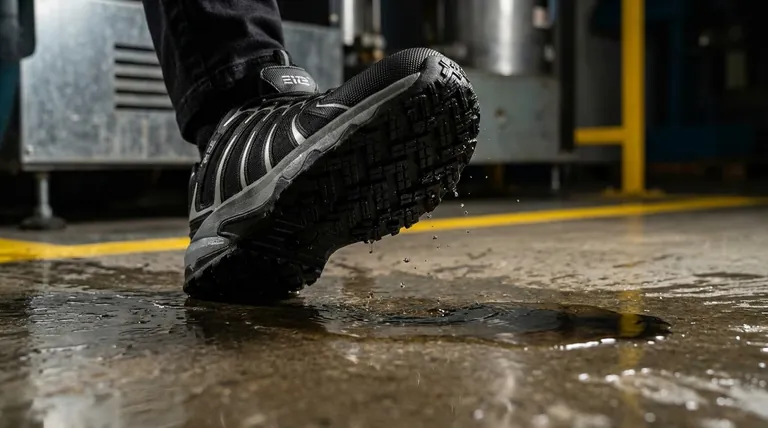
A single drop of oil on a workshop floor. A recently mopped hallway in a distribution center. These are not dramatic, once-in-a-lifetime events. They are mundane, everyday occurrences.
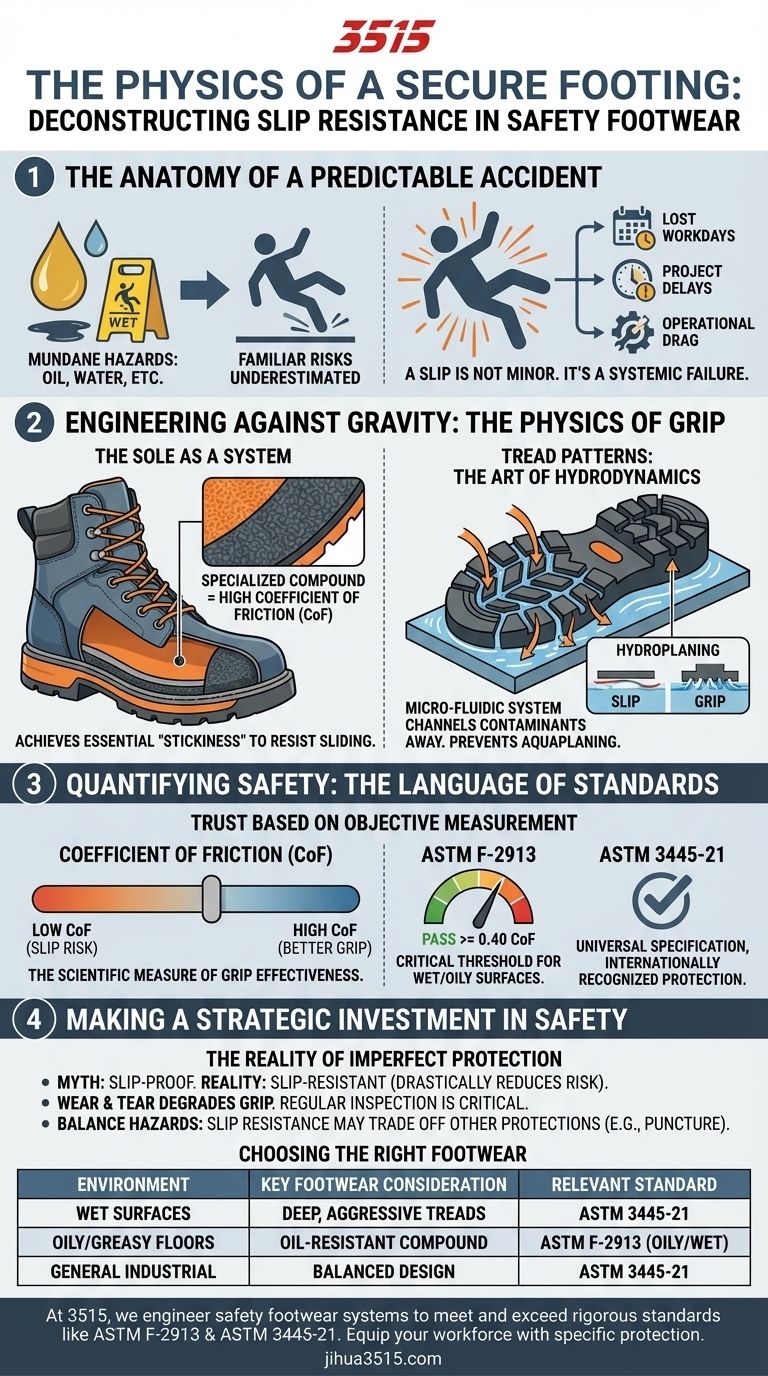
Yet, this is the environment where one of the most common and costly workplace accidents is born. We are psychologically wired to underestimate familiar risks. A slip seems minor, but the data reveals a systemic failure. Slips, trips, and falls are a leading cause of preventable, non-fatal injuries, creating a predictable drain on personnel and productivity.
When an employee falls, the impact is never isolated. It means lost workdays, project delays, and the operational drag of a team running at less than full capacity. The cost of a simple slip is rarely simple.
Engineering Against Gravity: The Physics of Grip
Preventing a slip is not about adding a generic layer of rubber to a boot. It's an act of deliberate engineering—managing the complex physical interface between a person, their footwear, and the ground.
The Sole as a System
The foundation of modern slip resistance is the sole's material compound. This isn't just rubber; it's a specialized formula engineered to achieve a high coefficient of friction. This property is what creates the essential "stickiness" or grip required to resist the forces that initiate a slide. The material itself is the first line of defense.
Tread Patterns: The Art of Hydrodynamics
A flat, high-friction surface is easily defeated by a thin layer of liquid. This is where tread design becomes critical. The patterns, channels, and grooves cut into a sole are not for aesthetics. They are a micro-fluidic system designed to do one thing: channel contaminants away.
Like the tread on a tire, these patterns break the surface tension of water, oil, or other liquids, allowing the solid parts of the sole to make direct, firm contact with the walking surface. Without this, an employee is effectively aquaplaning.
Quantifying Safety: The Language of Standards
Trust in safety equipment cannot be based on feeling or appearance. It must be based on objective, repeatable measurement. This is where industry standards translate complex physics into a clear benchmark for safety.
The Coefficient of Friction: A Single Number for a Complex Problem
The effectiveness of a shoe's grip is scientifically measured as its coefficient of friction (CoF). A higher CoF means a better grip and a lower probability of slipping. This simple number cuts through marketing claims and provides a hard data point for performance.
Decoding the Benchmarks
To ensure reliability, footwear is tested against rigorous standards that simulate real-world hazards.
- ASTM F-2913: This widely recognized test measures the CoF on various surfaces, including wet and oily tile. To pass, a shoe must achieve a CoF of at least 0.40—a critical pass/fail threshold.
- ASTM 3445-21: This newer, more comprehensive standard provides a universal specification, giving safety managers confidence that their chosen footwear meets an internationally recognized level of protection.
The Reality of Imperfect Protection
In safety, there are no silver bullets. Selecting the right footwear requires understanding its limitations and the context of its use.
The Myth of "Slip-Proof"
No shoe is "slip-proof." The correct term is "slip-resistant," which acknowledges the reality that these products are designed to drastically reduce the risk of a slip, not eliminate it entirely. A culture of awareness and caution remains the most important safety tool.
The Enemy of Grip: Wear and Tear
A slip-resistant sole is a high-performance system, and like any such system, it degrades over time. As the tread wears down, its ability to channel fluids diminishes, and the CoF drops. Regular inspection of footwear is not just good practice; it's a critical component of maintaining the safety system.
Balancing Hazards
The ideal footwear for a wet factory floor may not be the same for a construction site with sharp debris. Optimizing for one hazard, like slip resistance, can mean trading off protection in another area, like puncture or abrasion resistance. The total risk profile of the environment must dictate the choice.
Making a Strategic Investment in Safety
Choosing footwear is not a simple procurement task; it is a strategic investment in the stability and safety of your entire operation. The right choice depends entirely on the specific challenges your team faces.
| Environment | Key Footwear Consideration | Relevant Standard |
|---|---|---|
| Wet Surfaces | Deep, aggressive tread patterns for water channeling. | Tested and rated for wet conditions (ASTM 3445-21) |
| Oily/Greasy Floors | Specialized, oil-resistant sole compound. | Passes oily/wet surface tests (ASTM F-2913) |
| General Industrial | A balanced design meeting modern, broad standards. | Compliance with ASTM 3445-21 |
At 3515, we understand that effective safety footwear is an engineered system. As a large-scale manufacturer, we produce a comprehensive range of boots and shoes for distributors and bulk clients, with sole compounds and tread patterns designed to meet and exceed rigorous standards like ASTM F-2913 and ASTM 3445-21. We help you move beyond compliance and equip your workforce with the specific protection they need to stay safe and productive.
Ready to equip your team with footwear that's engineered for their specific risks? Contact Our Experts
Visual Guide
Related Products
- Premium Suede Sport Safety Shoes for Wholesale & Bulk Orders
- Heavy-Duty Waterproof Nubuck Safety Boots Safety Shoes for Bulk Supply
- Advanced KPU Athletic Safety Shoe with Steel Toe Cap Anti-Slip Rotary Lacing System
- Wholesale Durable 6-Inch Work Boots | Custom & Private Label Manufacturer
- Durable Leather Moc Toe Work Boots for Wholesale & Custom Manufacturing
Related Articles
- The Ghost in the Machine: Why an Obsolete Footwear Standard Creates Modern Risk
- Beyond the Steel Toe: The Hidden Ergonomics of Workplace Safety
- Why Traditional Laces Are a Hidden Safety Risk—And What to Do About It
- The True Cost of Skipping Safety Shoes: Long-Term Risks and Smart Protection
- How Safety Shoe Engineering Prevents Workplace Injuries Across Industries