The Margin of Safety is Measured in Millimeters
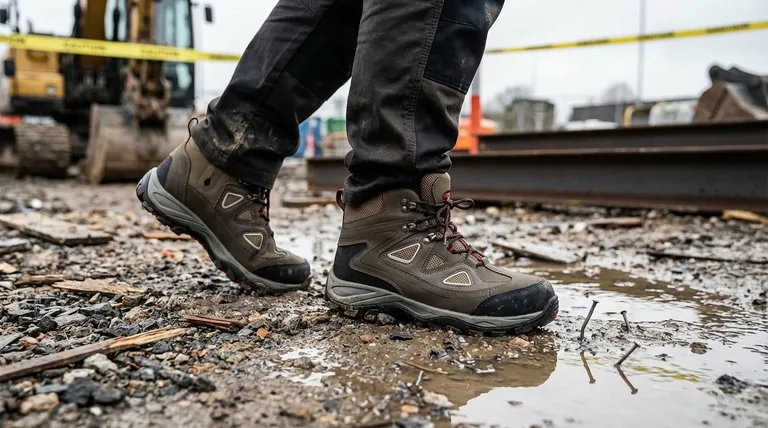
An overloaded cart rolls off a ramp. A puddle of oil spreads silently on a concrete floor. A stray nail lies flat on a dusty construction site.
In these moments, the difference between a minor incident and a life-altering injury isn't luck. It's engineering.
We often oversimplify safety footwear, reducing it to the iconic steel toe. But this perception misses the point. A safety boot isn't a single object; it's a sophisticated system designed to solve a specific set of physics problems. Choosing the right one is less about compliance and more about understanding the precise nature of the risks your team faces every single day.
Deconstructing the Hazard: A Threat-Specific Approach
To build a truly safe environment, you must first speak the language of the hazards within it. Each threat requires a specific countermeasure, an engineered solution built directly into the footwear.
The Brutal Force: Impact & Compression
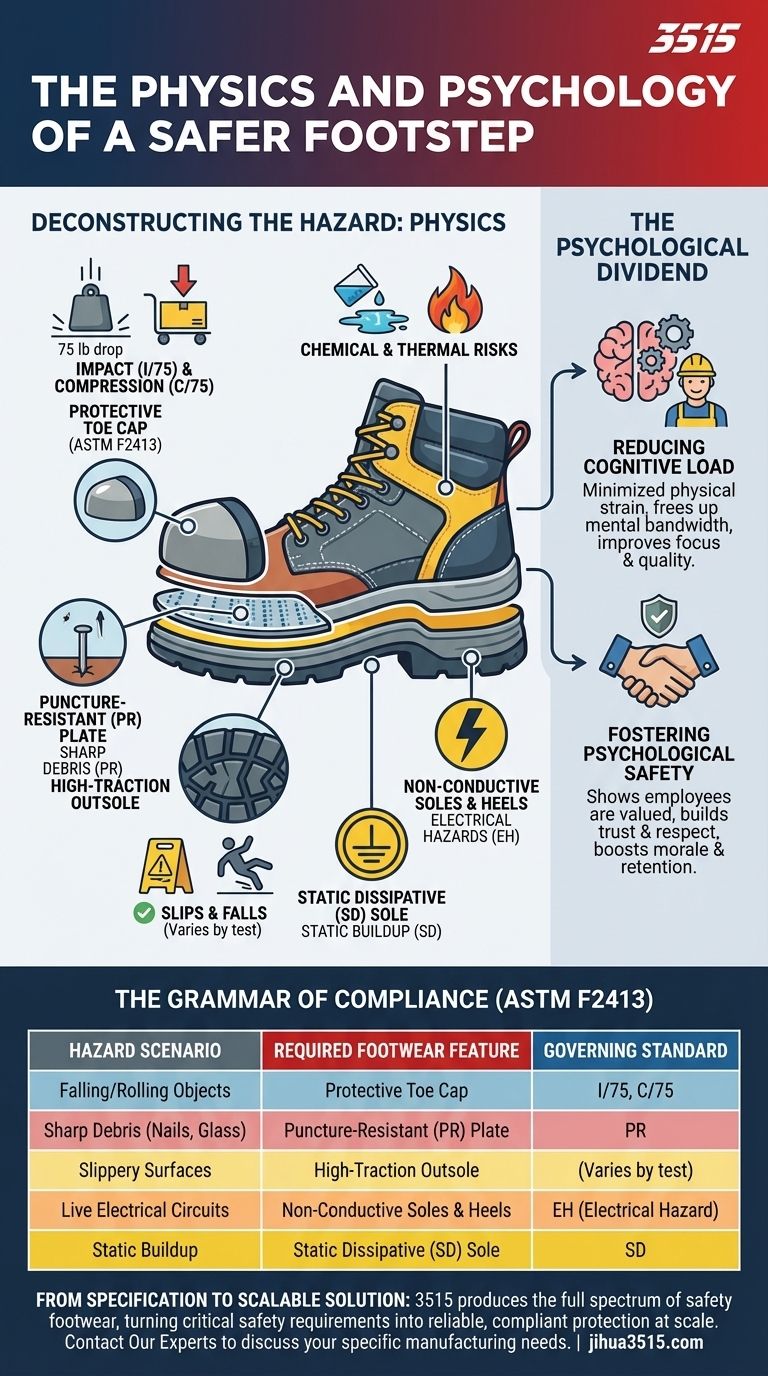
This is the classic scenario: a dropped tool, a falling box, a rolling pallet jack. The protective toe cap, mandated by standards like ASTM F2413, is the non-negotiable solution.
- Impact (I/75): Protects against a 75-pound object dropped from a specified height.
- Compression (C/75): Protects against a rolling force of 2,500 pounds.
This feature alone addresses the most visceral and immediate dangers on a factory or warehouse floor.
The Hidden Threat: Punctures & Penetrations
The ground is often the most overlooked surface. Nails, metal shards, and sharp debris pose a constant threat in demolition, construction, and maintenance zones. A standard sole offers little resistance.
For these environments, footwear must include a built-in, puncture-resistant (PR) plate in the midsole, designed to stop sharp objects before they can cause serious injury.
The Silent Attack: Chemical & Thermal Risks
Not all threats are mechanical. For workers handling corrosive materials, the boot's upper material is the first and last line of defense. It must be made of materials specifically formulated to resist degradation and permeation from chemical spills.
Similarly, in high-heat environments like foundries, specialized boots shield feet from molten metal splashes and extreme surface temperatures.
The Universal Danger: Slips & Falls
Slips, trips, and falls remain one of the most common causes of workplace injuries. The solution lies in the friction coefficient of the outsole.
Safety footwear with certified non-skid soles uses specific tread patterns and rubber compounds to provide superior grip on wet, oily, or uneven surfaces, converting an unstable step into a secure one.
The Invisible Current: Electrical Hazards
For electricians and personnel working near live circuits, the danger is entirely unseen. Electrical Hazard (EH) rated footwear is engineered with non-conductive soles and heels, isolating the wearer from the ground to protect against accidental electric shock.
The Psychological Dividend of Proper Equipment
Preventing injury is only half the story. The feeling of being safe has a profound and measurable impact on human performance. Providing correctly specified PPE is an investment in your team's psychology.
Reducing Cognitive Load
Physical discomfort is a tax on mental focus. A worker whose feet are fatigued, sore, or cold is a worker who is distracted. Well-designed safety footwear provides the support and cushioning that minimizes this physical strain. By freeing up that mental bandwidth, you enable employees to focus fully on their tasks, improving quality and reducing errors.
Fostering Psychological Safety
Issuing high-quality, task-specific PPE sends a powerful, non-verbal message: "Your well-being is our priority." This act builds a foundation of trust and respect. It shows that safety is not just a slogan on a poster but a core operational value. This sense of being valued is a direct contributor to higher morale and employee retention.
The Grammar of Compliance
Standards from bodies like OSHA and ASTM aren't just regulations; they are a precise technical language for safety. Understanding this "grammar" allows you to specify exactly what you need.
The table below translates common workplace hazards into their corresponding engineering solutions and standard "codes."
| Hazard Scenario | Required Footwear Feature | Governing Standard (ASTM F2413) |
|---|---|---|
| Falling/Rolling Objects | Protective Toe Cap | I/75, C/75 |
| Sharp Debris (Nails, Glass) | Puncture-Resistant (PR) Plate | PR |
| Slippery Surfaces | High-Traction Outsole | (Varies by test, e.g., F2913) |
| Live Electrical Circuits | Non-Conductive Soles & Heels | EH (Electrical Hazard) |
| Static Buildup | Static Dissipative (SD) Sole | SD |
From Specification to Scalable Solution
Understanding the physics of your work environment and the psychology of your team is the critical first step. The next is finding a manufacturing partner who can translate those precise specifications into reliable, compliant, and high-quality footwear at scale.
As a large-scale manufacturer, 3515 produces the full spectrum of safety footwear for distributors, brand owners, and organizations that demand uncompromising protection. Our capabilities encompass all of the specialized footwear discussed, ensuring that every shoe and boot we produce meets the exact ASTM standards required for your environment. We turn critical safety requirements into tangible, protective equipment for your workforce.
Ensuring your team has the right protection is the foundation of a safe, confident, and productive operation. Contact Our Experts to discuss your specific manufacturing needs.
Visual Guide
Related Products
- Premium Suede Sport Safety Shoes for Wholesale & Bulk Orders
- Premium Lightweight Safety Shoes for Wholesale & Bulk Orders
- Wholesale Anti-Smash & Puncture-Proof Safety Shoes Custom Manufacturing for Brands
- Premium KPU Injection Athletic Style Safety Shoes
- Premium Safety Shoes with Rotating Buckle Safety Sneakers
Related Articles
- The Ghost in the Machine: Why an Obsolete Footwear Standard Creates Modern Risk
- Beyond the Steel Toe: The Hidden Ergonomics of Workplace Safety
- Why Traditional Laces Are a Hidden Safety Risk—And What to Do About It
- The True Cost of Skipping Safety Shoes: Long-Term Risks and Smart Protection
- How Safety Shoe Engineering Prevents Workplace Injuries Across Industries