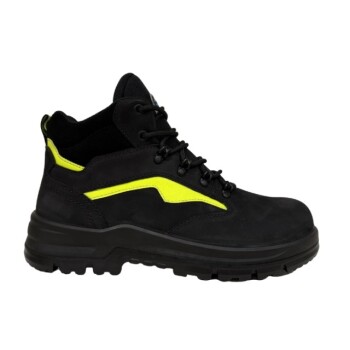
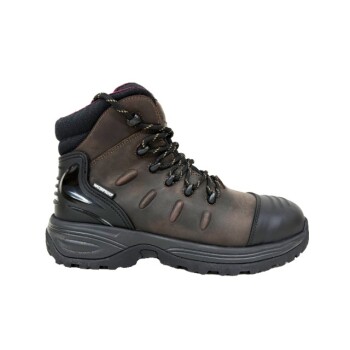
For work boots, Goodyear welt construction is chosen for its superior durability, water resistance, and long-term value. This method, which involves stitching a strip of leather (the "welt") between the boot's upper and the outsole, creates an exceptionally robust and repairable piece of footwear ideal for demanding environments.
The core reason to choose a Goodyear welt is viewing your boots as a long-term investment. While the upfront cost is higher, the ability to repeatedly resole the boot and its inherent durability mean it will outlast multiple pairs of cheaper, disposable footwear.
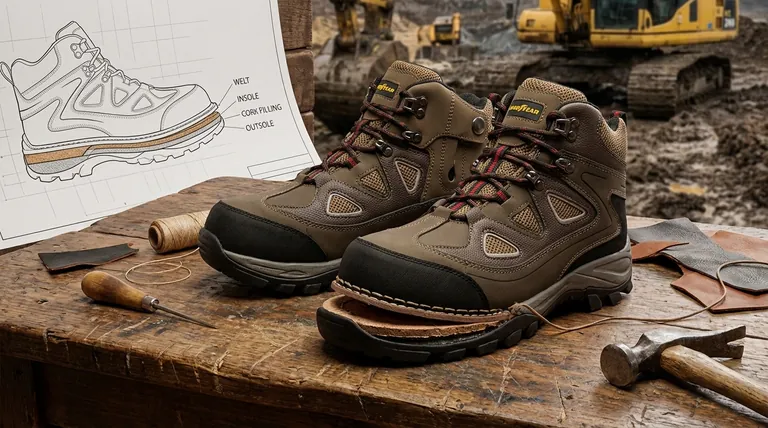
How a Goodyear Welt Actually Works
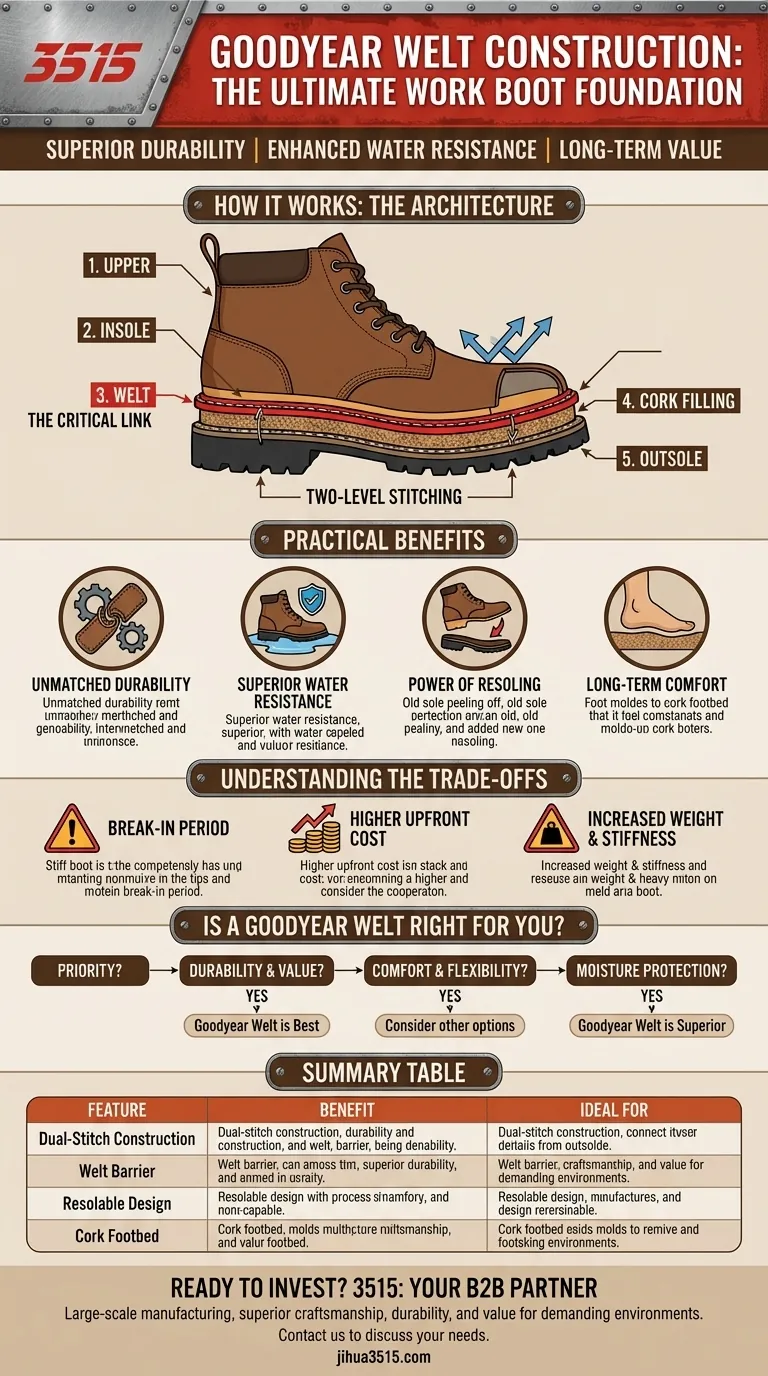
To understand the benefits, you must first understand the architecture. A Goodyear welt is a specific, multi-step construction method that creates a highly stable platform.
The Upper and the Insole
The process begins by attaching the boot's upper—the main leather body of the boot—to the insole, which is the layer your foot rests on. This creates the initial shape and structure.
The Role of the Welt
A strip of leather or synthetic material, known as the welt, is then stitched around the perimeter of the boot. This welt is the critical link in the entire system, acting as a buffer and connection point between the upper and the outsole.
Two-Level Stitching
This construction uses two independent stitches. The first stitch connects the upper, the insole, and the welt together. The second stitch then attaches the outsole directly to the welt. This two-level system means the outsole is never stitched directly into the boot's upper.
The Cork Filling
The cavity created between the insole and the outsole is filled with a layer of granulated cork. This material provides cushioning, insulation, and breathability.
The Practical Benefits in a Work Environment
The specific mechanics of the Goodyear welt translate directly into tangible advantages on the job site.
Unmatched Durability
The dual-stitching method creates an incredibly strong and stable bond. The entire structure is interlocked, preventing the sole from delaminating or separating from the upper, even under high stress and torsion.
Superior Water Resistance
The welt acts as a physical barrier, preventing water from easily seeping into the seam where the upper meets the sole. While not fully waterproof, this construction offers significantly more protection against moisture than simpler methods.
The Power of Resoling
Because the outsole is stitched only to the welt, a cobbler can easily remove the old sole and stitch on a new one without disturbing the integrity of the upper. This means a high-quality pair of boots can be resoled multiple times, dramatically extending their service life.
Long-Term Customized Comfort
Initially firm, the cork footbed gradually compresses and molds to the unique shape of your foot with heat and pressure. Over time, this creates a personalized, supportive footbed that is more comfortable than a generic insole.
Understanding the Trade-offs
No construction method is perfect for every application. Objectivity requires acknowledging the downsides of a Goodyear welt.
The Initial Break-in Period
The robust materials and stiff construction result in a significant break-in period. The boots will feel firm and less flexible out of the box and require time to conform to your foot and gait.
Higher Upfront Cost
The complexity of the process and the quality of materials required make Goodyear welted boots more expensive than those with cemented or Blake-stitched soles. This is an initial investment in future longevity.
Increased Weight and Stiffness
The extra layers of material—the welt, the midsole, the cork—add weight and reduce the overall flexibility of the boot. For jobs requiring maximum agility or a lightweight feel, this can be a drawback.
Is a Goodyear Welt Right for Your Job?
Choosing the right boot construction depends entirely on your priorities and work environment.
- If your primary focus is maximum durability and long-term value: A Goodyear welt is the undisputed best choice, especially in rugged, abrasive conditions.
- If your primary focus is out-of-the-box comfort and flexibility: You may prefer a different construction, like a direct-attach or cemented sole, at the cost of repairability.
- If your primary focus is moisture protection in a wet environment: The water resistance of a Goodyear welt makes it a superior option to most other traditional constructions.
Ultimately, a Goodyear welt is the foundational choice for professional-grade work boots built to last.
Summary Table:
| Feature | Benefit | Ideal For |
|---|---|---|
| Dual-Stitch Construction | Exceptional durability & sole stability | Rugged, abrasive work environments |
| Welt Barrier | Enhanced water resistance | Wet conditions & job sites |
| Resolable Design | Extends boot life, reduces long-term cost | Professionals seeking value |
| Cork Footbed | Molds to foot shape for custom comfort | All-day wear & support needs |
Ready to Invest in Boots That Last?
As a large-scale manufacturer, 3515 produces comprehensive ranges of Goodyear welt work boots for distributors, brand owners, and bulk clients. Our production capabilities ensure superior craftsmanship, durability, and value—perfect for demanding work environments.
Contact us today to discuss your specific needs and discover how our footwear solutions can enhance your product line or supply chain.
Visual Guide
Related Products
- Durable Goodyear Welt Leather Work Boots for Wholesale & Private Label
- Wholesale Durable Leather Work Boots | 8-Inch Goodyear Welt Manufacturer
- Durable Leather Work Boots for Wholesale & Custom Manufacturing
- Durable Leather Work Boots for Wholesale & Custom OEM Manufacturing
- Durable Leather Work Boots Wholesale Manufacturer & Custom Factory
People Also Ask
- What is the difference between full-grain and top-grain leather? Premium Material Guide for Boot Manufacturers
- What are the advantages of leather as an upper material for work boots? Unmatched Durability & Custom Comfort
- Why is it important to waterproof leather work boots? Protect Your Investment and Performance
- How should new leather work boots be broken in? A Guide to Comfort and Durability
- What are the advantages of leather uppers in work boots? Unmatched Durability & Protection