
In short, motorcycle boots must cover the ankle to provide structural reinforcement against the three primary forces in a crash: impact, abrasion, and torsion. Your ankle is a complex joint of small bones, ligaments, and tendons that is uniquely vulnerable to being crushed, scraped, and violently twisted when a motorcycle goes down.
The core reason is simple: a boot that ends below the ankle offers zero protection against twisting forces. Proper motorcycle boots act as an external skeleton, preventing your foot from being bent or rotated into angles that cause catastrophic, life-altering injuries.
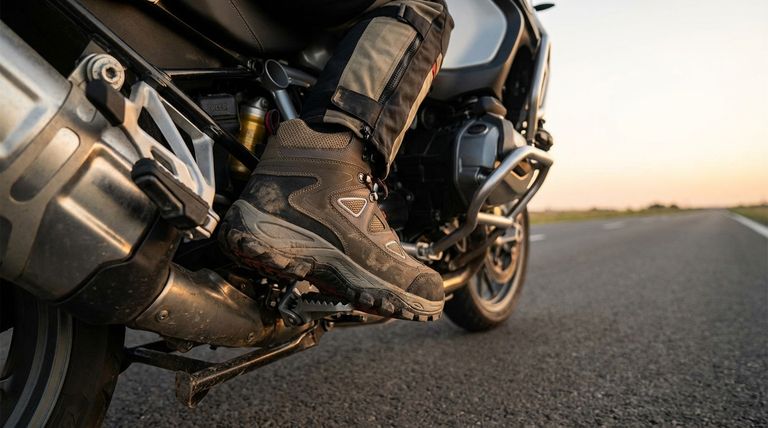
The Three Pillars of Ankle Protection
A common misconception is that ankle coverage is just about preventing scrapes. While important, that is only a small part of the story. True motorcycle boots are engineered systems designed to counter specific, predictable forces.
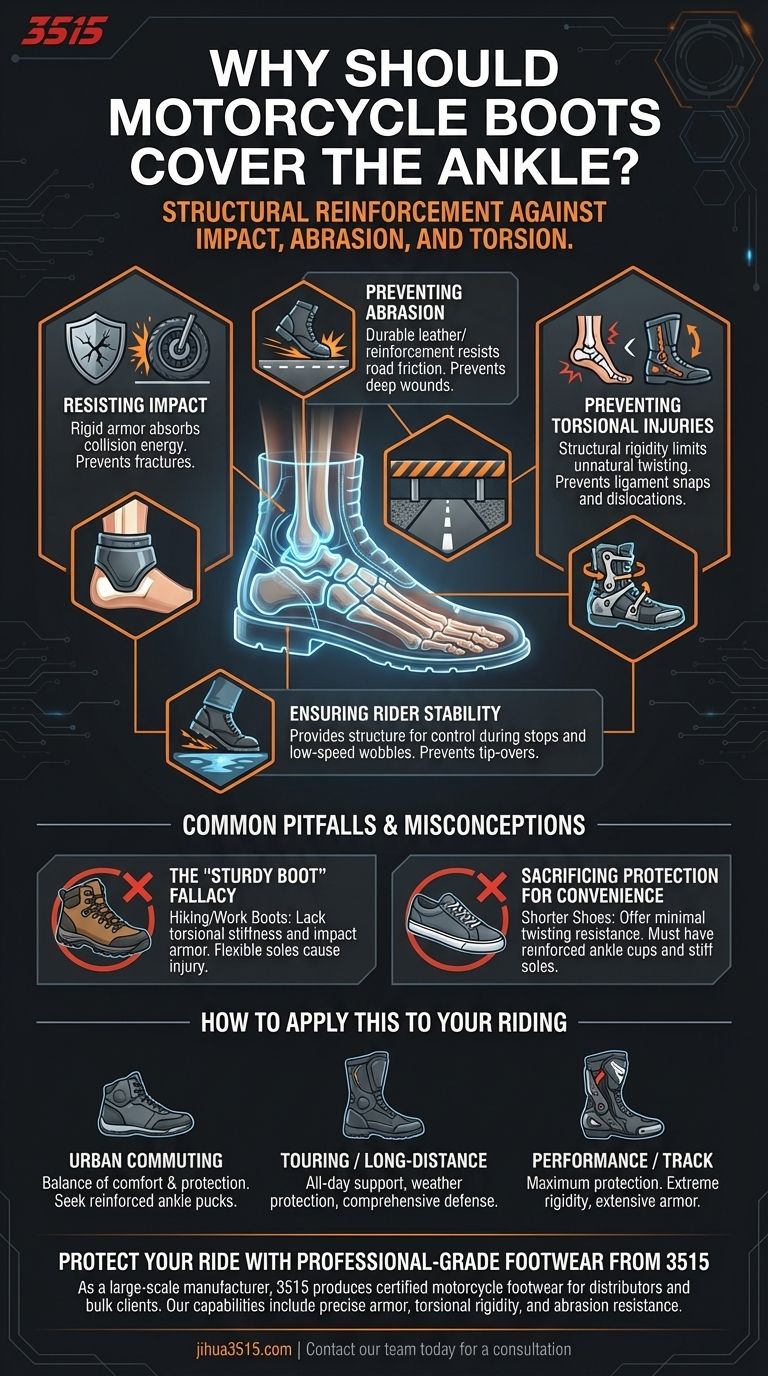
Resisting Impact and Abrasion
During a fall, your feet and ankles are highly likely to make contact with the road surface or the motorcycle itself.
Boots that cover the ankle place a durable barrier—typically thick leather combined with rigid armor—directly over the protruding ankle bones. This shield is designed to absorb impact energy from a collision and resist abrasion from sliding on asphalt, preventing fractures and deep wounds.
Preventing Torsional Injuries
This is the most critical and least understood function of a motorcycle boot.
Torsional force is the violent twisting that occurs when your foot is planted or trapped while the rest of your body is still in motion. A low-cut shoe offers no resistance to this, allowing your ankle to be twisted or hyper-extended, resulting in severe sprains or snapped ligaments and bones.
A proper boot with ankle coverage provides rigidity, severely limiting the ankle's ability to rotate or bend in unnatural directions.
Ensuring Rider Stability
Protection isn't just for crashes; it's also for control during routine riding.
Riders instinctively use their feet for stability when coming to a stop or during a low-speed wobble. A supportive boot provides the structure needed to plant your foot firmly on uneven or slippery surfaces, preventing a simple stop from turning into a tip-over and potential injury.
Common Pitfalls and Misconceptions
Choosing the right footwear involves understanding what doesn't work and why. Many riders make compromises here that expose them to unnecessary risk.
The "Sturdy Boot" Fallacy
Hiking boots and work boots are not motorcycle boots. While they cover the ankle, they are designed for walking flexibility, not crash protection.
They lack the necessary torsional stiffness, impact armor, and abrasion resistance. In a crash, their laces can get caught on bike parts, and their flexible soles can allow your foot to be bent backward over a footpeg, causing severe injury.
Sacrificing Protection for Convenience
Shorter "riding shoes" have become popular for their comfort and style.
While many of these are certified and offer good protection, it's crucial to verify they have reinforced ankle cups and some degree of torsional stiffness. A shoe that looks like a boot but can be twisted easily in your hands will not provide meaningful protection when you need it most.
How to Apply This to Your Riding
Your choice of boot should align directly with the risks you are most likely to face.
- If your primary focus is urban commuting: Seek out certified riding shoes or short boots that prioritize a balance of walking comfort and essential protection, ensuring they have reinforced ankle pucks and a stiff sole.
- If your primary focus is touring or long-distance riding: A full-height touring boot is non-negotiable. These offer the best combination of all-day support, weather protection, and comprehensive defense against impact and torsion.
- If your primary focus is performance or track riding: Maximum protection is the only goal. A race boot with external bracing, extreme torsional rigidity, and extensive armor is the only correct choice.
Investing in proper motorcycle boots is a direct investment in your ability to walk away from an accident and ride another day.
Summary Table:
| Force in a Crash | Risk to Ankle | How Ankle Boots Protect |
|---|---|---|
| Impact | Crushed bones, fractures | Rigid armor and durable materials absorb energy. |
| Abrasion | Severe scrapes, deep wounds | Thick leather and reinforcement resist road surface friction. |
| Torsion (Twisting) | Snapped ligaments, dislocations | Structural rigidity prevents unnatural bending and rotation. |
Protect Your Ride with Professional-Grade Footwear from 3515
As a large-scale manufacturer, 3515 produces a comprehensive range of certified safety footwear for distributors, brand owners, and bulk clients. Our production capabilities encompass all types of protective motorcycle boots and shoes, engineered with the precise armor, torsional rigidity, and abrasion resistance detailed in this article.
Whether you need touring boots for long-distance comfort or urban riding shoes that balance protection and style, we can deliver. Let's discuss how 3515 can be your trusted manufacturing partner for high-quality, safe motorcycle footwear.
Contact our team today for a consultation to explore our catalog and customization options.
Visual Guide
Related Products
- Wholesale Tactical Boots High-Traction & Reflective for Bulk & Brand Orders
- High Performance Fire-Retardant Waterproof Safety Boots
- Durable Goodyear Welt Leather Work Boots for Wholesale & Private Label
- Wholesale High-Traction Camo Boots - Custom Manufacturer for Brands
- Heavy-Duty Waterproof Nubuck Safety Boots Safety Shoes for Bulk Supply
People Also Ask
- How do tactical boots protect against injuries? Discover the Integrated Safety System
- What boots do navy SEALs run in? Discover the Mission-Driven Footwear Philosophy
- How should one choose the right tactical boots? Match Your Mission for Optimal Performance & Safety
- What features enhance breathability and comfort in tactical boots? A Guide to Superior Footwear Performance
- How is the compatibility of polymer materials demonstrated in smart footwear? Enhancing Tactical & Training Performance



















