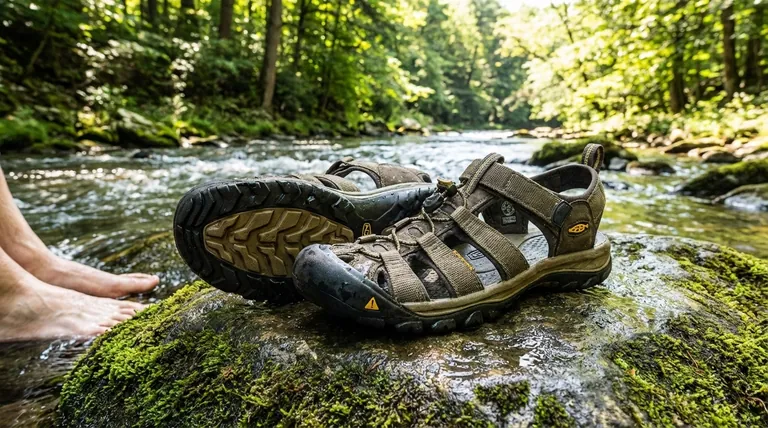
At their core, non-slip outdoor sandals are engineered as a hybrid footwear solution. They are designed to provide the grip and support of a light hiking shoe with the breathability and water-readiness of a traditional sandal, making them ideal for adventurers tackling rugged, often wet, environments.
The essential purpose of an outdoor sandal is not just to be an open-toed shoe, but to deliver reliable traction and a secure fit when navigating uneven terrain, riverbeds, and variable trail conditions where conventional footwear would be too hot, heavy, or slow to dry.
The Anatomy of an Outdoor Sandal
To understand their function, you must first understand their construction. Unlike a casual flip-flop, every component of an outdoor sandal is purpose-built for performance and durability.
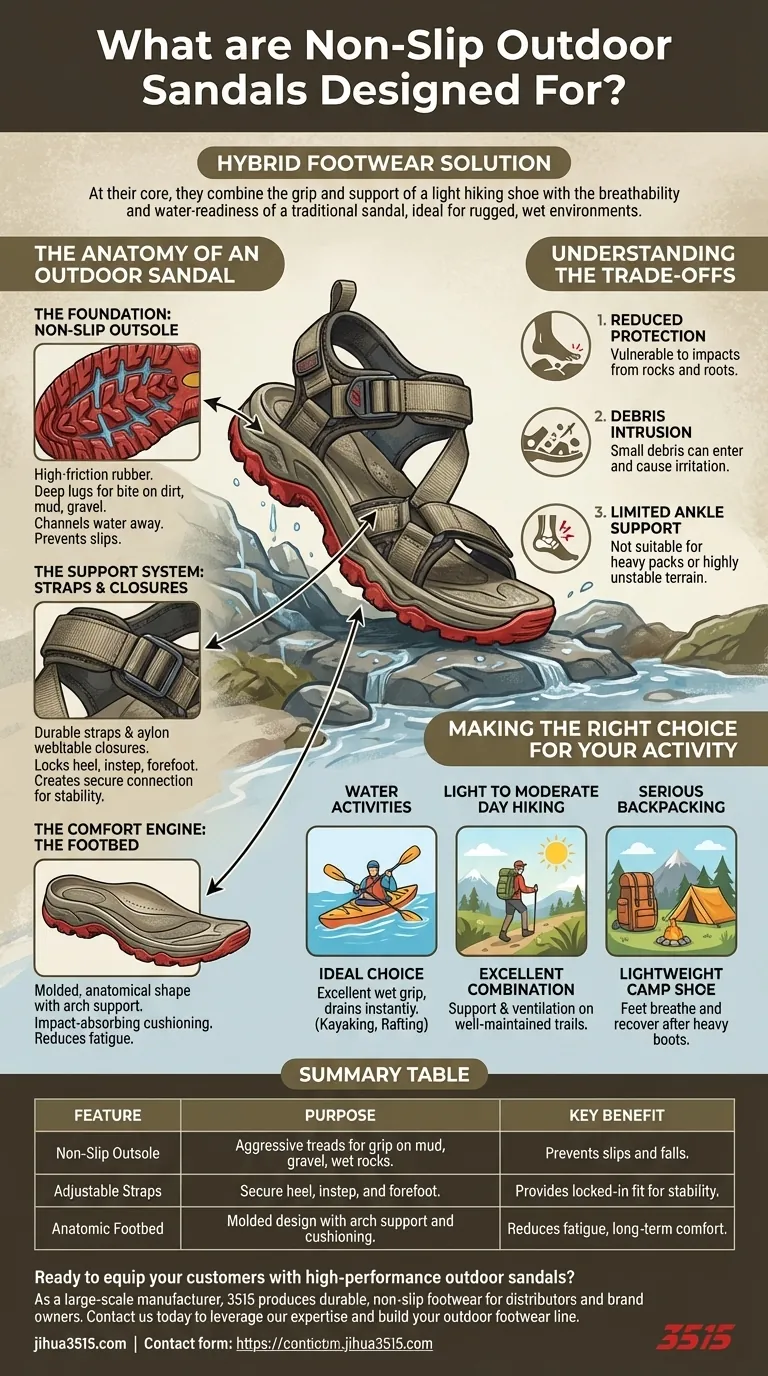
The Foundation: The Non-Slip Outsole
The most critical feature is the outsole, the part that contacts the ground. These are made from high-friction rubber compounds, often featuring deep, aggressive lugs (treads) designed to bite into dirt, mud, and gravel.
This design ensures stable footing on unpredictable surfaces, preventing slips that could lead to injury. Many are also designed for wet traction, channeling water away from the foot's contact points.
The Support System: Straps and Closures
An outdoor sandal is useless if your foot slides around on top of it. To solve this, they feature a robust system of durable straps and adjustable closures.
These straps, typically made of quick-drying nylon or polyester webbing, are strategically placed to lock your heel, instep, and forefoot into the footbed. This creates a secure connection that prevents internal slippage when climbing or descending steep terrain.
The Comfort Engine: The Footbed
The footbed is engineered for long-term comfort and support. Most feature a molded, anatomical shape that provides critical arch support, which is essential for reducing fatigue during long hikes.
They also incorporate cushioning to absorb impact, protecting your joints from the constant stress of walking on hard or uneven ground.
Understanding the Trade-offs
While highly versatile, outdoor sandals are a specialized tool. Choosing them requires acknowledging their inherent limitations compared to fully enclosed shoes or boots.
Reduced Protection
The most obvious trade-off is protection. The open design leaves your toes, heels, and the sides of your feet vulnerable to impacts from rocks, roots, and other trail hazards.
Debris Intrusion
Small pebbles, sand, and twigs can easily get between your foot and the footbed. This can be a minor annoyance or a painful problem, often requiring you to stop and clear out the sandal.
Limited Ankle Support
By design, sandals offer virtually no ankle support. This makes them less suitable for carrying heavy packs or traversing highly unstable terrain where an ankle roll is a significant risk.
Making the Right Choice for Your Activity
The decision to use an outdoor sandal should be based on a clear understanding of your environment and activity.
- If your primary focus is water activities: These are the ideal choice for kayaking, canoeing, or rafting, offering excellent grip on wet surfaces and draining instantly.
- If your primary focus is light to moderate day hiking: In hot weather on well-maintained trails, they provide an excellent combination of support and ventilation.
- If your primary focus is serious backpacking: They serve best as a lightweight camp shoe, allowing your feet to breathe and recover after a long day in heavy hiking boots.
Ultimately, choosing the right footwear is about matching the tool to the specific demands of your adventure.
Summary Table:
| Feature | Purpose | Key Benefit |
|---|---|---|
| Non-Slip Outsole | Aggressive treads for grip on mud, gravel, and wet rocks. | Prevents slips and falls on unpredictable surfaces. |
| Adjustable Straps | Secure heel, instep, and forefoot to the footbed. | Provides a locked-in fit for stability on uneven ground. |
| Anatomic Footbed | Molded design with arch support and cushioning. | Reduces fatigue and absorbs impact for long-term comfort. |
Ready to equip your customers with high-performance outdoor sandals?
As a large-scale manufacturer, 3515 produces a comprehensive range of durable, non-slip footwear for distributors, brand owners, and bulk clients. Our production capabilities encompass all types of outdoor sandals, hiking shoes, and boots, ensuring you get the perfect product for your market.
Contact us today to discuss your manufacturing needs and leverage our expertise to build your outdoor footwear line.
Visual Guide
Related Products
- Durable Rubber Sole Outdoor Shoes Wholesale & Custom Manufacturing
- Factory-Direct Wholesale Canvas Boots with High-Traction Rubber Soles
- Premium Suede Sport Safety Shoes for Wholesale & Bulk Orders
- Durable High-Traction Canvas Sneakers Wholesale & Custom Manufacturing
- Wholesale Waterproof Tactical Boots Custom Suede & High-Traction Soles
People Also Ask
- What is the function of the sole in outdoor shoes? Find the Perfect Grip and Support
- What role do outdoor shoes and sneakers play in navigating external terrains? Engineered Stability for Every Surface
- How is AI utilized in the design of outdoor and safety footwear? Harnessing Big Data for Market-Driven Shoe Innovation
- Why is durability important when selecting outdoor shoes? A Guide to Safety & Long-Term Value
- What are the key components of outdoor shoes that affect comfort and sturdiness? A Guide to Durable, High-Performance Footwear