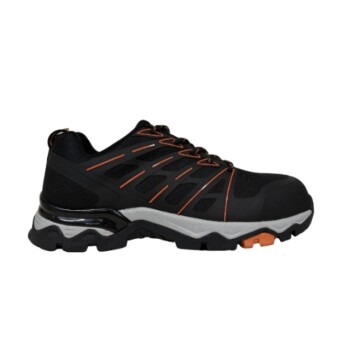
The design of professional safety footwear requires a critical compromise between impermeable physical barriers and necessary physiological regulation. While high-level protective materials like rubber or specialized plastics offer superior blocking of biological hazards, they often inhibit airflow, causing heat accumulation that significantly increases the wearer's metabolic rate.
Ideally, safety footwear provides a secure shield against external contaminants without becoming a physiological burden. If a shoe offers perfect isolation but causes rapid overheating, the wearer's resulting fatigue can compromise operational safety just as much as a barrier failure.
The Conflict Between Isolation and Physiology
The Impermeability Requirement
To ensure excellent biological blocking, manufacturers often rely on dense, non-porous materials.
Rubber and specialized plastics are the industry standard for these barriers. They effectively stop fluids and contaminants from penetrating the footwear.
The Breathability Deficit
The downside of these protective materials is that they are inherently non-breathable.
By sealing the foot to keep hazards out, they also trap body heat in. This prevents natural thermoregulation during physically demanding tasks.
The Operational Impact on the Worker
Heat and Metabolic Stress
When heat cannot escape the footwear, the wearer’s body temperature rises.
This forces the body to expend more energy to cool down. Consequently, the wearer experiences increased metabolic rates simply to maintain homeostasis.
Accelerated Physiological Fatigue
This excess energy expenditure leads to rapid physical exhaustion.
In high-intensity environments like Central Service operations, this fatigue sets in quickly. The protective gear itself becomes a source of physical stress.
Compromised Precision
Physical fatigue does not just affect stamina; it affects accuracy.
As the wearer becomes tired from heat stress, their operational precision declines. In safety-critical roles, a loss of focus or dexterity poses a significant risk.
Understanding the Design Trade-offs
The Risk of Pure Protection
Focusing exclusively on the strength of the physical barrier creates a "sauna effect" for the user.
While the foot remains isolated from biological threats, the worker’s overall performance degrades. A tired worker is more prone to accidents and errors.
The Challenge of Material Innovation
The core challenge for manufacturers is improving material structures.
They must engineer barriers that maintain strict strength requirements while allowing heat to dissipate. This requires moving beyond simple rubber constructions to more advanced, breathable composites.
Making the Right Choice for Your Team
When selecting safety footwear, you must evaluate the specific nature of the daily tasks.
- If your primary focus is stationary handling of high-risk biological fluids: Prioritize maximum biological blocking capabilities, even if the material is less breathable.
- If your primary focus is physically demanding, mobile Central Service operations: Prioritize advanced material structures that balance barrier strength with breathability to prevent fatigue-induced errors.
True safety is achieved only when the equipment protects the worker without exhausting them.
Summary Table:
| Factor | High-Level Protection (Impermeable) | Comfort & Breathability (Permeable) |
|---|---|---|
| Material Examples | Rubber, specialized non-porous plastics | Advanced breathable composites |
| Primary Benefit | Maximum biological & fluid blocking | Heat dissipation & thermoregulation |
| Worker Impact | Potential heat accumulation & fatigue | Sustained energy & higher precision |
| Best Use Case | Stationary handling of high-risk fluids | High-intensity, mobile operations |
Elevate Your Workforce Safety with 3515
As a large-scale manufacturer serving distributors and brand owners, 3515 offers comprehensive production capabilities for all footwear types. Our flagship Safety Shoes series is engineered to resolve the critical tension between high-level protection and physiological comfort.
Whether you need robust tactical boots, breathable sneakers, or formal dress shoes, our advanced material innovation ensures your team stays protected without the burden of fatigue. Partner with us to provide your clients with footwear that enhances operational precision and durability.
Ready to scale your inventory with premium safety solutions? Contact us today to discuss your bulk requirements!
References
- Pattikan Damrongkhunawut, Withaya Chanchai. Effectiveness of Personal Protective Equipment in Preventing Coronavirus Infection and Emerging Infectious Diseases among Central Service Technicians in Thailand. DOI: 10.29011/2688-9501.101394
This article is also based on technical information from 3515 Knowledge Base .
Related Products
- Premium Suede Sport Safety Shoes for Wholesale & Bulk Orders
- Premium Lightweight Safety Shoes for Wholesale & Bulk Orders
- Wholesale Anti-Smash & Puncture-Proof Safety Shoes Custom Manufacturing for Brands
- Premium KPU Injection Athletic Style Safety Shoes
- Premium Safety Shoes with Rotating Buckle Safety Sneakers
People Also Ask
- What are the primary functions of professional safety shoes? Maximize Safety in Water Supply Confined Spaces
- What industries have specific OSHA footwear requirements? Ensure Compliance & Protect Your Workforce
- What role do specialized safety shoes play in preventing falls? Engineering Stability in Industrial Environments
- What are the main safety features of S1-S5 shoes? The 3 Essential Protections Explained
- How do complex outsole tread designs in safety shoes work with coated floors? Master Slip Resistance Engineering