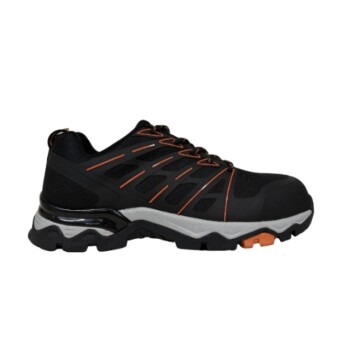
Safety shoes function as the fundamental line of defense for personnel in high-risk industrial and emergency environments. They are critical Personal Protective Equipment (PPE) engineered to shield feet from traumatic impacts, sharp object penetration, and hazardous surface conditions.
Core Takeaway: The protective value of safety shoes lies in their ability to form a multi-layered physical barrier. They combine structural reinforcements—such as steel toes and impenetrable midsoles—with specialized surface materials to prevent mechanical injury and ensure stability in volatile environments.
Physical Defense Mechanisms
Impact and Compression Protection
The primary function of safety shoes is to prevent crushing injuries caused by falling heavy objects or mechanical compression.
Manufacturers integrate impact-resistant toe caps directly into the shoe's structure. These are typically constructed from steel or high-strength composite materials to create a rigid shield over the toes.
Puncture Prevention Technology
In environments like construction or metallurgy, the risk of stepping on sharp objects such as nails, glass, or metal shards is acute.
Safety shoes address this through puncture-resistant midsoles. By embedding high-strength steel plates or non-metallic layers (such as Kevlar) within the sole, the footwear provides a comprehensive barrier that prevents sharp debris from penetrating through to the foot.
Stability and Environmental Adaptation
Traction Control on Hazardous Surfaces
Slips and falls are a leading cause of industrial injury, particularly on wet, oily, or irregular surfaces.
To combat this, safety shoes feature anti-slip outsoles with specialized tread patterns. These high-performance soles ensure necessary traction and walking stability, significantly reducing the risk of accidents on complex industrial floors or construction sites.
Resistance to Chemicals and Extremes
For professionals working with oils, chemicals, or extreme heat, standard footwear effectively degrades, posing an immediate safety risk.
High-risk safety shoes utilize specialized upper materials resistant to chemical corrosion and high temperatures. This prevents hazardous liquids from penetrating the footwear and reaching the skin, while also maintaining the structural integrity of the shoe in harsh environments.
Waterproofing and Static Control
Advanced classifications of safety shoes, such as the S3 standard, offer expanded protection for specific working conditions.
These models include a waterproof shaft to keep feet dry in wet conditions and antistatic properties to prevent spark generation. Additionally, energy-absorbing heels are often included to reduce fatigue and impact stress on the wearer's joints during long-duration operations.
Understanding the Trade-offs
Weight vs. Agility
While steel toes and steel plates offer maximum protection, they add significant weight to the footwear. In high-mobility roles, this can lead to faster worker fatigue. Composite alternatives offer similar protection with less weight but may have different cost or bulk implications.
Rigidity vs. Comfort
The impenetrable nature of puncture-resistant midsoles can make the shoe sole more rigid. This reduces the natural flexibility of the foot during walking. While necessary for safety on construction sites with sharp debris, this rigidity can be uncomfortable for workers who walk long distances on flat, safe floors.
Making the Right Choice for Your Goal
Selecting the correct safety shoe requires matching the specific protective features to the hazards present in your work zone.
- If your primary focus is Heavy Construction: Prioritize puncture-resistant midsoles and steel toes to protect against nails and falling debris on uneven ground.
- If your primary focus is Chemical or Oil Processing: Prioritize chemical-resistant materials and anti-slip outsoles to prevent liquid penetration and ensure stability on slick surfaces.
- If your primary focus is General Warehousing/Logistics: Prioritize S3 standards for a balanced combination of antistatic properties, waterproofing, and impact protection.
The most effective safety shoe is one that addresses your specific environmental risks without creating unnecessary fatigue or mobility restrictions.
Summary Table:
| Protective Feature | Primary Benefit | Common Material Used |
|---|---|---|
| Impact-Resistant Toe Cap | Prevents crushing from falling heavy objects | Steel or High-Strength Composite |
| Puncture-Resistant Midsole | Shields against nails, glass, and sharp debris | Steel Plate or Kevlar Layers |
| Anti-Slip Outsole | Provides traction on wet, oily, or uneven floors | Specialized Rubber / High-Traction Treads |
| Chemical-Resistant Upper | Prevents corrosion and liquid penetration | Treated Leather or Synthetic Materials |
| Antistatic & Waterproofing | Blocks sparks and keeps feet dry (S3 Standards) | Conductive Fibers & Waterproof Membranes |
Secure Your Workforce with Premium Protective Footwear
As a large-scale manufacturer serving distributors and brand owners, 3515 offers comprehensive production capabilities for all footwear types, anchored by our flagship Safety Shoes series. Whether your clients operate in heavy construction, metallurgy, or chemical processing, our extensive portfolio—covering work and tactical boots, outdoor shoes, training shoes, and sneakers—is engineered to meet the highest safety standards (including S3).
Why partner with 3515?
- Unmatched Bulk Capacity: Reliable supply for large-scale distribution.
- Multi-Hazard Protection: Expertly crafted for impact, puncture, and chemical resistance.
- Diverse Portfolio: From formal dress shoes to rugged tactical gear.
Contact our team today to discuss your bulk manufacturing requirements and see how 3515 can enhance your product line!
References
- Stephen Setyawan, Eka Puji Widiyanto. ANALISIS KINERJA MODEL YOLOv8 UNTUK MONITORING KEPATUHAN PENGGUNAAN SEPATU SAFETY PADA PETUGAS PEMADAM KEBAKARAN. DOI: 10.23960/jitet.v13i3s1.8065
This article is also based on technical information from 3515 Knowledge Base .
Related Products
- Premium Suede Sport Safety Shoes for Wholesale & Bulk Orders
- Premium Lightweight Safety Shoes for Wholesale & Bulk Orders
- Wholesale Anti-Smash & Puncture-Proof Safety Shoes Custom Manufacturing for Brands
- Premium KPU Injection Athletic Style Safety Shoes
- Premium Safety Shoes with Rotating Buckle Safety Sneakers
People Also Ask
- What industries have specific OSHA footwear requirements? Ensure Compliance & Protect Your Workforce
- What are the primary functions of professional safety shoes? Maximize Safety in Water Supply Confined Spaces
- What role do specialized safety shoes play in preventing falls? Engineering Stability in Industrial Environments
- What are the technical advantages of integrating sensors into safety shoes? Achieve Superior Motion Capture Precision
- Why should ergonomics and comfort be prioritized when selecting safety shoes? Boost Compliance & Worker Health